

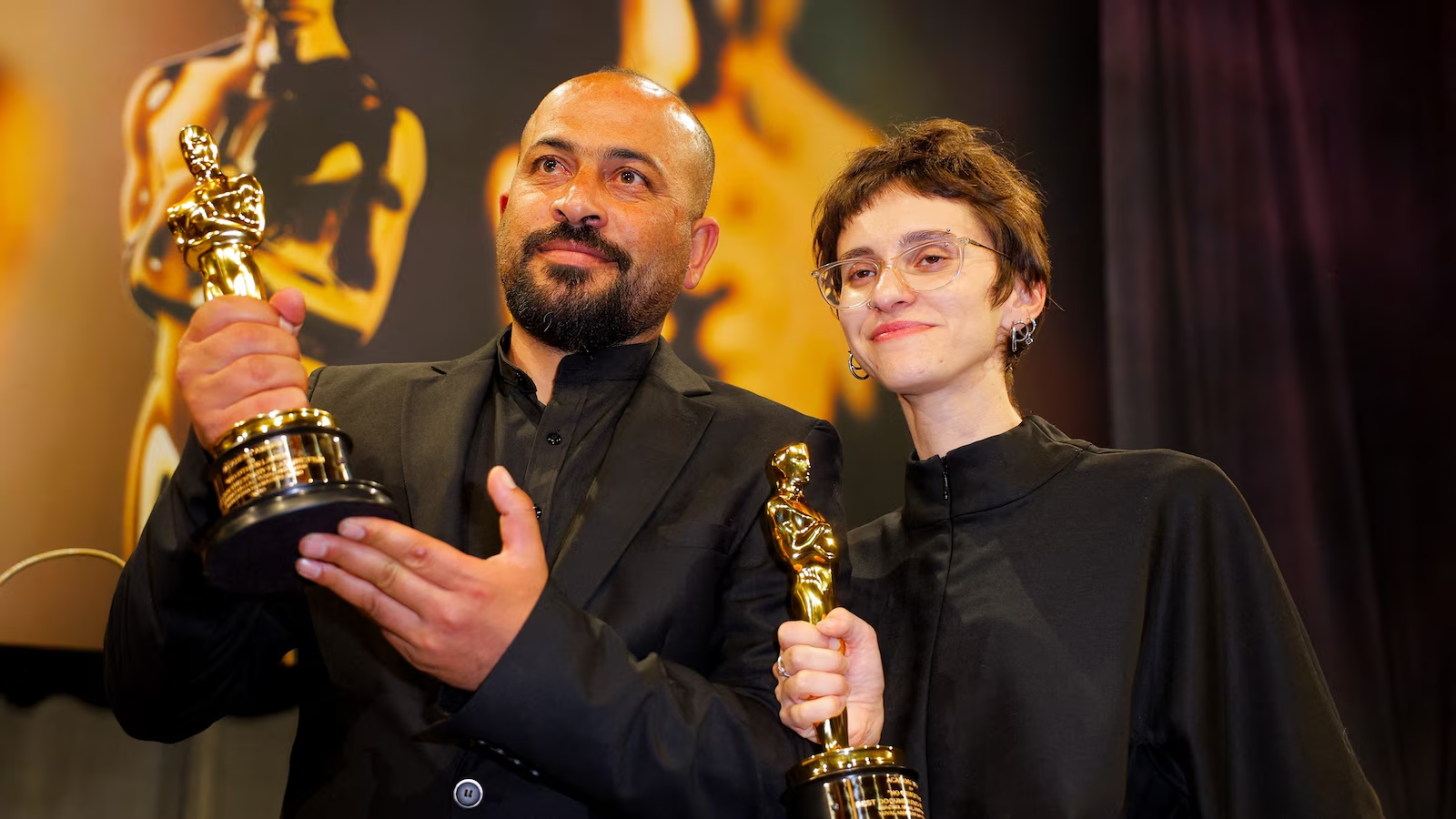
JERUSALEM, March 29, 2025 — The Academy of Motion Picture Arts and Sciences has issued a public apology after widespread criticism for failing to directly support Palestinian Oscar-winning filmmaker Hamdan Ballal, who was recently attacked and detained in the West Bank.
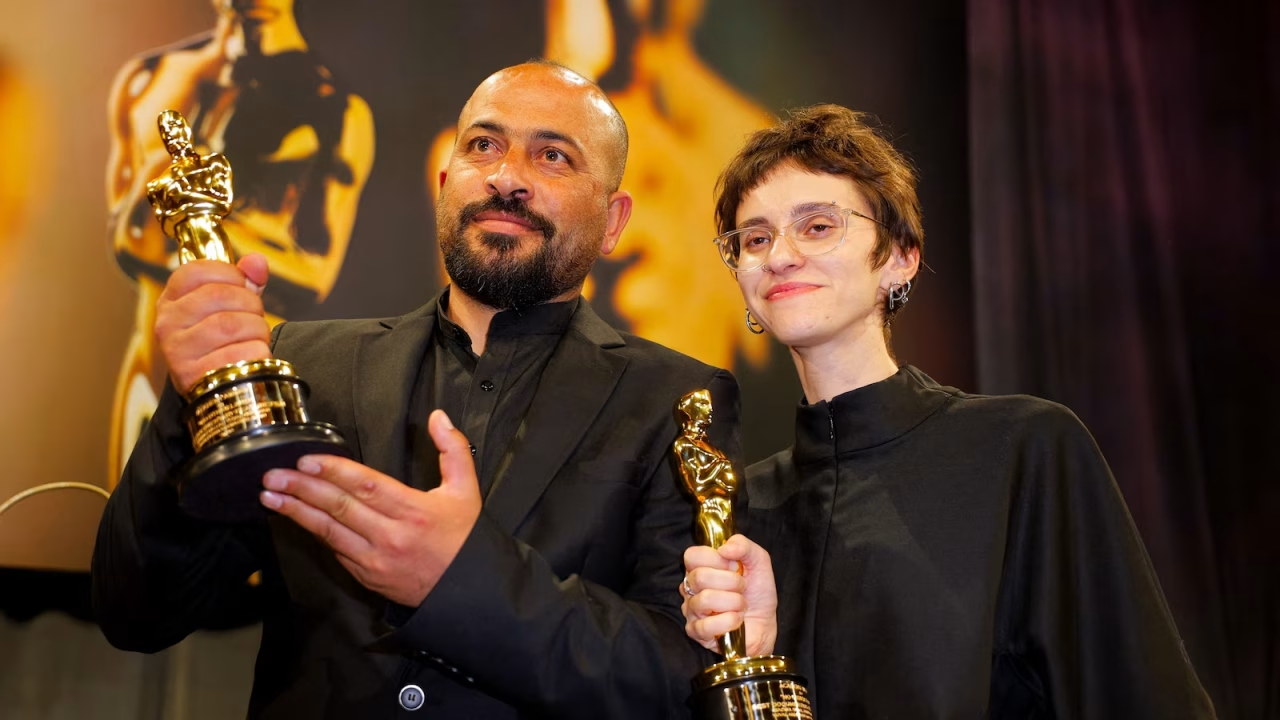

In a rare display of solidarity, nearly 700 Academy voting members, including some of the industry’s most respected names, signed an open letter denouncing the initial response as insufficient and expressing full support for Ballal, who co-directed the acclaimed documentary No Other Land.
The Incident: Assault and Detention
Ballal, who won an Oscar earlier this year for No Other Land, was beaten by Israeli settlers and at least two soldiers in the village of Susiya, located in the occupied West Bank’s Masafer Yatta region. He was reportedly bleeding, handcuffed, and blindfolded, before being taken to a military base and held overnight.
“It was revenge for our movie,” Ballal said after his release, referencing the documentary’s critical portrayal of the Israeli military’s demolition of Palestinian villages.
Initial Silence from the Academy Sparks Outrage
On social media, No Other Land co-director Yuval Abraham criticized the Academy for declining to issue a direct statement about Ballal. “We were told that because other Palestinians were beaten up in the settler attack, it could be considered unrelated to the film, so they felt no need to respond,” he posted on X.
Abraham added that the Academy’s reluctance to speak up — even after honoring Ballal weeks earlier — suggested a dangerous double standard when it comes to Palestinian lives and voices.
Apology and Statement of Support
Under pressure from within its own ranks, the Academy on Friday released a revised statement, directly naming Ballal and condemning the violence against him.
“We sincerely apologise to Mr Ballal and all artists who felt unsupported by our previous statement,” it read.
“It is indefensible for an organisation to recognise a film with an award in the first week of March, and then fail to defend its filmmakers just a few weeks later.”
The statement also acknowledged the growing danger facing filmmakers like Ballal, asserting:
“Winning an Oscar has put their lives in increasing danger, and we will not mince words when the safety of fellow artists is at stake.”
A-List Solidarity: Hollywood Speaks Out
Prominent actors and Academy members — including Mark Ruffalo, Olivia Colman, Emma Thompson, Richard Gere, Susan Sarandon, Joaquin Phoenix, and Penélope Cruz — signed the letter demanding accountability and transparency from the Academy.
The letter describes the assault on Ballal as “not just an attack on one filmmaker – it is an attack on all those who dare to bear witness and tell inconvenient truths.”
Context: Rising Violence in the West Bank
Ballal’s detention underscores the worsening situation in the occupied West Bank, where violence by Israeli settlers and soldiers has surged since the outbreak of war in Gaza on October 7, 2023.
According to the Palestinian Ministry of Health, at least 870 Palestinians, including 177 children, have been killed in the West Bank since then. The United Nations has documented over 1,860 incidents of settler violence in the same period — an average of four per day.
The escalation comes amid growing fears that Israeli Prime Minister Benjamin Netanyahu’s far-right government is moving toward full annexation of Palestinian territory — a move that may gain momentum with support from the Trump administration in Washington.
Conclusion
The Academy’s revised statement marks a pivotal moment in Hollywood’s engagement with global human rights issues. As artists increasingly use their platforms to spotlight injustice, Ballal’s case serves as a sobering reminder of the risks faced by filmmakers who challenge power through storytelling.
The response also signals a broader reckoning within the entertainment industry over whose stories are told, and whose voices are protected.

Bhupendra Singh Chundawat is a seasoned technology journalist with over 22 years of experience in the media industry. He specializes in covering the global technology landscape, with a deep focus on manufacturing trends and the geopolitical impact on tech companies. Currently serving as the Editor at Udaipur Kiran, his insights are shaped by decades of hands-on reporting and editorial leadership in the fast-evolving world of technology.