

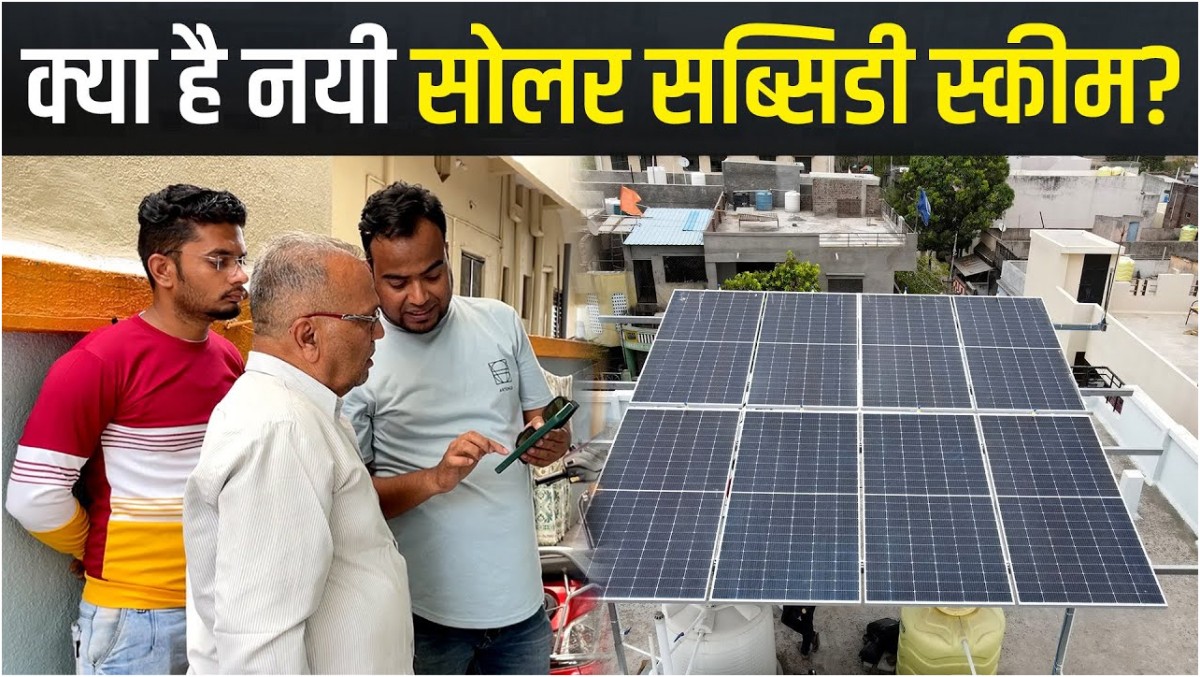

Since solar energy can reduce the carbon footprint of its consumer, it is environmentally benign. Over the land area of India, the study estimates that 5000 trillion kWh of energy is consumed annually, with most areas receiving between 4 and 7 kWh per square meter each day. But the truth is, most Indians cannot afford the expense of installing solar panels on their rooftops. A rooftop solar system linked with the grid costs, on average, 75 per watt, according to the Ministry of New and Renewable Energy (MNRE). In response, the government implemented a number of subsidies and other incentives that have pushed individuals to switch to solar energy for both domestic and commercial use.
PM Surya Ghar Muft Bijli Yojana Rooftop Solar Yojana Objectives
One crore homes are to receive 300 units of free electricity each month thanks to the PM Surya Ghar Muft Bijli Yojana, also known as the Rooftop Solar Yojana. The idea is to use solar energy and install rooftop solar panels to lower the house’s electricity bills.
This solar panel subsidy scheme moves towards sustainable energy practices and installs rooftop solar panels in homes to reduce reliance on conventional energy sources. It contributes to clean and sustainable energy.
Allow me to explain the Indian House government subsidy Scheme
Not commercial or industrial sectors are eligible for the subsidy; only residential homes (individual homes and large apartments) can go for it. Only Grid Connected Solar Systems (without Battery Systems) will be entertained under this solar subsidy. Because establishing a solar system is an expensive endeavor, financial support encourages people to make the investment and relieves part of their burden. The government will offer the following incentives under the Rooftop Solar Scheme: up to 2 kW of solar panel installation will cost Rs. 30,000 per kW; additional capacity up to 3 kW will cost Rs. 18,000 per kW; and systems greater than 3 kW will cost a maximum of Rs. 78,000.
You can understand this calculation by the table below.
| System Capacity (kW) | Solar Subsidy (in %) |
| 1kW | ₹ 30,000 |
| 2kW | ₹ 60,000 |
| 3kW | ₹ 78,000 |
| 4kW to 10kW | ₹ 78,000 (Capped) |
How Rooftop Solar Panels and Net Metering Reduce Electricity Bills?
Known by another name, rooftop solar panels, photovoltaic panels are mounted on the roofs of homes or other structures and wired into the main power supply unit. Savings result from this installation’s reduction of dependence on grid-connected electricity.
Thanks to Net Metering, which sells the electricity distribution companies for a fair price any excess energy or power produced by the solar panels for home, the entire process is more financially viable. By balancing what is used and what is provided, it thus greatly lowers total electricity bills.

Bhupendra Singh Chundawat is a seasoned technology journalist with over 22 years of experience in the media industry. He specializes in covering the global technology landscape, with a deep focus on manufacturing trends and the geopolitical impact on tech companies. Currently serving as the Editor at Udaipur Kiran, his insights are shaped by decades of hands-on reporting and editorial leadership in the fast-evolving world of technology.