

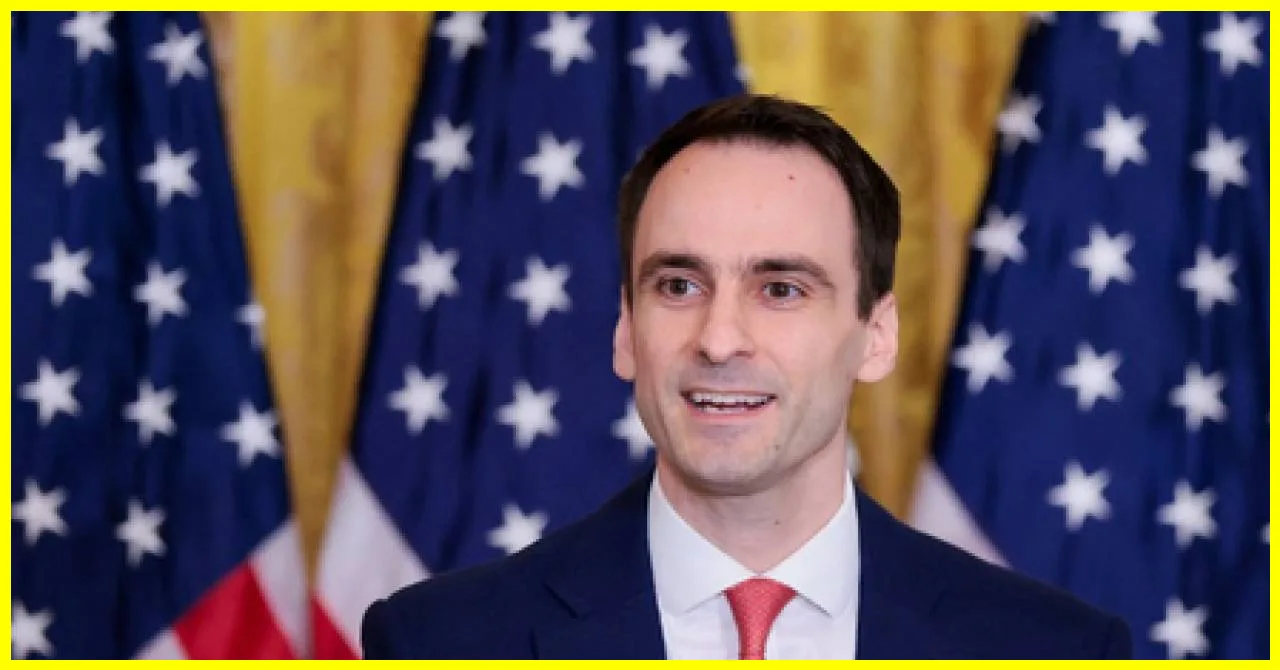

Washington, July 25: The Trump administration has defended significant changes to the United States’ scientific research system this week. The administration argues that advancements in artificial intelligence (AI), quantum computing, and advanced manufacturing will be crucial for maintaining a technological edge over China in the coming decades. This strategy will also impact key allies like India.
During a presentation before the House Committee on Science, Space, and Technology, Michael Kratsios, Director of the White House Office of Science and Technology Policy (OSTP), outlined a “new golden age of science.” However, lawmakers appeared divided along party lines regarding funding, research priorities, and the future direction of American science.
Kratsios emphasized to lawmakers, “Our economic leadership and technological dominance in a rapidly changing world cannot be taken lightly. The U.S. is no longer the sole industrial and scientific superpower. New focus and reforms are needed to usher in a golden age of American science.”
He mentioned that a report from his office proposed reforms to make federal research more flexible, support diverse scientists, strengthen the connection between scientific discovery and manufacturing, and center AI in future research.
A key component of this initiative is the administration’s “Genesis Mission,” which Kratsios described as “the most important aspect of American AI for science.” He noted that over 15 federal agencies have pledged more than $5 billion for AI-based scientific research, including the Departments of Energy, Agriculture, Health and Human Services, NASA, and the National Institute of Standards and Technology.
Republican lawmakers have repeatedly stressed that this initiative is essential for maintaining America’s technological edge over China.
Committee Chairman Brian Babin warned that “the Chinese Communist Party has made artificial intelligence a national priority and is spending accordingly.” He also stated that Beijing is continuously targeting American universities and laboratories to gain cutting-edge research.
Kratsios urged Washington to “clearly define what the most critical priorities are for America.” He identified AI, quantum computing, fusion energy, and space technology as strategic sectors where the U.S. must maintain its leadership. However, Democrats accused the administration of undermining the very scientific ecosystem it claims to strengthen.
Ranking member Zoe Lofgren argued that declining graduate admissions, uncertainty in research funding, and proposed changes in grant policy are weakening the American research base, while China is increasing its investment in science and recruiting researchers from the U.S. She stated that the administration’s actions are “empowering China while destroying the American research system.”
Several Democratic members raised concerns about proposed cuts to National Science Foundation (NSF) funding, political interference in research grants, and the removal of scientific advisory bodies. Kratsios denied that the White House was involved in individual NSF grant decisions, defending the administration’s emphasis on “gold standard science” that should be “reproducible, transparent, and reliable.”
Throughout the hearing, references to China were frequent. Republican lawmakers expressed concerns about China’s efforts to gain advanced research, dependency on Chinese supply chains in biotechnology and semiconductors, and competition in open-source artificial intelligence. Kratsios affirmed the administration’s commitment to ensuring that “the future of American leadership in AI relies on a model that is vibrant, open, and closed source,” while also promoting domestic semiconductor manufacturing and AI infrastructure.

My name is Kuldeep Singh Chundawat. I am an experienced content writer with several years of expertise in the field. Currently, I contribute to Daily Kiran, creating engaging and informative content across a variety of categories including technology, health, travel, education, and automobiles. My goal is to deliver accurate, insightful, and captivating information through my words to help readers stay informed and empowered.