Supreme Court Responds Firmly to Opposition March Concerns
The Supreme Court has issued a notice regarding political protests after a recent opposition march, emphasizing its independence from external pressures.
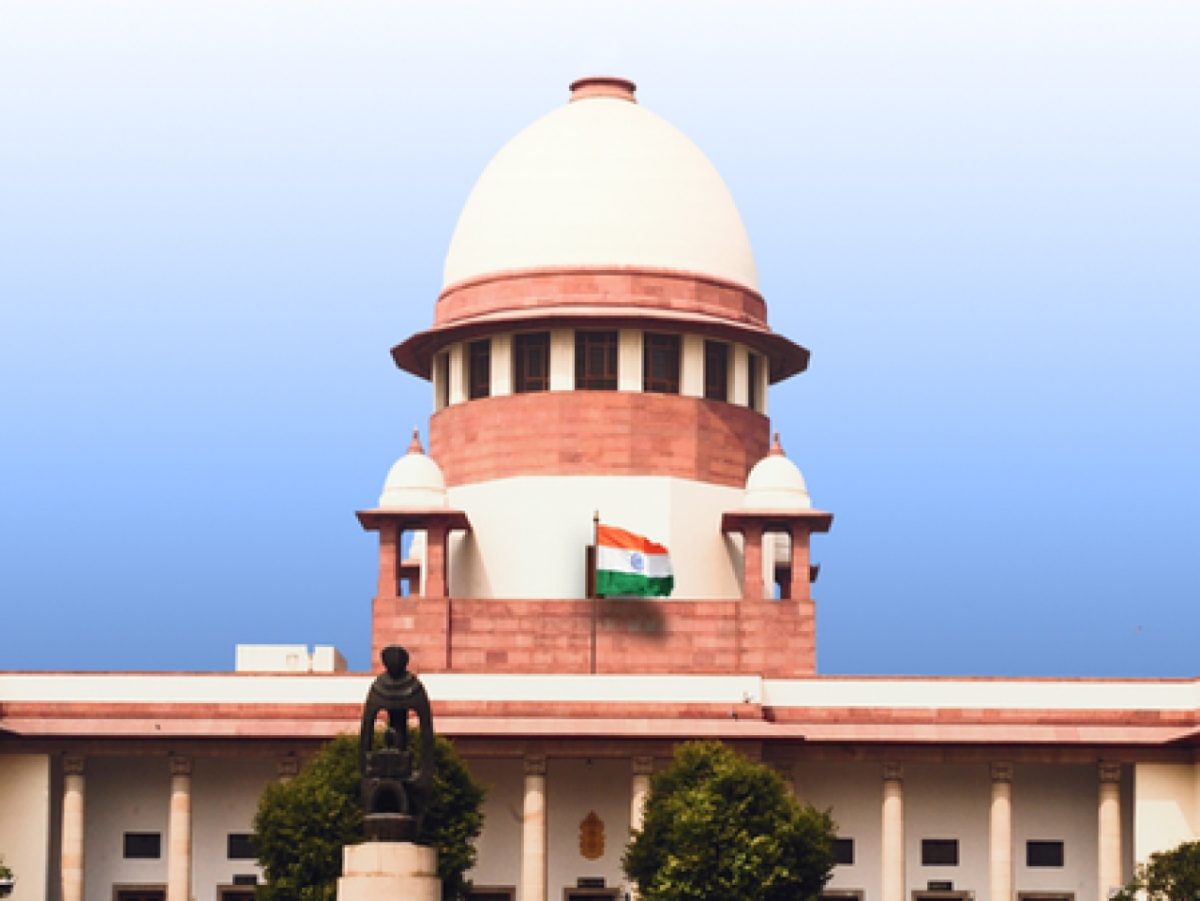

New Delhi, October 15 (Udaipur Kiran) : The Supreme Court of India has taken a strong stance regarding a recent opposition march held by leaders of the India bloc, issuing a notice on October 12 concerning the regulation of political protests near the court premises. Chief Justice D.Y. Chandrachud made it clear during the proceedings that no one can exert pressure on the Supreme Court.
The court directed the preservation of CCTV footage and other digital evidence related to the incident. The notice followed arguments presented by senior advocate Gaurav Bhatia on behalf of the petitioners, who contended that the Supreme Court should not be subjected to a political procession.
In response, Chief Justice Chandrachud asserted, “No one can put us under pressure,” emphasizing that such attempts are weak and go unnoticed. He remarked, “We do not operate from ivory towers. We are aware of what is stated outside and what is said inside the court. We know everything.”
The case stems from petitions filed by four advocates seeking a uniform system to regulate political processions and protests around the Supreme Court and various High Courts. They also requested a ban on political demonstrations within court premises, arguing that political mobilization should not interfere with judicial processes or exert pressure on pending cases.
The petitions also requested the preservation of CCTV footage from the October 12 incident, visitor records, and documents related to entry and security arrangements. Furthermore, they called for an investigation into the conduct of political leaders involved and consideration of criminal contempt proceedings if warranted.
This controversy arose following the opposition march led by leaders from the India bloc, including Rahul Gandhi, to express concerns regarding the Special Intensive Review (SIR) of voter lists. The Chief Justice had previously declined a request from Gandhi and Congress President Mallikarjun Kharge to meet and submit a memorandum on the SIR issue, stating that the matters raised were already pending before the Supreme Court.
In his response to the opposition leaders, the Chief Justice clarified that convening a meeting to discuss pending cases would violate the constitutional principle of separation of powers, which is integral to the Constitution’s framework. He also noted that while the Supreme Court does not have administrative authority to act on the issues raised in the opposition leaders’ letter, it is obligated to conduct judicial reviews on matters affecting citizens’ rights.
The Chief Justice advised the opposition leaders to approach the Supreme Court through established legal processes, assuring them that any petition filed in accordance with the law would be heard promptly. Following this, Rahul Gandhi announced that leaders of the India bloc would formally petition the Supreme Court and urged citizens to join their campaign in support of the Constitution and democracy.
Earlier on the same day, the Supreme Court issued a notice to the Election Commission regarding a petition filed by Rahul Gandhi and 12 other leaders challenging the SIR process. The Chief Justice’s bench ordered that this petition be consolidated with existing petitions challenging the validity of the SIR in various states.
The bench stated, “We are issuing a notice and linking the case with previously pending petitions.” During the proceedings, the Supreme Court indicated that it would seek clarification regarding the conduct of one of the petitioners at the next hearing, although the identity of the relevant petitioner has not been disclosed at this time. The bench clarified that the notice concerning the petitioner would be considered temporarily, depending on the explanation provided about their conduct.

Bhupendra Singh Chundawat is a seasoned technology journalist with over 22 years of experience in the media industry. He specializes in covering the global technology landscape, with a deep focus on manufacturing trends and the geopolitical impact on tech companies. Currently serving as the Editor at Udaipur Kiran, his insights are shaped by decades of hands-on reporting and editorial leadership in the fast-evolving world of technology.