

Elon Musks SpaceX Rocket Fails to Recover in Gulf

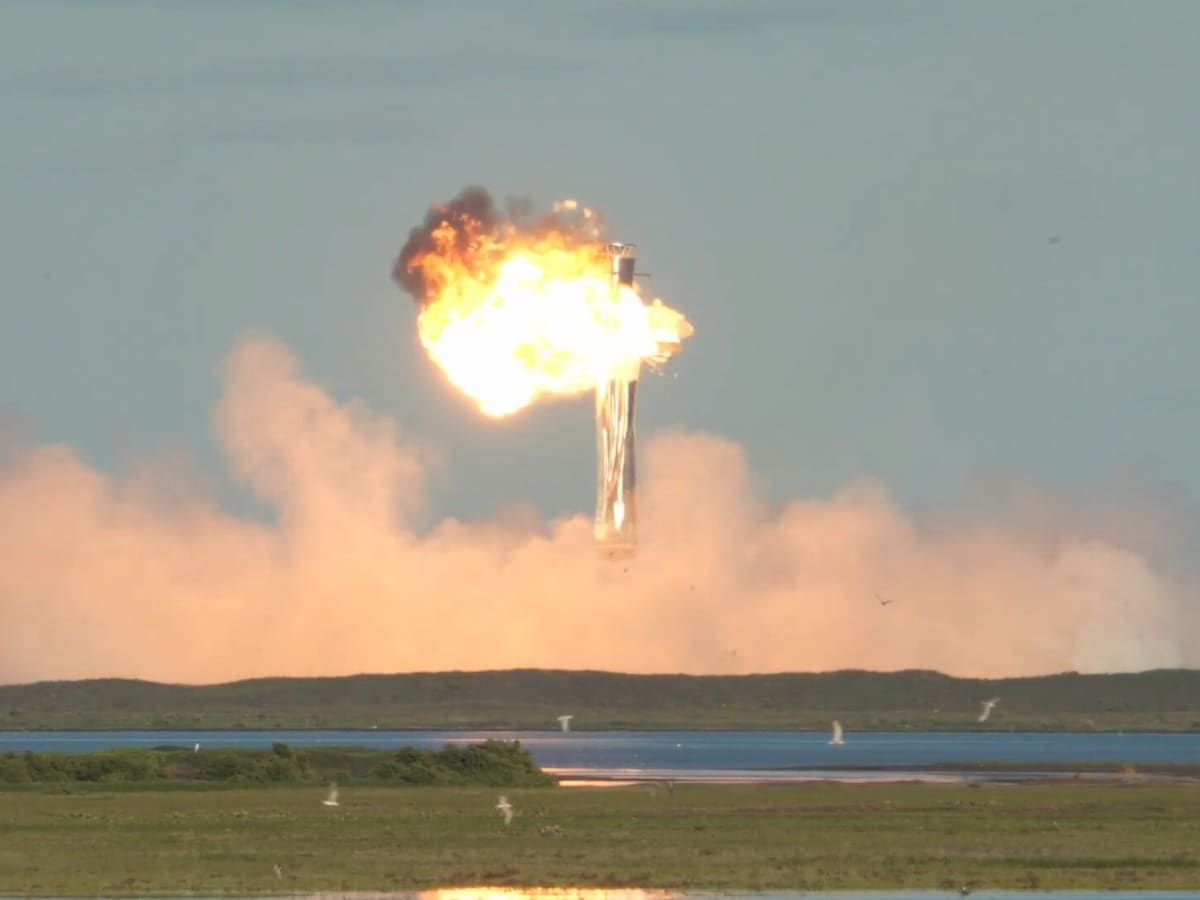
Boca Chica, November 14: Elon Musk’s ambitions took a significant hit as SpaceX failed to recover both parts of its Starship rocket during a mission. On Friday, the Super Heavy booster fell into the Gulf, and the company decided not to attempt recovery due to a technical issue. The mission aimed to successfully retrieve both the booster and the upper stage of the Starship for the first time.
This was SpaceX’s most ambitious Starship test to date. Through this approximately 22-hour mission, the company intended to demonstrate that both parts of the rocket could be recovered for reuse in future launches.
Importance of the Starship Test
SpaceX aims to make the entire Starship rocket reusable. The company believes that achieving this will streamline and expedite the launch process for space missions, aiding future missions related to the Moon and Mars.
If successful, this test would have marked a significant milestone in the direction of recovering and reusing all parts of a rocket sent into space.
For SpaceX founder Elon Musk, the full reusability of the rocket is crucial. He believes that frequent launches with minimal time gaps will be essential for establishing a base on the Moon and sending humans to Mars.
Recovery Attempt Also Failed in September
In a previous test in September, Starship successfully reached Earth’s orbit for the first time. However, the company did not attempt to recover any part of the rocket during that mission. This time, the goal was to recover both parts, but the Super Heavy booster falling into the Gulf thwarted those plans.
Plans to Replace Falcon Rockets with Starship
SpaceX plans to begin launching Starship from Florida in the coming months, with future launches also expected from Louisiana. The company believes that expanding the launch infrastructure and reusing all parts of the rocket is essential for enhancing its operational capacity.
Meanwhile, SpaceX will continue to use its smaller Falcon rockets for several key space missions. These rockets are currently used to send astronauts to the International Space Station (ISS) from Cape Canaveral and to launch Starlink satellites from California. However, Musk plans to eventually replace these with Starship.
Starship’s Role in NASA’s Lunar Missions
NASA has committed billions of dollars to SpaceX to develop Starship as a lunar lander under its Artemis program. Jeff Bezos’s company, Blue Origin, is also a major contender in this project with its Blue Moon lander.
NASA must decide by one year before the human landing under Artemis IV whether to use Musk’s Starship or Bezos’s Blue Moon lander for the mission.
During the proposed Artemis III mission next summer, astronauts will practice docking their spacecraft with both Starship and Blue Moon in Earth’s orbit, aiming to prepare for a human landing on the Moon by 2028.