

(Udaipur Kiran / Tech Desk) — Samsung has officially showcased its long-awaited tri-fold smartphone, the Galaxy Z TriFold, at the Asia-Pacific Economic Cooperation (APEC) Summit held in Gyeongju, North Gyeongsang Province, South Korea. The new device marks Samsung’s entry into the next frontier of foldable smartphones and is expected to become only the second commercially available tri-fold phone in the world, following Huawei’s Mate XT Ultimate Design.
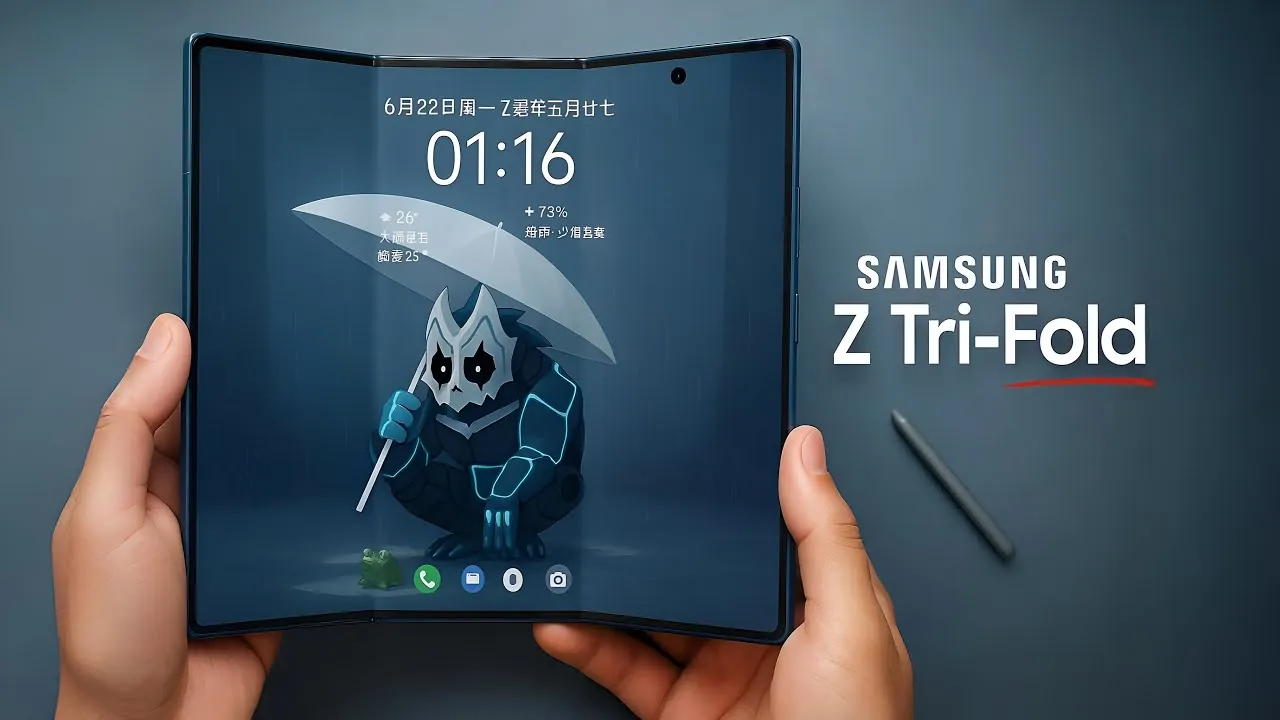

Samsung Galaxy Z TriFold: First Look
According to a report by The Chosun Daily, Samsung offered a discreet preview of the Galaxy Z TriFold during the APEC Summit. The device features a dual inward-folding hinge system, allowing it to fold into a compact, bar-style form factor resembling the Galaxy Z Fold 7 when closed.
When unfolded, the smartphone reveals three side-by-side display panels arranged in a Z-style tri-fold configuration. The rightmost screen houses an in-display hole-punch front camera, while the outer design closely mirrors Samsung’s current premium foldable lineup.
Design and Display
Leaks suggest that the Galaxy Z TriFold may feature a titanium frame for enhanced durability and a premium finish. It is expected to include:
6.54-inch cover display
9.96-inch tri-folding inner display
Both panels are likely to use Samsung’s latest Dynamic AMOLED 2X technology, ensuring high refresh rates and vivid HDR visuals.
When folded, the device maintains the sleek, minimalistic profile Samsung is known for, while its Z-style folding mechanism promises a seamless transition between smartphone and tablet modes.
Hardware and Performance
The Galaxy Z TriFold is rumored to be powered by Qualcomm’s Snapdragon 8 Elite Gen 5 chipset, paired with up to 16GB of RAM. This would make it one of the most powerful foldable devices in the market.
Expected specifications include:
Chipset: Snapdragon 8 Elite Gen 5
RAM: 16GB
Storage: Up to 1TB (unconfirmed)
Battery: Advanced silicon-carbon cell for higher energy density and longevity
Operating System: One UI 8 based on Android 16
Camera System
The tri-fold flagship is expected to sport a triple rear camera setup, possibly located on the leftmost rear panel. Reports suggest a 200MP primary sensor with 100x zoom support, mirroring the camera power of Samsung’s Galaxy S Ultra series.
While official camera specifications remain unconfirmed, design renders indicate a camera island similar to that of the Galaxy Z Fold 7.
Limited Production and Availability
Despite global anticipation, the Galaxy Z TriFold will reportedly have a limited production run of just 50,000 units. Samsung is said to be planning a select-market release, including:
South Korea
Singapore
Taiwan
United Arab Emirates (UAE)
A global rollout may follow depending on production scalability and demand.
Strategic Significance
The Galaxy Z TriFold represents Samsung’s most ambitious innovation in the foldable category yet, positioning it directly against Huawei’s Mate XT Ultimate Design — launched in September 2024 as the world’s first tri-fold device.
The move also reinforces Samsung’s leadership in the flexible-display market, where it already dominates with the Galaxy Z Fold and Z Flip series.
What’s Next
Samsung is expected to announce full specifications, pricing, and availability details later this year, once mass production begins. Analysts predict the Galaxy Z TriFold could serve as a “halo product” — showcasing Samsung’s engineering prowess and setting the stage for the next era of ultra-premium foldables.
If launched commercially in 2025, the Samsung Galaxy Z TriFold will mark a pivotal milestone in smartphone design — blending the portability of a phone with the multitasking power of a tablet, all within one futuristic form factor.

Bhupendra Singh Chundawat is a seasoned technology journalist with over 22 years of experience in the media industry. He specializes in covering the global technology landscape, with a deep focus on manufacturing trends and the geopolitical impact on tech companies. Currently serving as the Editor at Udaipur Kiran, his insights are shaped by decades of hands-on reporting and editorial leadership in the fast-evolving world of technology.