Rajasthan High Court Orders Government to Recognize Married Daughter as Dependent for Benefits
Landmark Judgment Upholds Rights of Married Daughters in Government Employee Benefits
Jodhpur, March 7 – In a significant ruling, the Rajasthan High Court has directed the state government and the Public Health Engineering Department (PHED) to recognize a married daughter as a dependent of a deceased government employee and grant her the rightful financial benefits.
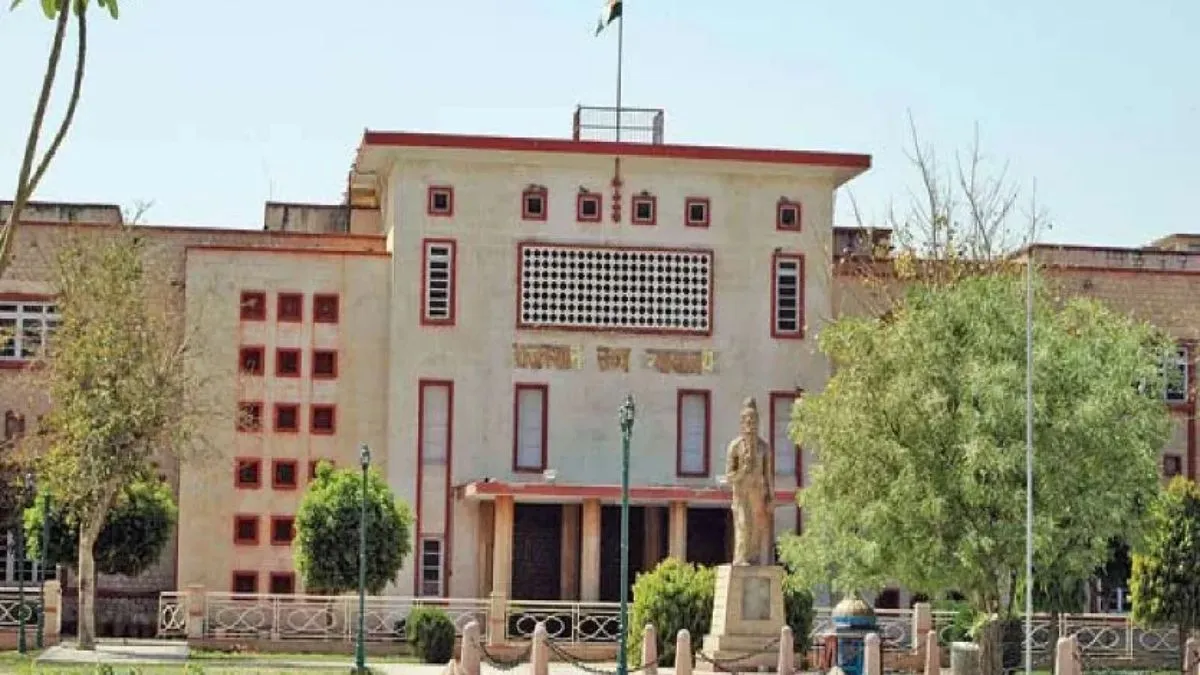

A single-judge bench of Justice Dinesh Mehta passed the order while hearing a petition filed by Bhavna Kanwar, who had sought posthumous benefits after her mother, Shakuntala Bhati, a PHED employee, passed away during service.
The court’s ruling marks an important precedent in extending equal rights to married daughters, challenging previous interpretations of the Rajasthan Civil Services Pension Rules, 1996.
Case Background: Denial of Benefits to a Married Daughter
Advocate Praveen Dayal Dave, representing petitioner Bhavna Kanwar, argued before the Rajasthan High Court that:
- The petitioner’s mother, Shakuntala Bhati, was a government employee in the Public Health Engineering Department (PHED).
- Following her mother’s demise, Bhavna, along with her two brothers, applied for posthumous benefits, including pension, gratuity, and encashment of earned leave.
- Since Shakuntala Bhati had not nominated any beneficiary in her service records, the pension department denied benefits to Bhavna on the grounds that she was married and thus not considered a legal dependent under Rule 54 and Rule 56 of the Rajasthan Civil Services Pension Rules, 1996.
After repeated appeals to the PHED department were rejected, Bhavna Kanwar filed a writ petition before the Rajasthan High Court, challenging the department’s decision as unconstitutional and discriminatory.
Legal Arguments: How the Court Ruled in Favor of the Married Daughter
The petitioner argued that:
- The Rajasthan Government had amended the 1996 Compassionate Appointment Rules to include married daughters as legal dependents of deceased government employees.
- The Rajasthan High Court’s full bench ruling in Priyanka Shrimali vs. State of Rajasthan had already recognized married daughters as rightful claimants of posthumous government benefits.
- The department’s refusal to grant benefits was illegal and in violation of constitutional rights.
The Rajasthan High Court, after hearing arguments from both sides, ruled in favor of Bhavna Kanwar, emphasizing that legal heirs, including married daughters, are entitled to claim financial benefits upon the demise of a government employee.
The court also referred to landmark Supreme Court judgments, including:
- Ramchandra Talwar & Others vs. Devendra Kumar Talwar & Others
- Smt. Sharbatidevi vs. Usha Devi
These cases reinforced the principle that all legal representatives of a deceased person have equal rights to succession and benefits, regardless of marital status.
Court Orders: Payment to Be Made Within Four Weeks
The High Court directed the Rajasthan Government, through the Secretary of PHED, Chief Engineer of Rajasthan, Chief Engineer Jodhpur, and Superintending Engineer Jodhpur, to:
- Recognize Bhavna Kanwar as a legal dependent under government service rules.
- Process and disburse all pending financial benefits, including pension, gratuity, and leave encashment, within four weeks.
- Ensure that all legal representatives of the deceased employee, if applicable, are given their due share upon submitting the prescribed claim forms.
Impact of the Judgment: Strengthening the Rights of Married Daughters
This ruling sets a legal precedent that will have far-reaching implications:
- Strengthening gender equality by ensuring that married daughters are treated at par with sons in succession laws.
- Compelling government departments to revise their policies and align with modern judicial interpretations.
- Providing financial security to married daughters who, under previous administrative rules, were often denied government benefits.
This judgment upholds the principles of fairness and equality, ensuring that no woman is deprived of her rightful share in parental financial benefits solely based on marital status.

Bhupendra Singh Chundawat is a seasoned technology journalist with over 22 years of experience in the media industry. He specializes in covering the global technology landscape, with a deep focus on manufacturing trends and the geopolitical impact on tech companies. Currently serving as the Editor at Udaipur Kiran, his insights are shaped by decades of hands-on reporting and editorial leadership in the fast-evolving world of technology.