Rajasthan Gramin Bank, NPCI BHIM and Women’s World Banking Partner to Bring Digital Payments to 3 Lakh Rural Women
Udaipur: Rajasthan Gramin Bank (RGB), NPCI BHIM and Women’s World Banking (WWB) have announced a strategic partnership to promote digital payments among women in rural Rajasthan. The initiative aims to reach 3 lakh women through the BHIM Payments app over the next year, helping them adopt digital payments for their everyday financial transactions.
The partnership builds on the experience of the ‘UPI for Her’ programme, developed by the National Payments Corporation of India (NPCI) and Women’s World Banking. The programme aims to encourage the use of UPI among approximately 20 crore women in India who have the potential to adopt digital payments.
The initiative was launched in Udaipur in the presence of representatives from Rajasthan Gramin Bank, NPCI BHIM, Women’s World Banking, government departments and other organisations working in the sector. More than 100 women from rural Rajasthan also participated in the programme and shared their experiences of using the BHIM Payments app for everyday financial transactions.
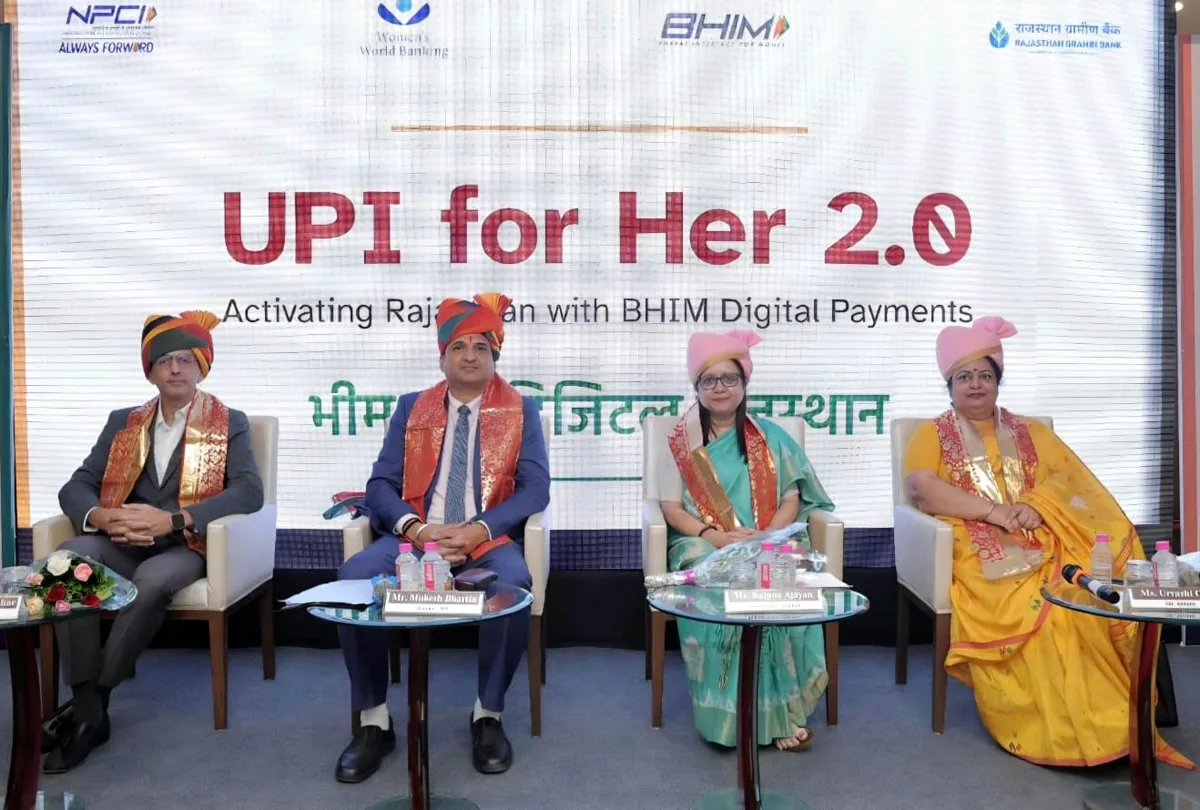

UPI for Her 2.0 to Promote Digital Payments Among Rural Women
The initiative is part of the ‘UPI for Her 2.0’ programme. Research indicates that around 20 crore women in India have access to a smartphone and a bank account. With appropriate guidance, greater confidence and services designed around their needs, these women can use UPI for their financial transactions.
India has developed one of the world’s most successful digital payment systems through the Unified Payments Interface (UPI). It has made sending and receiving money and managing financial transactions easier. However, women in rural and underserved communities continue to face barriers to regular digital payment adoption.
These challenges include a lack of trust in digital transactions, limited confidence, insufficient awareness and difficulties in using digital payment services.
The partnership will work to address these barriers through trusted local banking relationships, women-focused solutions, community participation and direct guidance. The aim is not only to encourage women to start using digital payments but also to help them make these transactions a regular part of their lives.
NPCI BHIM CEO Highlights Women’s Role in Digital Economy
Lalitha Nataraj, Managing Director and Chief Executive Officer of NPCI BHIM, said women must not only be part of India’s digital payment revolution but should also play an important role in driving it forward, particularly women from low-income households.
She said digital payments can help women manage their money more effectively, access various services and build a more secure future for themselves and their families.
More than 100 women in rural Rajasthan have already started using the BHIM Payments app for everyday transactions and have experienced its benefits, she said. Through the partnership with Rajasthan Gramin Bank and Women’s World Banking, NPCI BHIM aims to extend these opportunities to more women across the state.
Nataraj said the initiative reflects the organisation’s commitment to building an inclusive digital economy in which every woman has an opportunity to progress.
Rajasthan Gramin Bank to Use Its Rural Network and Community Trust
Rajasthan Gramin Bank Chairman Mukesh Bharati said regional rural banks share a unique relationship of trust with rural communities.
He said combining this trust with the digital payment facilities offered by BHIM could help women begin using digital financial services and extend the benefits of India’s digital infrastructure to villages and households.
The partnership will use Rajasthan Gramin Bank’s established community relationships to encourage women to adopt digital payments with greater confidence.
Women’s World Banking Stresses Trust and Financial Inclusion
Kalpana Ajayan, Head of South Asia at Women’s World Banking, said trust plays a crucial role in determining whether women adopt digital financial services.
For many women, she said, digital payments are more than a way to transfer money. They can represent the first step towards becoming part of the formal financial system and can help women manage unexpected challenges caused by weather-related changes or health issues.
Regular use of digital payments can also open access to other financial services, including savings, credit, insurance and financial security products.
Ajayan said the partnership would combine the trust Rajasthan Gramin Bank has built over decades with solutions tailored to women’s needs and community support. This approach could help thousands of women participate more actively in Rajasthan’s growing digital economy.
Training and Local Support to Encourage Regular UPI Use
The initiative focuses on more than simply helping women download or start using the BHIM Payments app. It will also seek to build their confidence, encourage regular transactions and provide local support so they can continue using digital payments.
The launch programme included discussions on making digital services accessible to more people and demonstrations of how to use the BHIM Payments app.
Women who already use the app shared their experiences, explaining how digital payments had helped them manage household expenses, receive money, save time and participate more actively in local business activities.
Initiative Aims to Expand Women’s Participation in Digital India
As digital services continue to expand in Rajasthan, the partnership aims to demonstrate how trusted local institutions, digital public infrastructure and services designed around women’s needs can work together to increase digital payment adoption.
The experience gained through the initiative could help identify ways to expand digital payments among rural women on a larger scale. It may also inform future policies and programmes in Rajasthan and support broader efforts to increase women’s participation in India’s digital economy.
By combining banking support, practical guidance and community engagement, the initiative seeks to make digital payments more accessible to women who have so far remained outside the mainstream formal financial system.
FAQs
1. Which organisations have partnered to promote digital payments in Rajasthan?
Rajasthan Gramin Bank, NPCI BHIM and Women’s World Banking have partnered to promote digital payment adoption among rural women.
2. What is the target of the digital payment initiative?
The partnership aims to reach 3 lakh women in rural Rajasthan through the BHIM Payments app over one year.
3. What is the UPI for Her 2.0 programme?
It is an initiative focused on encouraging more women to adopt UPI and use digital payments for their everyday financial transactions.
4. Where was the partnership launched?
The initiative was launched in Udaipur, Rajasthan, with representatives from the participating organisations, government departments and other institutions.
5. How can the BHIM Payments app help rural women?
It can help women send and receive money, manage household expenses, save time and conduct everyday financial transactions digitally.
6. What challenges prevent rural women from using digital payments regularly?
Key challenges include limited awareness, lack of confidence, concerns about trust and difficulties in using digital payment services.
7. Who is the chairman of Rajasthan Gramin Bank?
Mukesh Bharati is the chairman of Rajasthan Gramin Bank, according to the information provided.
8. How can digital payments improve women’s financial inclusion?
Regular use of digital payments can help women participate in the formal financial system and potentially improve access to savings, credit, insurance and other financial services.

Bhupendra Singh Chundawat is a seasoned technology journalist with over 22 years of experience in the media industry. He specializes in covering the global technology landscape, with a deep focus on manufacturing trends and the geopolitical impact on tech companies. Currently serving as the Editor at Udaipur Kiran, his insights are shaped by decades of hands-on reporting and editorial leadership in the fast-evolving world of technology.