Rajasthan DGP Reviews Law and Order, Directs Police to Use Body Cameras During Checkpoints
Jaipur, October 14, 2026: Rajasthan Director General of Police Rajiv Kumar Sharma has directed police officers to remain alert to maintain law and order across the state and ensure prompt and effective action in every situation.
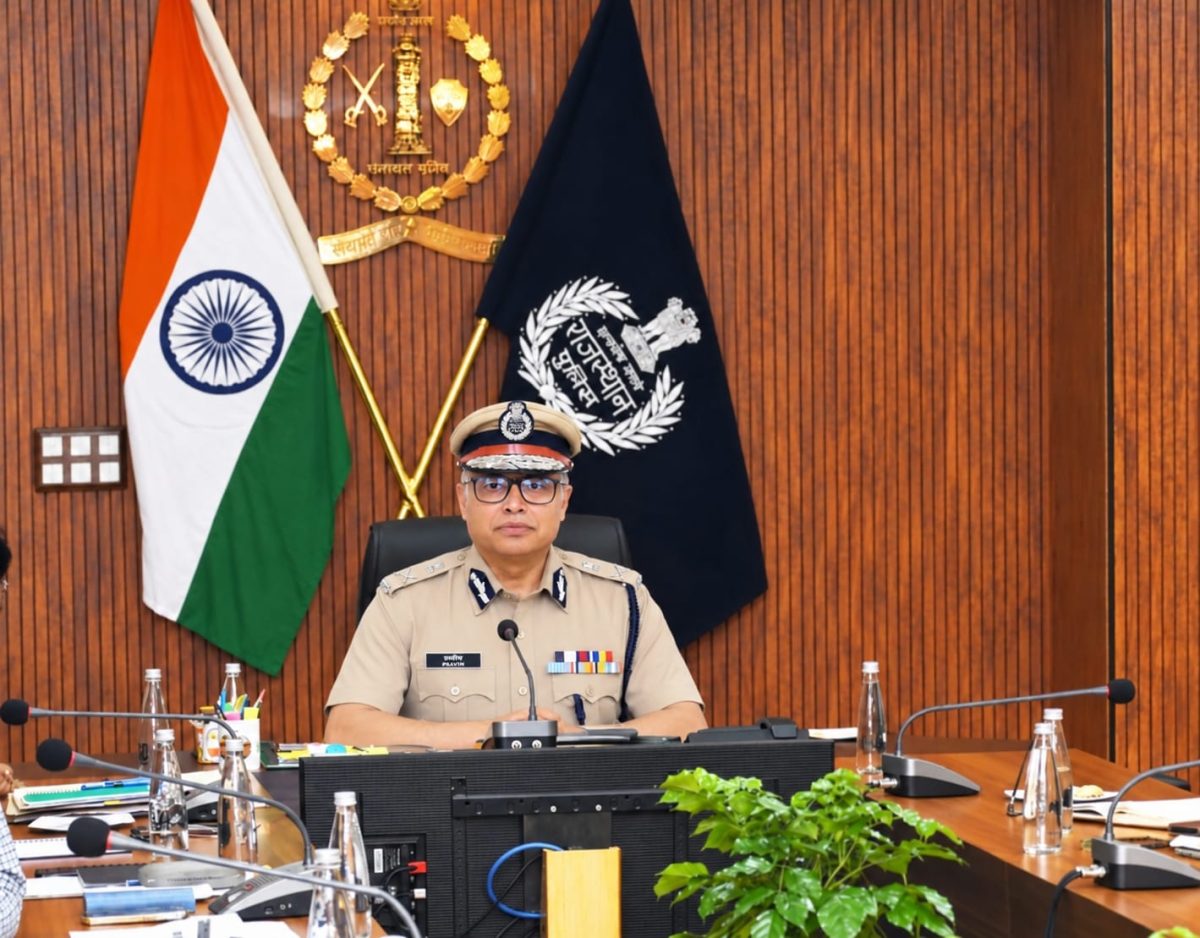

During a crime and law-and-order review meeting held at Police Headquarters on Wednesday, the DGP reviewed pending cases, crime prevention, monitoring of sensitive incidents, preparations for the upcoming Panchayati Raj elections and the conduct of police personnel.
The meeting was conducted through video conferencing, with Inspector General of Police from all ranges and Superintendents of Police from police districts participating. Additional Directors General of Police and other senior officers were present at Police Headquarters.
Special Monitoring of Disputed Cases
DGP Rajiv Kumar Sharma directed officers to identify disputed cases that could potentially affect law and order and place them under priority monitoring. He instructed police stations, circle officers and district-level officers to review such cases regularly.
He also called for coordination with departments such as Revenue and Forest to take timely action. Officers were asked to use counselling, preventive action and other legal measures to resolve disputes before they escalate.
Police Personnel Told to Behave Sensitively with the Public
The DGP took a serious view of cases involving police personnel allegedly engaged in criminal activities. He directed officers to identify such personnel, monitor them and take action according to the rules.
He stressed that police personnel posted at police stations and in the field must behave sensitively, courteously and cooperatively with the public. Officers were also instructed to hear public complaints regularly and ensure that people’s problems are resolved within a fixed timeframe.
Prompt Action in Sensitive Incidents
Sharma directed senior officers to ensure effective supervision of sensitive and serious cases reported in recent days. Information about such incidents must be communicated to senior officials immediately, followed by prompt and appropriate action based on the facts.
He also stressed the need to share factual information with the media and through social media in a timely manner.
The DGP made it clear that negligence in law-and-order matters would not be tolerated. Those found responsible would face action under the applicable rules, with accountability fixed at the appropriate level.
Accountability for Pending Cases
The DGP directed police officers to ensure the timely disposal of pending cases at police stations.
Under the review mechanism outlined at the meeting, the concerned Superintendents of Police will review cases pending for more than one year, while Range Inspectors General will review cases pending for more than three years.
He also called for an effective action plan to dispose of old cases, pending charge sheets and final reports. Regular reviews must identify and remove obstacles delaying the disposal of cases.
Districts Told to Analyse Crime Trends
Districts reporting an increase of more than 5% in cases registered under the Bharatiya Nyaya Sanhita (BNS) and the Indian Penal Code (IPC) were directed to analyse crime trends and prepare effective action plans.
Districts registering comparatively fewer cases under the Narcotic Drugs and Psychotropic Substances (NDPS) Act were asked to strengthen enforcement against narcotics-related offences.
The DGP also directed districts reporting a higher increase in cases related to crimes against women to analyse the reasons and prepare concrete action plans. Districts showing low enforcement under local and special laws and the NDPS Act were told to improve their performance.
Security Plan for Panchayati Raj Elections and Festivals
With Panchayati Raj elections and upcoming festivals approaching, the DGP directed all districts to prepare deployment plans for the required police force and maintain special vigilance in sensitive areas.
Officers were instructed to identify anti-social elements and take preventive action against them. Regular patrolling and effective checkpoints were also emphasised.
Sharma directed officials to ensure the field presence of Kalika Patrolling Units during festivals. He called for continuous monitoring of law and order, with public safety, police accountability and public trust remaining the top priorities.
Body Cameras at Checkpoints, Strict Action Against Traffic Violations
The DGP instructed police personnel to use body cameras during checkpoint operations.
He also directed officers to take effective action against drunk driving, suspicious vehicles and overspeeding. Police response time must be kept to a minimum after receiving information about a crime, with prompt action at the spot.
Preventive Policing and Cybercrime Under Focus
Sharma called for stronger preventive and proactive policing to curb crime. He directed officers to make effective use of legal provisions, including the Rajasthan Prevention of Dangerous Activities law (RajPASA), relevant provisions of the BNS, the Goonda Act and preventive provisions related to the NDPS Act.
In cybercrime cases, police were instructed to register Zero FIRs to provide relief to more victims and ensure prompt action on complaints.
The DGP urged all officers to maintain continuous vigilance in their respective areas and give the highest priority to public safety, police accountability and maintaining public confidence.
FAQs
1. Who chaired the Rajasthan law-and-order review meeting?
Rajasthan Director General of Police Rajiv Kumar Sharma chaired the meeting at Police Headquarters in Jaipur on October 14, 2026.
2. What did the DGP direct police personnel to use at checkpoints?
He directed police personnel to use body cameras during checkpoint operations.
3. Who will review cases pending for more than one year?
The concerned Superintendents of Police will review cases pending for more than one year.
4. Who will review cases pending for more than three years?
The concerned Range Inspectors General of Police will review cases pending for more than three years.
5. What instructions were issued regarding cybercrime complaints?
Police officers were directed to register Zero FIRs in cybercrime cases to help more victims and ensure prompt action on complaints.
6. What action was directed against drunk driving and overspeeding?
The DGP instructed police officers to take effective action against drunk driving, suspicious vehicles and overspeeding.
7. What preparations were ordered for the Panchayati Raj elections?
Districts were directed to prepare police deployment plans, increase patrolling, monitor sensitive areas and take preventive action against anti-social elements.
8. What did the DGP say about police conduct towards the public?
He said police personnel must behave sensitively, courteously and cooperatively and ensure timely resolution of public complaints.

Bhupendra Singh Chundawat is a seasoned technology journalist with over 22 years of experience in the media industry. He specializes in covering the global technology landscape, with a deep focus on manufacturing trends and the geopolitical impact on tech companies. Currently serving as the Editor at Udaipur Kiran, his insights are shaped by decades of hands-on reporting and editorial leadership in the fast-evolving world of technology.