

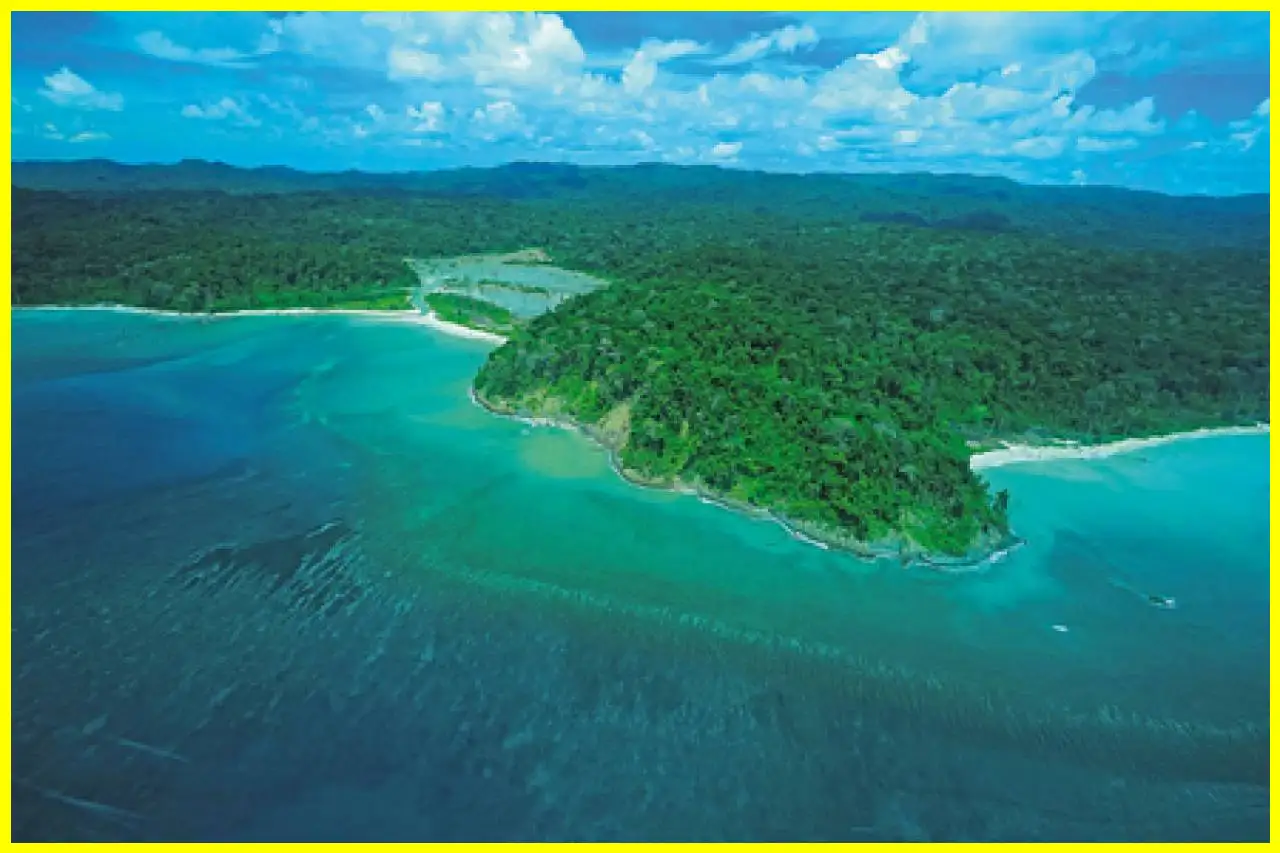

New Delhi, May 1: The Great Nicobar Project is set to bolster India’s national security, maritime presence, and strategic reach in the Indo-Pacific region, leveraging the strategic position of Great Nicobar. This information was disclosed in a fact sheet released by the government.
The fact sheet states that the Great Nicobar Project is a strategic initiative aimed at enhancing India’s presence in the Andaman Sea and Southeast Asia. The project seeks to establish an ideal balance between port-based development and precise environmental protection measures, alongside the preservation of local indigenous communities. Through a unique amalgamation of strategic, economic, and environmental priorities, the project ensures that the development of Great Nicobar is not only inclusive and sustainable but also fully aligned with national interests.
According to the note, the project includes an International Container Transshipment Terminal, a greenfield international airport, townships, planned urban development, and a power plant.
The government has indicated that the Great Nicobar Project will be implemented in three distinct phases: Phase I (2025–35, 72.12 square kilometers), Phase II (2036–41, 45.27 square kilometers), and Phase III (2042–47, 48.71 square kilometers).
This project spans a total area of 166.10 square kilometers, comprising 35.35 square kilometers of revenue land and 130.75 square kilometers of forest land. This phased approach not only facilitates organized infrastructure development but also ensures that environmental protection measures and tribal welfare initiatives are effectively integrated at each stage.
The strategic and economic significance of this project is underscored by the need to establish Great Nicobar as a vital hub in the Indian Ocean Region (IOR). Emphasis has been placed on the optimal use of land and full consideration of environmental factors to ensure substantial benefits for the region in the future. Additionally, all environmental regulations (EIA) and legal approvals are being strictly adhered to in this endeavor.
The fact sheet highlights that environmental balance is given the utmost priority under the Great Nicobar Project. Only 1.82 percent of the total forest area of the Andaman and Nicobar Islands will be utilized for this ambitious project. The estimated number of trees in the identified area is 1.865 million; however, the government aims to minimize this, with a maximum of 711,000 trees expected to be cut down, spread over 49.86 square kilometers of forest area.
Furthermore, the fact sheet states that this tree cutting will occur in a phased manner, aligned with the sequential development of various projects. To ensure environmental balance, an area of 65.99 square kilometers will be preserved as a ‘green zone,’ where no trees will be cut. Given that over 75 percent of the islands already have forest cover, compensatory afforestation efforts are being undertaken in Haryana. For the first phase involving 48.65 square kilometers of forest diversion, 97.30 square kilometers of land has been earmarked for afforestation in Haryana. Reaffirming its unwavering commitment to environmental protection, the Andaman and Nicobar Islands have already planted 2.4 million saplings under the ‘One Tree in the Name of Mother’ campaign.
–

My name is Ganpat Singh Choughan. I am an experienced content writer with 8 years of expertise in the field. Currently, I contribute to Udaipur Kiran & Daily Kiran, creating engaging and informative content across a variety of categories including technology, health, travel, education, and automobiles. My goal is to deliver accurate, insightful, and captivating information through my words to help readers stay informed and empowered.