

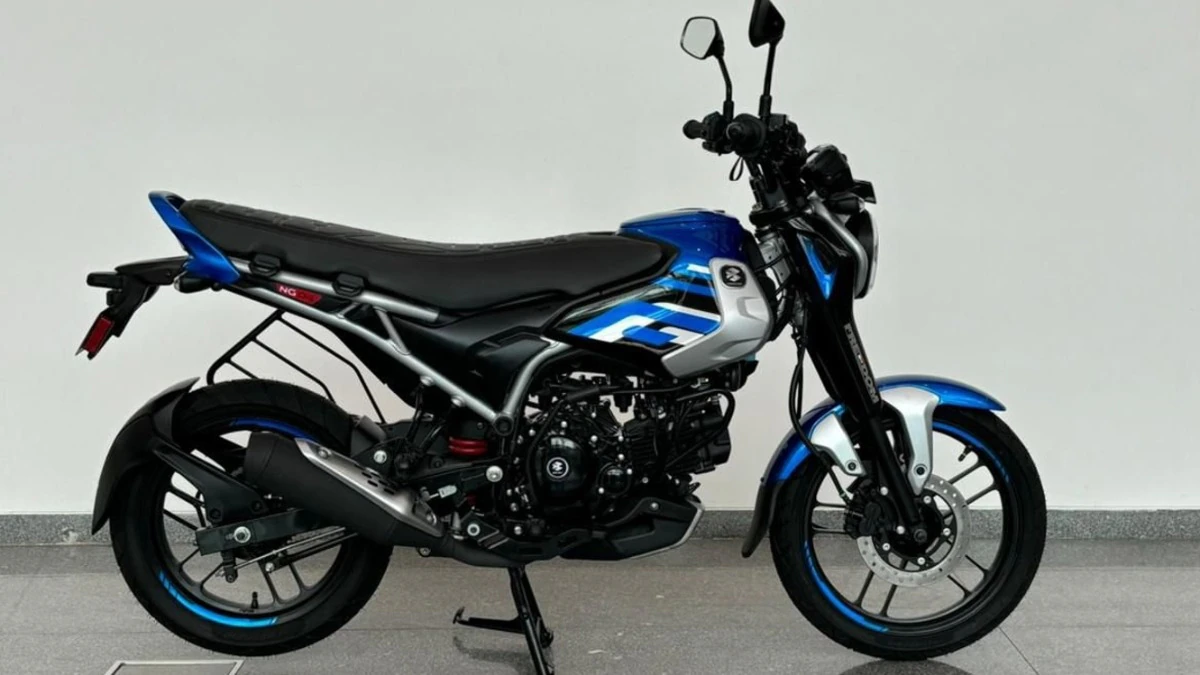

Bajaj Auto has introduced the Freedom 125, the world’s first compressed natural gas (CNG) motorcycle. This 125cc commuter bike runs on petrol and CNG and aims to significantly reduce running costs for this category of riders.
The Freedom 125 is priced between Rs 95,000 and Rs 1.1 lakh (ex-showroom). Bookings for the Freedom 125 started today. The initial launch will be in Gujarat and Maharashtra with exports to markets such as Egypt, Tanzania, Peru, Indonesia and Bangladesh.
Freedom 125 is designed for price-conscious consumers and offers 50% lower fuel costs than its competitors. This motorcycle is equipped with a small gasoline tank and a CNG bottle, and the rider can switch between fuel types using a switch mounted on the steering wheel.
The CNG cylinder, located below the gas tank, is seamlessly integrated into the bike’s design, subtly differentiating it from other models. The motorcycle has separate filler ports for CNG and gasoline to meet different storage needs. The gasoline tank capacity is 2 liters and the CNG tank capacity is 2 kg.
Bajaj claims that the Freedom 125 can travel up to 213 km on CNG alone and an additional 117 km on one tank of fuel, giving a total range of 330 km. Fuel efficiency is 102 km/kg for CNG and 64 km/l for petrol.
The Freedom 125 is powered by a 125cc air-cooled, fuel-injected, single-cylinder engine that produces 9.4 bhp of power and 9.7 Nm of torque. This bike features a front telescopic fork and a single rear shock absorber. Braking takes place via a front disc and a rear drum brake. It rides on 17-inch aluminum rims.
In terms of design, the Freedom 125 adopts a modern retro aesthetic with rounded headlights with daytime running lights. The bike’s design includes a flat seat, wide handlebars and a center stand for a neutral riding position. The semi-digital instrument cluster displays various displays, e.g. B. a low CNG warning and an idle indicator.

Bhupendra Singh Chundawat is a seasoned technology journalist with over 22 years of experience in the media industry. He specializes in covering the global technology landscape, with a deep focus on manufacturing trends and the geopolitical impact on tech companies. Currently serving as the Editor at Udaipur Kiran, his insights are shaped by decades of hands-on reporting and editorial leadership in the fast-evolving world of technology.