

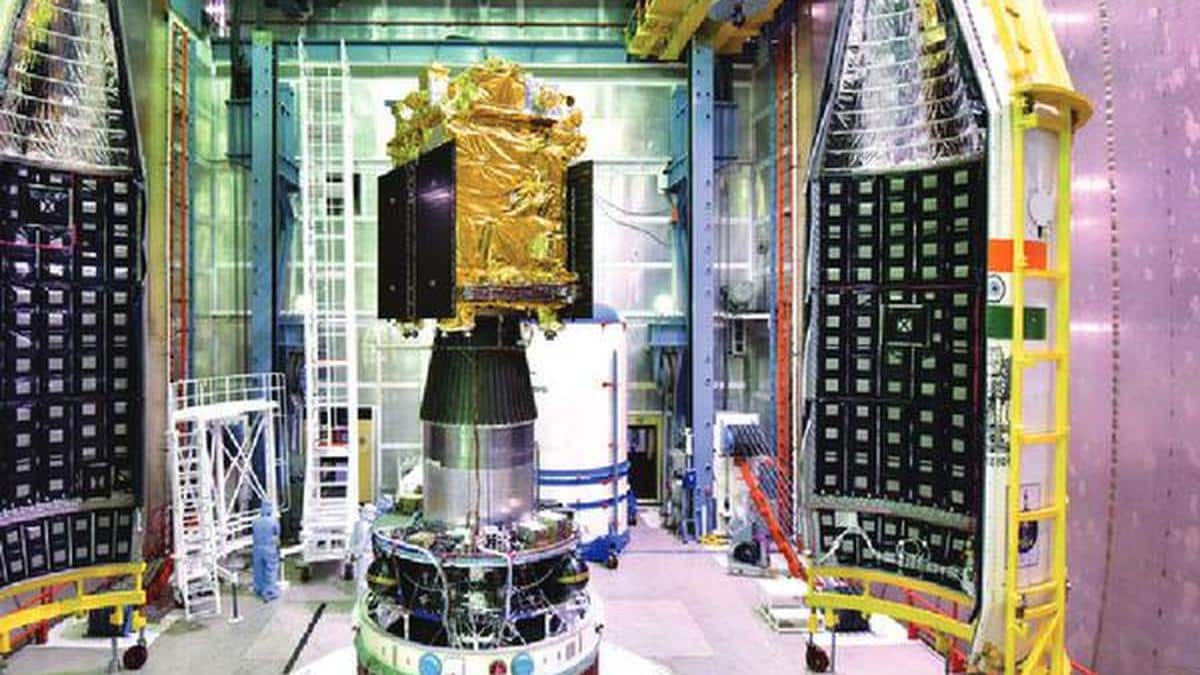

According to Indian scientists, they obtained the very first significant observations from an instrument called Visible Emission Line Coronagraph aboard India’s Aditya-L1 mission. The solar mission was launched last September 2023 by the Indian Space Research Organisation and is placed at the Lagrange Point 1, marking a dedicated solar observation project that will be the first of its kind for India. This landmark discovery opens the way to unlock further knowledge and understanding of the Sun’s magnetic processes and associated space weather.
Details of the First Observed Solar Event
Physicists at Bengaluru-based Indian Institute of Astrophysics (IIA) announced that with the help of VELC instrument they had been able to track exactly when the CME actually started, which occurred on July 16. That is another big achievement by this mission. While referring to this science result on ISRO’s solar mission, Prof R Ramesh, a senior professor from IIA, and a principal investigator of the payload VELC, called it the first science return. According to several other reports, while the flare was being shaped near the sun’s surface, the Sun’s corona was noted quite intimately because it may even help simulate solar eruptions.
Fresh Approach to Observation of Solars
The closest view, with the same level of detail, now possible in orbit is over the surface of the Sun itself because VELC is currently the only operating coronagraph that can study the corona. With this design, development, and execution was only done with ISRO support for the team here at IIA. Since most instruments view CMEs when they have long gotten away from the Sun, it will be one of the few instruments on orbit allowing scientists to witness such eruptions in their nascent states. According to Dr V Muthupriyal, the astrophysicist from IIA, spectral observations provided by VELC open up new venues for studying CME dynamics unprecedented in detail.
Effect of Solar Cycle and Future Research Trends
As the Sun is very close to a solar maximum position in its 11-year cyclic activity, the rate of CMEs will most likely shoot up manifold. The only way to understand the solar events, which will further affect satellite communications and other space-dependent technologies, is through the continuous monitoring of such solar events. As per Prof. Ramesh, the data collected during this mission is very crucial for developing the predictive models of the future since the current phase of Solar Cycle 25 intensifies. Aditya-L1 will collect priceless data to enable scientists in predicting the solar activities that may pose risks in space weather.

Bhupendra Singh Chundawat is a seasoned technology journalist with over 22 years of experience in the media industry. He specializes in covering the global technology landscape, with a deep focus on manufacturing trends and the geopolitical impact on tech companies. Currently serving as the Editor at Udaipur Kiran, his insights are shaped by decades of hands-on reporting and editorial leadership in the fast-evolving world of technology.