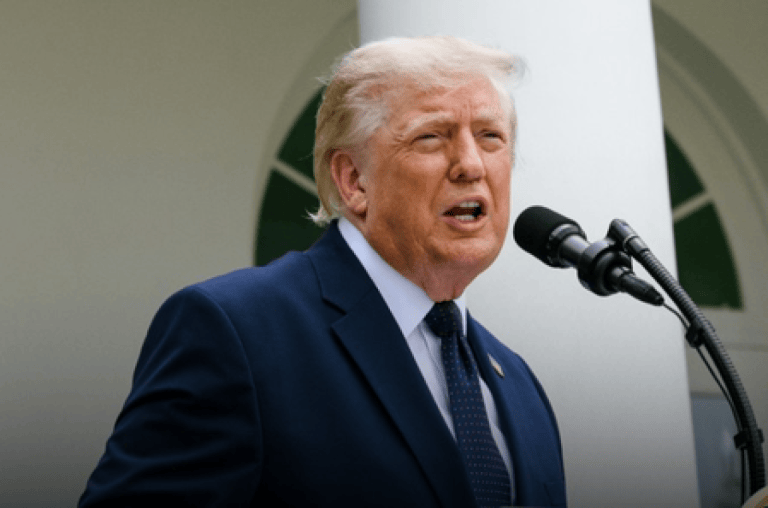

Wall Street Plunges Amid Escalating U.S.-China Tariff War
April 5, 2025 – New York, NY — In a dramatic turn reminiscent of the COVID-era market crash, U.S. stock markets took a nosedive on Friday after China announced retaliatory tariffs on all American imports. The move, seen as a direct response to President Donald Trump’s earlier tariff hike, sparked panic among investors and revived fears of a prolonged global trade war.


U.S. Indices See Worst Drop Since Pandemic Era
The Dow Jones Industrial Average plummeted over 4%, falling to 38,873 points. The S&P 500 lost 4.75%, trading at 5,139.96, while the Nasdaq Composite dropped 4.96% to 15,729.92. Market analysts described the downturn as the worst single-day decline since the COVID-19 pandemic shook financial markets in early 2020.
Major tech stocks bore the brunt of the selloff. Nvidia shares plunged 7.2% to $94.46, fueled by concerns over its manufacturing exposure in China. Apple shares fell 3.8%, closing at $193.67. Other major S&P 500 companies including APA Corp, EQT Corp, GE Healthcare, and Freeport-McMoRan also registered sharp losses.
China Hits Back with 34% Tariffs and Rare Earth Restrictions
On April 4, China unveiled plans to impose a 34% additional tariff on all U.S. imports, effective April 10. The move follows Trump’s April 2 announcement of higher tariffs on Chinese goods. In a social media post, Trump reacted, “China made a mistake. They are panicking. This is unacceptable!”
Beijing also announced intentions to tighten export controls on key rare earth minerals such as samarium, gadolinium, terbium, dysprosium, lutetium, scandium, and yttrium—materials essential for high-tech manufacturing, including semiconductors and defense equipment.
Trump Pushes Fed to Cut Rates, Urges Investment in U.S.
In response to the market turmoil, President Trump urged Federal Reserve Chairman Jerome Powell to lower benchmark interest rates, calling current economic conditions “perfect” for a rate cut. “Energy prices are down, inflation is down, and jobs are up—cut the rates and stop playing politics,” Trump posted on social media.
According to an AP report, the U.S. added 228,000 jobs in March 2025, though unemployment ticked up slightly to 4.2%. Trump pointed to rising employment and falling prices—claiming egg prices had dropped 69%—as justification for monetary easing.
Tariff Diplomacy and Economic Optimism
Amid the tariff standoff, Trump shared that Vietnam’s Communist Party General Secretary To Lam has signaled willingness to eliminate tariffs on U.S. products as part of a potential trade agreement. “I thanked him on behalf of our country and look forward to meeting in the future,” Trump said.
Despite the market drop, Trump assured investors that it’s still the best time to invest in America. “For those investing in the United States—my policies won’t change. This is the time to become richer than ever before!” he stated confidently.

Bhupendra Singh Chundawat is a seasoned technology journalist with over 22 years of experience in the media industry. He specializes in covering the global technology landscape, with a deep focus on manufacturing trends and the geopolitical impact on tech companies. Currently serving as the Editor at Udaipur Kiran, his insights are shaped by decades of hands-on reporting and editorial leadership in the fast-evolving world of technology.