

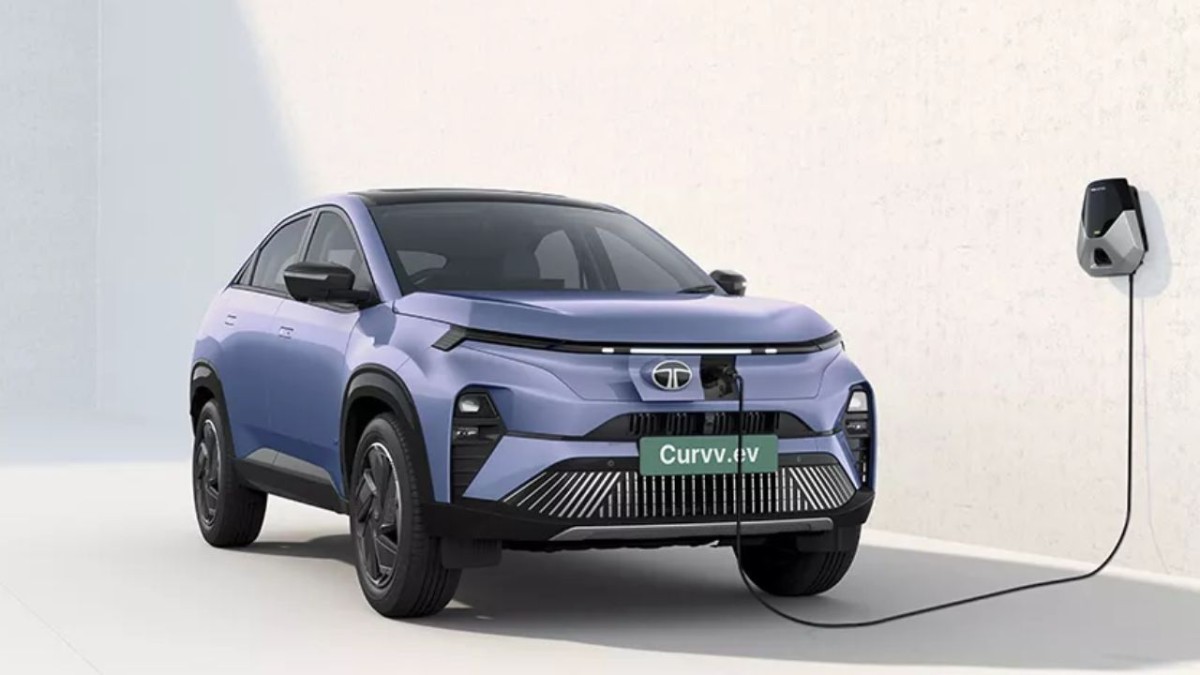

The Indian EV market is heating up and now Tata Motors has launched a new competitor to the Curved EV. Designed as a stylish and practical electric SUV coupe, the Tata Curvv EV joins the company’s growing line-up of electric vehicles that includes the Tiago.ev, Tigor.ev, Punch.ev and Nexon.ev . Based on the company’s state-of-the-art Acti.ev platform, the electric vehicle is a combination of technology and efficiency.
The Mahindra XUV400 is a direct competitor to the Tata Curve EV as it is an established product in the electric SUV segment. All of these products make a good case for facilitating the transition to electric mobility for future car owners. But which one is the best? Let’s compare these two electric SUVs.
In the following sections, we compare the Tata Curvv EV with the Mahindra XUV400 to highlight key parameters such as range, performance, features and pricing to give you an idea of which electric SUV suits your needs. .
Tata Curvv EV vs Mahindra XUV400: Batteries and Range
The Tata Curvv EV is based on the Acti.ev platform. Two battery packs are available: a 45 kWh unit with a range of 502 km and a larger 55 kWh unit with a range of 585 km. The actual value should be 350 km or 425 km.
The Tata Curvv EV is powered by a 165bhp electric motor that enables the coupe SUV to accelerate from 0 to 100km/h in 8.6 seconds and reach a top speed of 160km/h. The Curvv EV also offers fast charging and can cover a range of 150 km in about 15 minutes. This is in addition to vehicle-to-load (V2L) and vehicle-to-vehicle V2V capabilities.
The Mahindra XUV400 uses an electric motor that produces 150 horsepower and 310 Nm of torque. Acceleration from 0 to 100 km/h is 8.3 seconds and the top speed is 150 km/h. Two battery options are available: a 34.5 kWh pack and a larger 39.4 kWh unit. The range of the MIDC is given as 375 km or 456 km. Charging options include 3.3 kW and 7.2 kW AC chargers, and DC fast charging is also supported.
It has very competitive performance and range figures, which are significantly better than the Tata Curvv EV. However, the Mahindra XUV400 could have an advantage with faster acceleration. This could be attractive for more performance-oriented customers.
Tata Curvv EV vs Mahindra XUV400: Features
Tata Curvv EV and Mahindra XUV400 come with different features and promise a great and comfortable ride. The interior of the Tata Curvv EV looks very modern with a dual-tone dashboard and ventilated front seats.
The technological touch is reinforced by a 12.3-inch floating infotainment system and a 10.25-inch digital driver display. Other features that enhance the car driving experience include a panoramic sunroof, air purifier and ambient lighting.
The cabin of the Mahindra XUV400 is also modern and functional. The standout features of this phone include a 10.25-inch touchscreen infotainment system, digital instrument cluster, and wireless charging. While not as luxurious as the Curvv and perhaps more competitively priced, the XUV400 looks pretty strong with its features.
Both SUVs also take safety aspects into account for their occupants. The Tata Curvv EV comes with a Level 2 ADAS suite and features a host of advanced driver assistance systems that really set it apart. The Mahindra XUV400 is certainly not particularly feature-rich in this regard, but it does have more basic safety features such as some airbags and electronic stability control.
Tata Curvv EV vs Mahindra XUV400: Price
Currently, the price of the Tata Curvv EV starts at Rs 17.49 lakh and goes up to Rs 21.99 lakh (ex-showroom). A total of five variants are offered: Creative, Accomplished, Accomplished+ S, Empowered+ and the top variant Empowered+ A.
However, the Mahindra XUV400 is a little higher on the price list. The base EC trim is priced at Rs 15.49 lakh, while the top-of-the-line ELX+ is priced at Rs 20.99 lakh (ex-showroom). Mahindra offers two main trims – EC and EL, each with several sub-variants.

Bhupendra Singh Chundawat is a seasoned technology journalist with over 22 years of experience in the media industry. He specializes in covering the global technology landscape, with a deep focus on manufacturing trends and the geopolitical impact on tech companies. Currently serving as the Editor at Udaipur Kiran, his insights are shaped by decades of hands-on reporting and editorial leadership in the fast-evolving world of technology.