

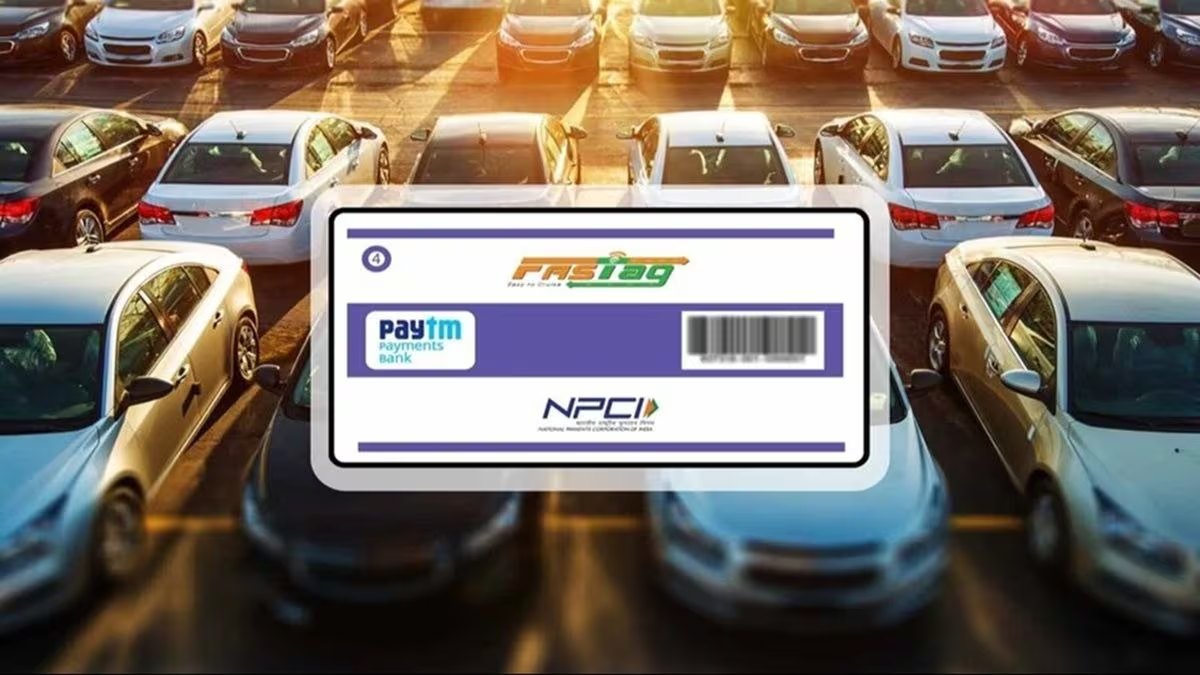

The National Highways Authority of India (NHAI) has announced a significant change for car, jeep, and van owners regarding FASTag issuance. Starting from 1 February 2026, the Know Your Vehicle (KYV) verification process will be discontinued for new FASTags issued to these vehicles. This move aims to reduce delays, follow-ups, and complaints related to FASTag activation and use.
Previously, KYV was a mandatory verification step after FASTag issuance to confirm the vehicle details. However, many users faced difficulties despite having valid documents, including repeated uploads of documents, photos, and multiple verifications. To simplify this, NHAI has shifted the responsibility of all vehicle verification to banks, who will complete these checks before activating the FASTag.
KYV was introduced to ensure that the FASTag was correctly linked to the vehicle’s registration number, preventing misuse or duplication. Under the new system, banks will verify vehicle data using the VAHAN database prior to issuing the tag. If the VAHAN data is unavailable, they will rely on the vehicle’s Registration Certificate (RC).
For existing FASTag holders, KYV will no longer be part of the routine process. KYV verification will only be required if a specific complaint arises, such as a loose tag, incorrect issuance, misuse, or wrong vehicle linkage. This change will speed up the FASTag process, allowing users to start using their tags immediately after purchase without additional document submissions.
This update means vehicle owners no longer need to repeatedly submit documents or follow up for verification. Only complaint-based KYV checks will remain, ensuring faster and smoother toll payments for car owners across national highways.

Bhupendra Singh Chundawat is a seasoned technology journalist with over 22 years of experience in the media industry. He specializes in covering the global technology landscape, with a deep focus on manufacturing trends and the geopolitical impact on tech companies. Currently serving as the Editor at Udaipur Kiran, his insights are shaped by decades of hands-on reporting and editorial leadership in the fast-evolving world of technology.


