

Breakthrough study of blazar BL Lacertae confirms Compton scattering as likely source of X-ray radiation
IXPE Unlocks New Insights into Extreme Astrophysical Environments
NASA’s Imaging X-ray Polarimetry Explorer (IXPE) has provided groundbreaking evidence solving a long-standing mystery about how X-rays are produced in the powerful jets of supermassive black holes. In a recent study focused on the blazar BL Lacertae—a black hole whose jet points directly toward Earth—scientists found strong evidence pointing to Compton scattering as the dominant mechanism behind X-ray emissions.
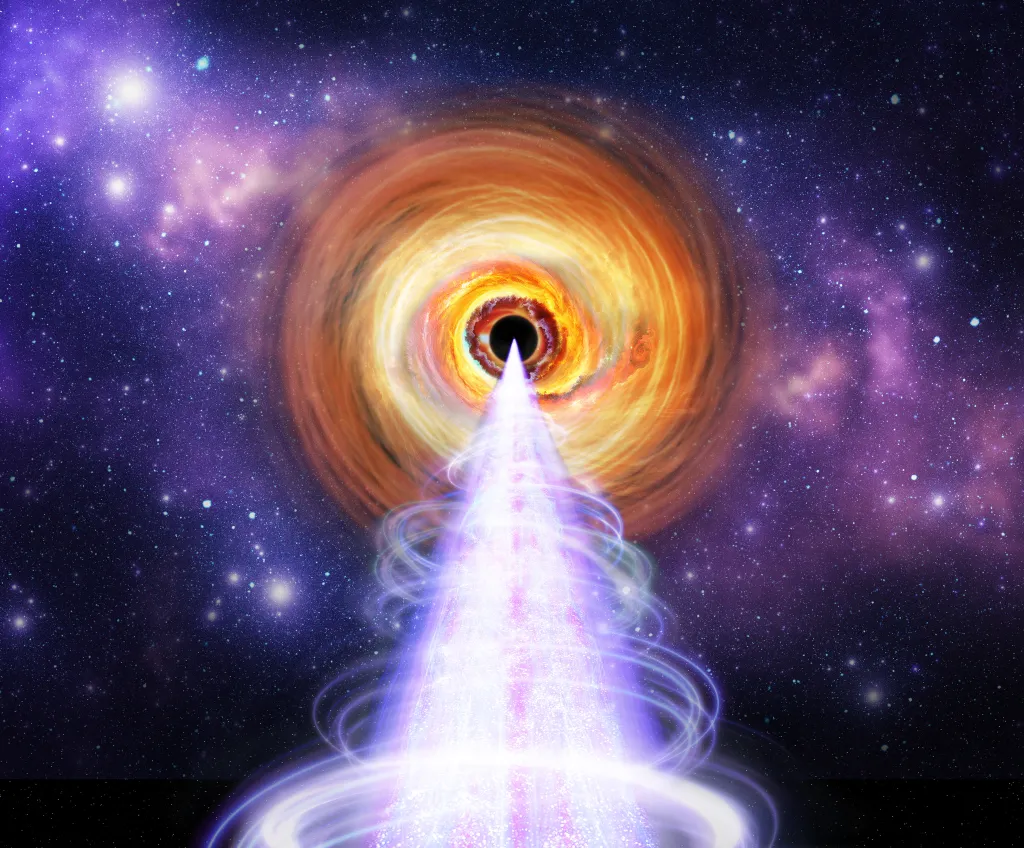

This discovery marks a significant leap in our understanding of high-energy astrophysical processes and validates the core mission of IXPE, launched in December 2021 to explore the polarization of cosmic X-rays.
X-ray Polarization Data Supports Compton Scattering Theory
The central question has long been whether the X-rays emitted from blazar jets arise from photon-photon interactions or from electrons scattering photons—a process known as Compton scattering. The distinction hinges on the polarization of the emitted X-rays: higher polarization would suggest synchrotron emission, while lower polarization points to Compton scattering.
In a critical observational window in November 2023, scientists recorded a peak optical polarization of 47.5% in BL Lacertae—the highest ever documented for any blazar. However, IXPE measured the X-ray polarization at only 7.6%. This stark contrast strongly supports the Compton scattering model and diminishes the likelihood of synchrotron-based X-ray generation.
“This was one of the biggest mysteries about supermassive black hole jets,” said Iván Agudo, lead author of the study and astronomer at the Instituto de Astrofísica de Andalucía – CSIC in Spain. “Thanks to IXPE, we finally have direct observational evidence supporting one model over the other.”
A New Era in Black Hole Jet Studies
The implications of IXPE’s discovery extend beyond a single observation. According to astrophysicist Enrico Costa, one of the original IXPE mission collaborators, this breakthrough represents one of the most significant achievements in the mission’s history.
Project scientist Steven Ehlert emphasized that this is only the beginning. “Blazars are variable by nature. Studying more of them under different conditions will refine our understanding of jet physics across the universe,” he said.
With IXPE’s unique capability to measure X-ray polarization—something no other active space telescope can do—astronomers are now better equipped than ever to explore the energetic engines at the hearts of galaxies.

Bhupendra Singh Chundawat is a seasoned technology journalist with over 22 years of experience in the media industry. He specializes in covering the global technology landscape, with a deep focus on manufacturing trends and the geopolitical impact on tech companies. Currently serving as the Editor at Udaipur Kiran, his insights are shaped by decades of hands-on reporting and editorial leadership in the fast-evolving world of technology.