

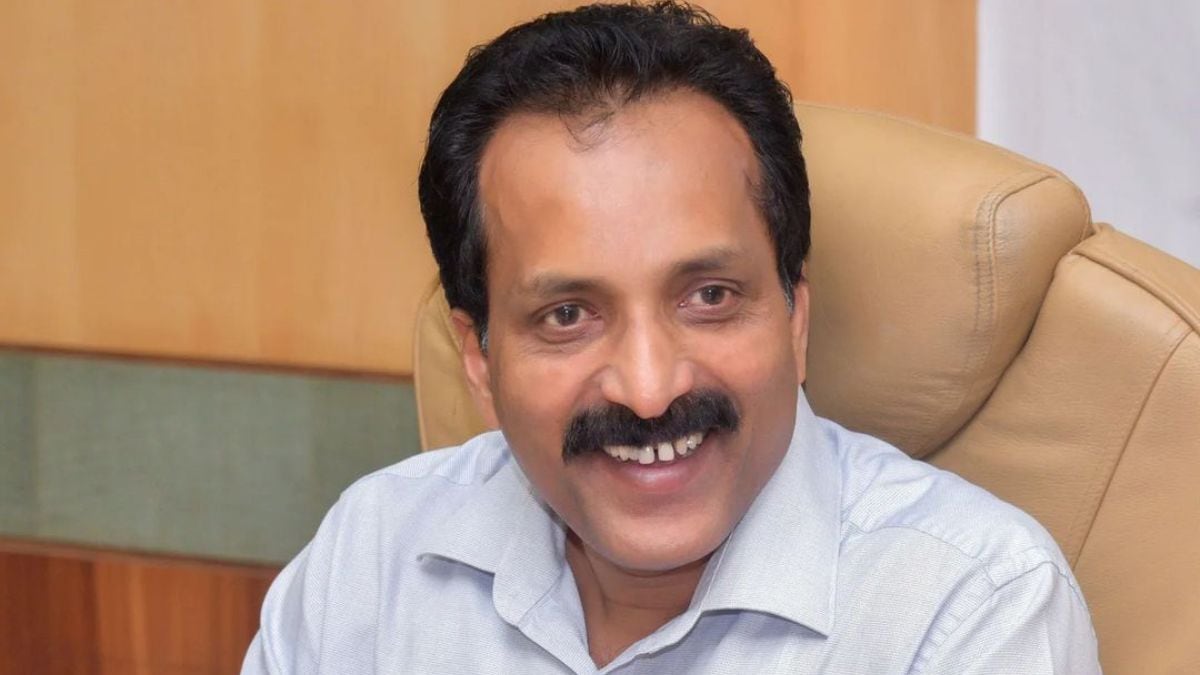

Delivering a significant update on India’s advancing space objectives, ISRO Chairman S Somanath outlined new timelines for the country’s ambitious space projects, including the Gaganyaan and Chandrayaan-4 missions. Speaking at the Sardar Patel Memorial Lecture hosted at Akashvani, Somanath announced that India’s inaugural manned space mission, Gaganyaan, is now slated for 2026. Additionally, the highly-anticipated Chandrayaan-4 mission, which aims to return samples from the lunar surface, is planned for a 2028 launch.
Joint Missions and Chandrayaan-5 Collaboration with Japan
Somanath also provided insights into India’s collaborative efforts in space exploration, specifically the joint mission with the Japan Aerospace Exploration Agency (JAXA). This mission, known as LUPEX (Lunar Polar Exploration) and now designated Chandrayaan-5, involves a critical partnership where India will supply the lander, and JAXA will provide a 350-kg rover capable of conducting comprehensive lunar research. The Chandrayaan-5 rover’s payload is a significant enhancement over Chandrayaan-3’s rover, enabling an extended scientific scope on the Moon’s surface.
Expanding India’s Presence in the Global Space Economy
Addressing the need for greater self-reliance, Somanath highlighted ISRO’s strides in indigenising space technology. With an aim to increase India’s share in the global space economy from its current 2% to 10% over the next decade, Somanath underscored that this goal necessitates collaborative effort across both emerging and established sectors. He urged Indian startups and established companies to actively contribute to the space ecosystem, noting that such participation is essential for achieving the targeted growth.
Private Sector Involvement and Innovation in Space
In a marked shift from past practice, Somanath spoke about ISRO’s recent initiatives to involve private companies in India’s space ventures. Private-sector engagement is now welcomed in areas traditionally dominated by government-led efforts, including rocket manufacturing and satellite production. According to Somanath, this partnership between ISRO and private entities signals a new era of innovation and growth, bringing fresh perspectives and expertise to India’s expanding space industry.
Building on India’s Astronomical Legacy
Reflecting on India’s longstanding contributions to astronomy, Somanath praised India’s rich legacy of observing and exploring the cosmos. He highlighted the achievements of recent scientific missions, such as Chandrayaan-3, which successfully completed a soft landing on the Moon, and Aditya-L1, India’s mission to study the Sun. Somanath noted that India’s space observatory, Astrosat, has led to extensive research, generating hundreds of research papers and supporting numerous doctoral studies, thus underscoring India’s role in advancing global scientific knowledge.
A Vision for the Future
With ISRO’s ambitious projects and growing collaboration with private players, India is poised to make substantial contributions to space science and the global space market. Somanath’s announcements signal ISRO’s commitment to innovation, indigenisation, and collaboration, aligning India’s space aspirations with the broader goal of establishing itself as a global leader in space exploration and scientific discovery.

Bhupendra Singh Chundawat is a seasoned technology journalist with over 22 years of experience in the media industry. He specializes in covering the global technology landscape, with a deep focus on manufacturing trends and the geopolitical impact on tech companies. Currently serving as the Editor at Udaipur Kiran, his insights are shaped by decades of hands-on reporting and editorial leadership in the fast-evolving world of technology.