

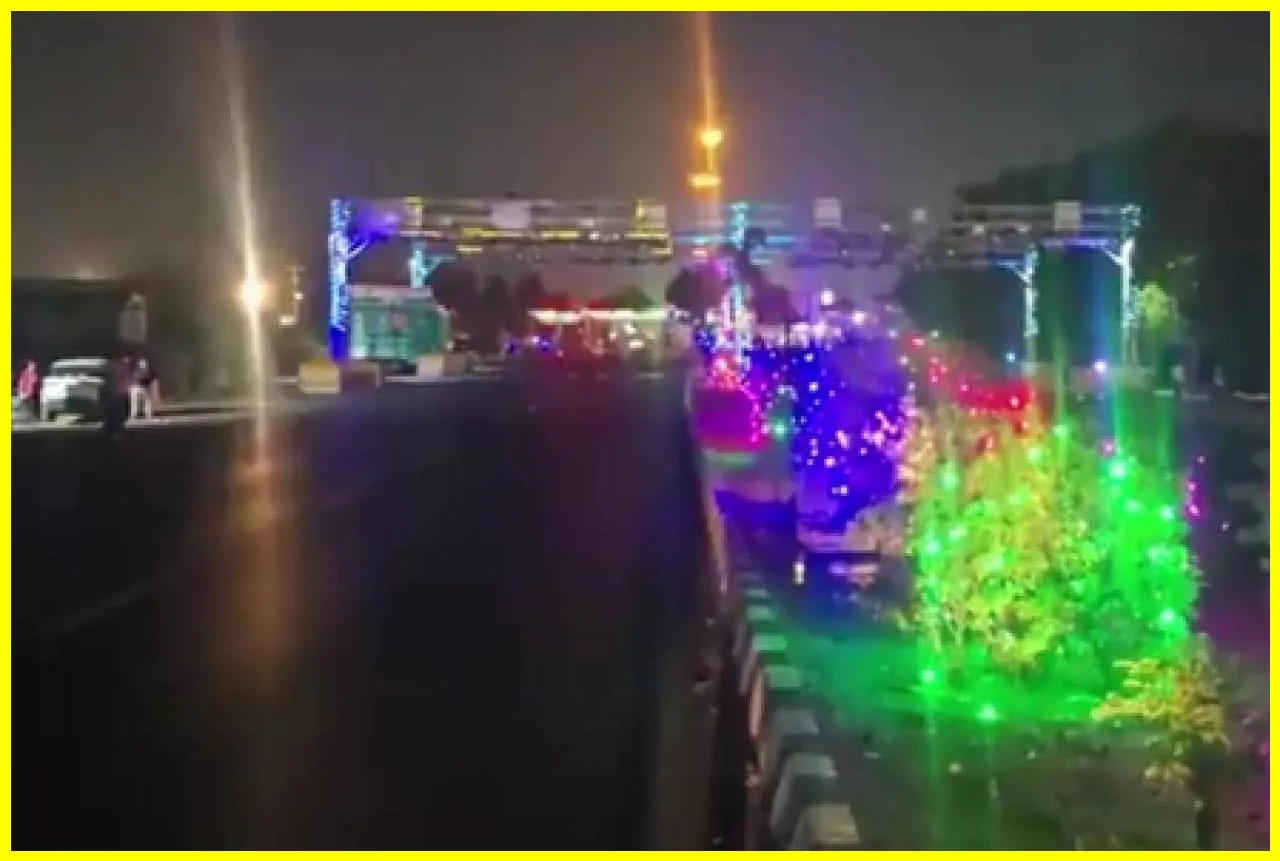

Surat, May 1: A significant step has been taken towards making road travel in India faster, easier, and more modern. The Choryasi Toll Plaza, located near Surat on the Mumbai-Delhi National Highway (NH48), has become the country’s first toll plaza where vehicles will not need to stop. This means no more braking at tolls or waiting in line.
Situated on the Kamrej-Choryasi section between Surat and Bharuch, this toll plaza has been fully operational after a two-month trial period. The unique feature of this toll plaza is that it is completely barrier-free, meaning there are no physical barriers or gates to stop vehicles.
The new system employs Multi-Lane Free Flow (MLFF) technology, implemented by the National Highways Authority of India (NHAI) as part of the Ministry of Road Transport and Highways’ modern tolling initiative. The government’s goal is to convert over 1,050 toll plazas across the country into similar smart and automated systems by the end of 2026.
In this system, toll collection is entirely automatic. As a vehicle passes through the toll plaza, high-resolution cameras mounted on overhead gantries scan its number plate. Additionally, RFID sensors linked to FASTag read the vehicle’s information. The toll amount is then directly deducted from the vehicle owner’s bank account, eliminating the need for cash transactions or stopping the vehicle.
If a vehicle does not have a FASTag, the system can still identify it through the number plate and send an e-notice to the registered number of the vehicle owner, detailing the payment information.
A.R. Chitranshi, Chief Operating Officer of NHAI, stated that this system is completely hassle-free. Vehicles can pass directly under the toll gantry without stopping, and the toll will be automatically deducted. This technology significantly speeds up vehicle movement, allowing cars to cross the toll at speeds of up to 80 kilometers per hour without stopping. This will greatly reduce long traffic jams and congestion on highways, especially on routes that previously experienced heavy crowds at tolls.
Not only will this system save time, but it is also expected to conserve fuel. It is estimated that around ₹15 billion in fuel could be saved annually, as vehicles will no longer need to stop and start. Additionally, increased transparency and efficiency in toll collection could generate an additional ₹60 billion in revenue.
Union Minister for Road Transport Nitin Gadkari stated that India is moving towards a completely barrier-free tolling system by the end of 2026. The Surat project is considered a pilot model in this direction, which will be implemented nationwide in the future.

Bhupendra Singh Chundawat is a seasoned technology journalist with over 22 years of experience in the media industry. He specializes in covering the global technology landscape, with a deep focus on manufacturing trends and the geopolitical impact on tech companies. Currently serving as the Editor at Udaipur Kiran, his insights are shaped by decades of hands-on reporting and editorial leadership in the fast-evolving world of technology.