

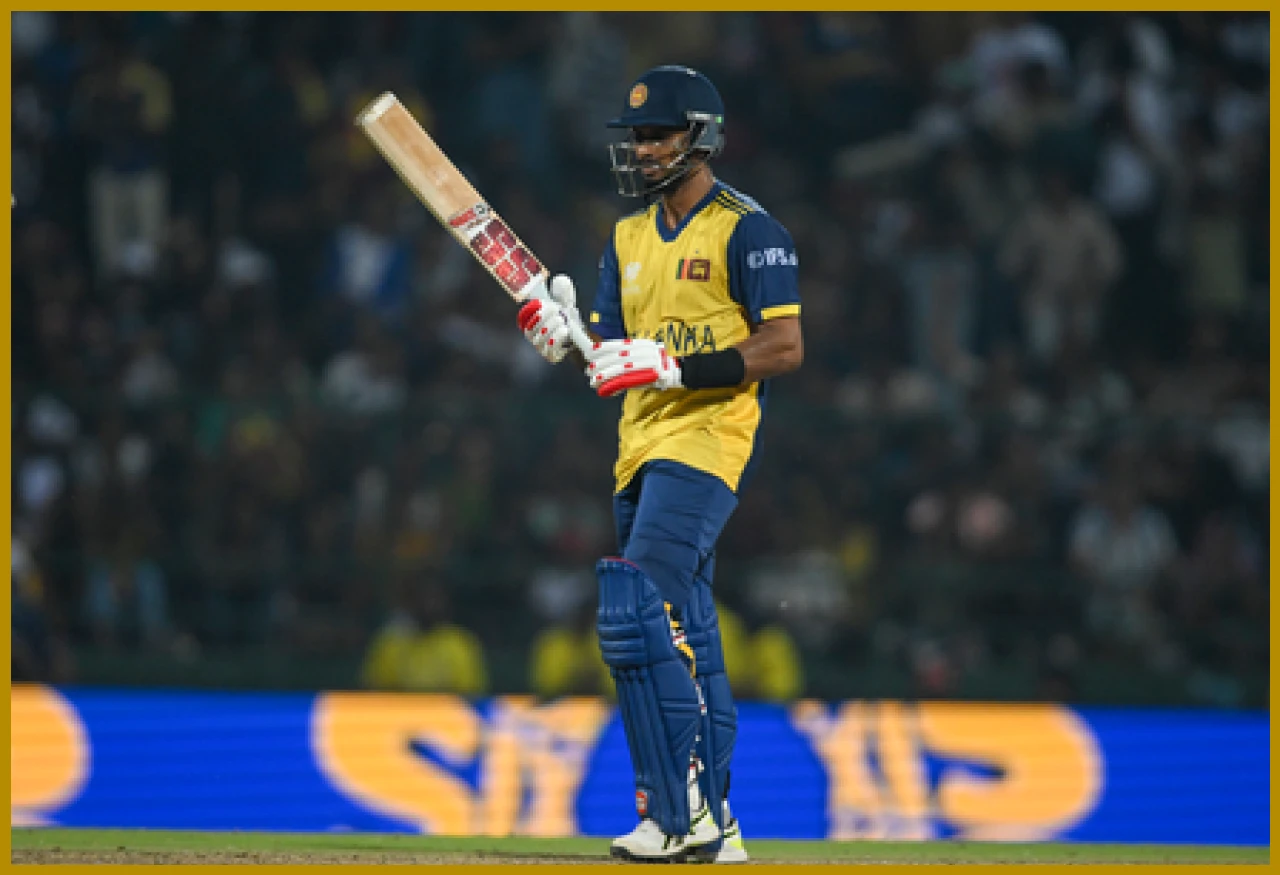

Pallekele, March 1: In a thrilling Super-8 match of the T20 World Cup 2026 held at the Pallekele International Cricket Stadium, Sri Lanka faced a narrow defeat against Pakistan by just 5 runs. However, captain Dasun Shanaka made headlines by becoming the player with the most sixes in T20 World Cup history as a captain.
Batting at number seven, Shanaka scored an unbeaten 76 runs off 31 balls, hitting 8 sixes and 2 fours. With this performance, he has now hit a total of 21 sixes in T20 World Cup matches as a captain, surpassing former Indian captain Rohit Sharma, who had 19 sixes. Chris Gayle and Jos Buttler are tied for third place with 17 sixes each, while Mahendra Singh Dhoni follows with 16 sixes.
Shanaka’s eight sixes in this match are the most by a Sri Lankan batsman in a T20 innings, surpassing Kusal Perera’s record of 7 sixes against India in Indore in 2017.
After losing the toss, the Pakistani team batted first, scoring 212 runs for the loss of 8 wickets. Fakhar Zaman and Sahibzada Farhan provided a solid start, adding 176 runs for the first wicket in just 15.5 overs. Zaman scored 84 runs off 42 balls, hitting 4 sixes and 9 fours, while Farhan remained unbeaten on 100 runs, with 5 sixes and 9 fours.
For Sri Lanka, Dilshan Madushanka took the most wickets, claiming 3, while Shanaka and Dushmantha Chameera took 2 and 1 wicket, respectively.
In response, Sri Lanka managed to score only 207 runs for the loss of 6 wickets. Pawan Ratnayake contributed with a quick 58 runs off 37 balls, while Shanaka’s remarkable innings included 8 sixes and 2 fours. For Pakistan, Abrar Ahmed was the standout bowler, taking 3 wickets, while Shaheen Afridi, Naseem Shah, and Mohammad Nawaz claimed 1 wicket each.

Bhupendra Singh Chundawat is a seasoned technology journalist with over 22 years of experience in the media industry. He specializes in covering the global technology landscape, with a deep focus on manufacturing trends and the geopolitical impact on tech companies. Currently serving as the Editor at Udaipur Kiran, his insights are shaped by decades of hands-on reporting and editorial leadership in the fast-evolving world of technology.