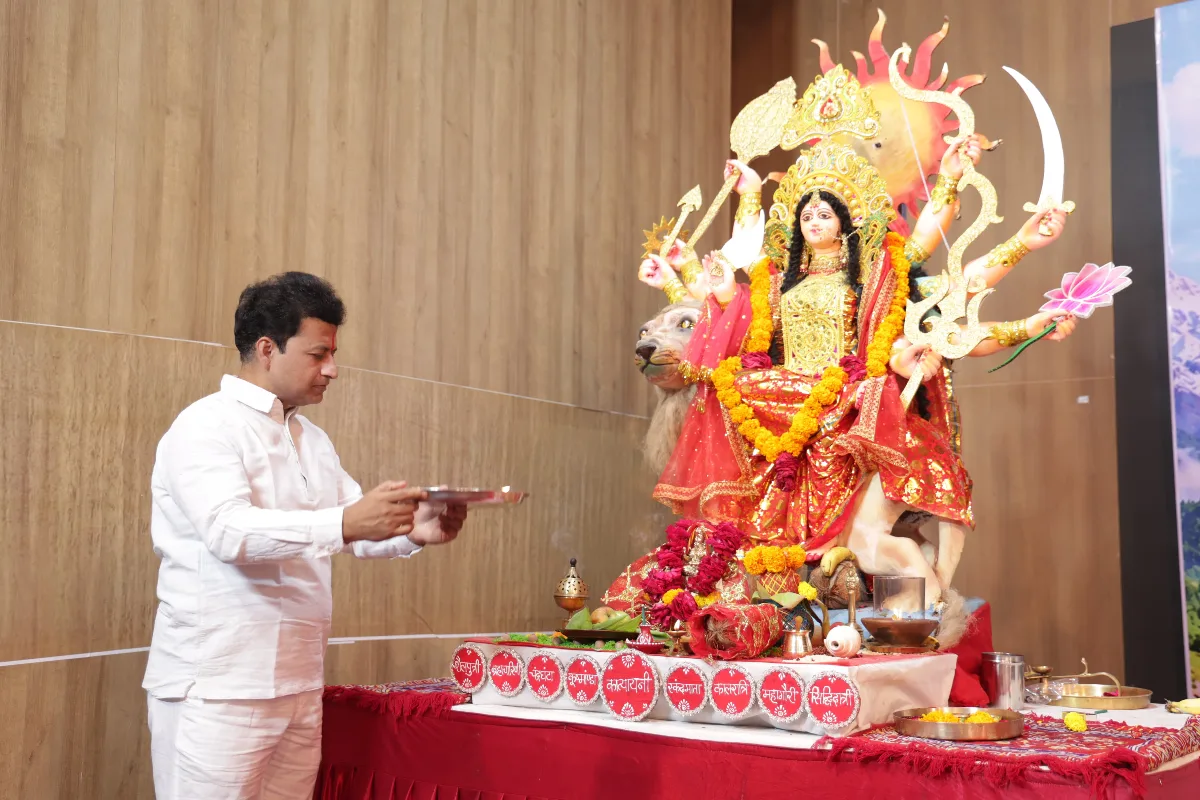
₹10.07 Crore Approved for Development of 21 Tribal Hostels in Udaipur Lok Sabha Constituency: MP Dr Mannalal Rawat
Udaipur, October 9 (Udaipur Kiran): A total of ₹10.07 crore has been approved for development work at 21 tribal residential hostels in the Udaipur Lok Sabha constituency under the Dharti Aaba Janjatiya Gram Utkarsh Abhiyan. MP Dr Mannalal Rawat expressed his gratitude to Prime Minister Narendra Modi for the approval.

New Construction Work at Tribal Hostels
Dr Rawat said the approved funds would be used for new construction work at tribal residential hostels in Udaipur, Salumber and Dungarpur districts.
In Udaipur district, the projects include the boys’ residential hostels at Daiya, Ambasa, Madi in Panchayat Samiti Phalasia, Nalwa, Sarera, Khel Kherwara, Kojawada, Pai, Jhamarkotda and Barapal. The works will also cover girls’ residential hostels at Kanbai, Saroli, Umarda in Panchayat Samiti Girwa and Piplikheda, along with the Government Tribal Model Residential School at Tikli.
In Salumber district, construction work will be undertaken at the girls’ residential hostels in Kun and Aggad, and the boys’ residential hostel in Prasad.
In Dungarpur district, the approved projects include boys’ residential hostels at Rawal and Richa in Panchayat Samiti Sabla, and Raghunathpura in Panchayat Samiti Dowda.
About the Dharti Aaba Janjatiya Gram Utkarsh Abhiyan
Dr Rawat said Prime Minister Narendra Modi launched the Dharti Aaba Janjatiya Gram Utkarsh Abhiyan on October 2, 2024.
The campaign includes 25 initiatives implemented by 17 ministries. Its objective is to address infrastructure gaps, improve access to healthcare, education and Anganwadi services, and create livelihood opportunities for more than five crore tribal people over five years.
The mission covers 63,843 villages across 549 districts and 2,911 blocks in 30 states and Union Territories.
It aims to improve infrastructure and socio-economic conditions in selected tribal-majority villages with a population of 500 or more, where at least 50 per cent of residents belong to tribal communities. It also covers villages in aspirational districts where the tribal population is 50 or more.

Bhupendra Singh Chundawat is a seasoned technology journalist with over 22 years of experience in the media industry. He specializes in covering the global technology landscape, with a deep focus on manufacturing trends and the geopolitical impact on tech companies. Currently serving as the Editor at Udaipur Kiran, his insights are shaped by decades of hands-on reporting and editorial leadership in the fast-evolving world of technology.