

U.S., China, and Russia Hold Historic Trilateral Summit in Shenzhen
The leaders of the U.S., China, and Russia convened in Shenzhen for a historic summit focused on nuclear risks and global cooperation, though substantive outcomes were limited.

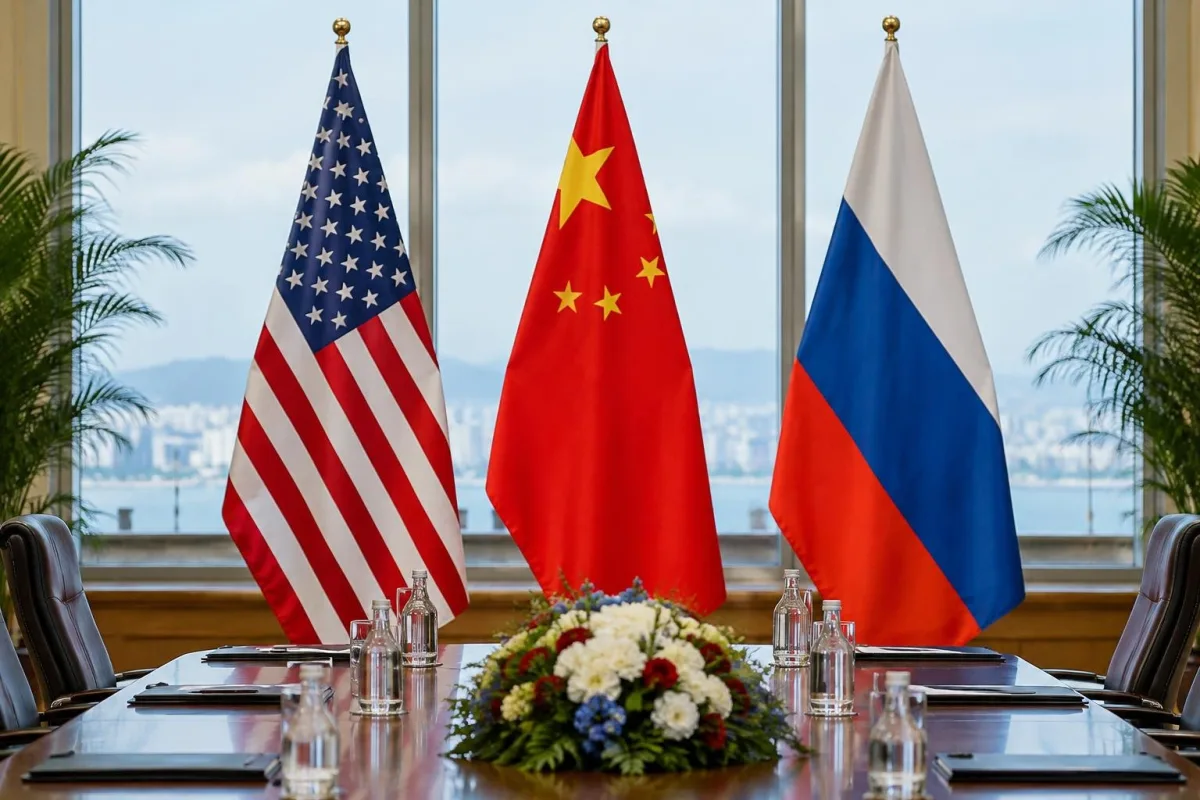
SHENZHEN, Nov 20: The leaders of the United States, China, and Russia met for a trilateral summit in Shenzhen, China, on November 19, 2026. This marked the first formal gathering of these three countries to address pressing global issues, although it did not produce immediate diplomatic breakthroughs.
U.S. President Donald Trump described the summit as historic, stating the three nations are ‘making history.’ Chinese President Xi Jinping called for respect among major powers regarding sovereignty and territorial integrity. Russian President Vladimir Putin noted shared interests in resolving regional conflicts, particularly the ongoing war in Ukraine.
A joint declaration issued after 90 minutes of discussions included a commitment to reduce nuclear risks, asserting that ‘a nuclear war cannot be won and must never be fought.’ This phrase, historically linked to Presidents Ronald Reagan and Mikhail Gorbachev, emphasizes nuclear arms reduction. Trump reiterated that the three nations, as the largest nuclear powers, are uniquely positioned to engage in discussions on nuclear disarmament.
The leaders also expressed intentions to enhance the production and supply of refined petroleum products and highlighted state sovereignty, particularly regarding the International Criminal Court. Trump, seeking to bolster his legacy after recent midterm election challenges, valued the meeting’s optics, while the joint statement was criticized for lacking substantive commitments.
The summit was seen as an opportunity for dialogue and a reflection of the deep divisions among the countries. Analysts noted that while the declaration reaffirms shared interests, skepticism remains regarding genuine progress on nuclear disarmament, especially given the current geopolitical climate.
Tong Zhao, a nuclear weapons policy expert, commented that the statement reveals the limited common ground among the three nations. Former arms control officials expressed concerns about the summit’s efficacy, suggesting that while it was a step forward, clear goals and actionable plans are necessary for meaningful progress.
As the summit concluded, Trump, Xi, and Putin did not set a timeline for future nuclear discussions, although a U.S. delegation is expected to lead upcoming talks with guidance from the State Department. The leaders’ interactions and the summit’s public reception may influence future diplomatic efforts amid ongoing tensions in international relations.