Storms and Rain to Subside in Rajasthan, Drop in Temperature Brings Relief from Heat
Western Disturbance Weakens, Weather Expected to Clear Up


Jaipur, March 16 – After three consecutive days of storms and rain across Rajasthan, the impact of the western disturbance is expected to weaken from today. During this period, temperatures dropped by 4-5 degrees Celsius, providing significant relief from the summer heat. In cities like Ganganagar, Hanumangarh, and Jhunjhunu, the maximum daytime temperature fell below 30°C, creating a pleasant climate for residents.
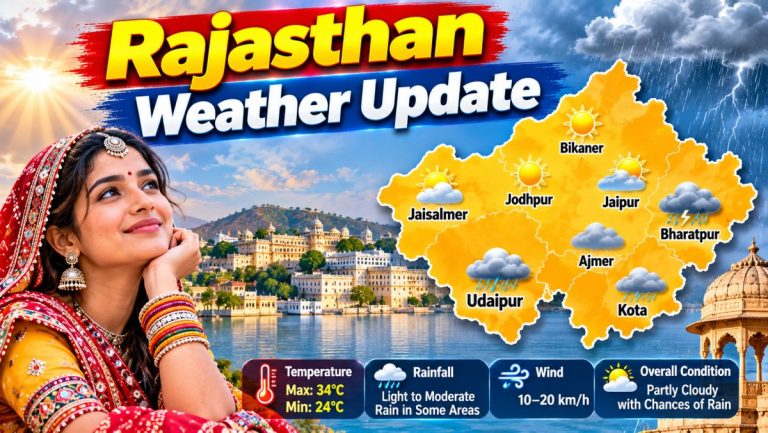
According to the Meteorological Centre, Jaipur, light cloud cover and sporadic drizzles may still occur in parts of Bharatpur and Jaipur divisions this afternoon. Additionally, temperatures could dip by another 2°C, continuing the cooling trend. Over the last 24 hours, light rainfall was recorded in some areas of Bharatpur, Alwar, and Dausa, while Jaipur experienced cloudy skies. On Saturday, maximum temperatures across most cities ranged between 30°C and 36°C, marking a 5-7°C decline compared to the earlier hot spell.
Before the rain, areas like Barmer and Jalore experienced maximum temperatures exceeding 40°C. However, post-rainfall, the temperature has now settled around 35-36°C, making conditions more bearable for residents.
Temperature Trends and Forecast for Rajasthan
Cooling Trend to Persist in Some Areas
As per the weather department, temperatures across the state are expected to remain stable between March 17 and 19. However, certain regions may see a drop of up to 2°C in minimum temperatures. While light showers may continue today in Jaipur and Bharatpur divisions, the rest of Rajasthan will experience clear skies and ample sunshine.
On Saturday, Chittorgarh recorded the highest maximum temperature at 38.7°C, while Hanumangarh had the lowest minimum temperature at 15.1°C. Jaipur, the state capital, witnessed a maximum temperature of 33.3°C and a minimum of 20°C.
City-wise Temperature Report (March 16)
- Jaipur: Max 33.3°C | Min 20°C
- Bhilwara: Max 36.2°C | Min 19.9°C
- Kota: Max 36.3°C | Min 25°C
- Udaipur: Max 34.8°C | Min 19.5°C
- Barmer: Max 35.3°C
- Jaisalmer: Max 32.2°C
- Pilani: Max 29.9°C | Min 15°C
- Sikar: Max 29.9°C | Min 15.4°C
- Nagaur: Max 32°C | Min 17.2°C
- Phalodi: Max 35.2°C | Min 20.6°C
- Alwar: Max 31°C | Min 16.4°C
- Jhunjhunu: Max 29.9°C | Min 16.1°C
- Ganganagar: Max 28.1°C | Min 16.2°C
Impact of Temperature Drop in Various Regions
The cooling effect has been particularly noticeable in northern Rajasthan, where cold winds brought temperatures down significantly. The morning and night air remains crisp in places like Pilani, Sikar, and Ganganagar, with temperatures hovering around 15-16°C during the night.
Meanwhile, the southern and western districts, including Barmer, Jaisalmer, and Phalodi, are still experiencing relatively warmer temperatures, though much lower than pre-rainfall levels.
What to Expect Next: Rajasthan’s Weather Outlook
Short-Term Weather Forecast
- March 17-19: Stable temperatures, clear skies in most regions, occasional drizzles possible in Jaipur and Bharatpur divisions.
- Northern Rajasthan: Minimum temperatures may drop further by 1-2°C in areas like Jhunjhunu, Ganganagar, and Sikar.
- Western Rajasthan: Dry and sunny weather likely to return by the start of the week.
Long-Term Predictions: Warmer Days Ahead?
As March progresses, temperatures in Rajasthan are expected to rise gradually. The current dip in temperatures is temporary due to western disturbances, but with clear skies returning, daytime temperatures may climb back towards 38-40°C in some areas.
Advice for Residents
- Those in northern Rajasthan should expect cooler mornings and nights and may need light warm clothing during the early hours.
- People in southern and western Rajasthan should brace for warmer days ahead as temperatures gradually return to pre-rain levels.
- Farmers should stay updated with local weather reports as residual moisture from the rains may benefit Rabi crops in some areas.

Bhupendra Singh Chundawat is a seasoned technology journalist with over 22 years of experience in the media industry. He specializes in covering the global technology landscape, with a deep focus on manufacturing trends and the geopolitical impact on tech companies. Currently serving as the Editor at Udaipur Kiran, his insights are shaped by decades of hands-on reporting and editorial leadership in the fast-evolving world of technology.