

Religious Leaders Unite Against Hate in New York
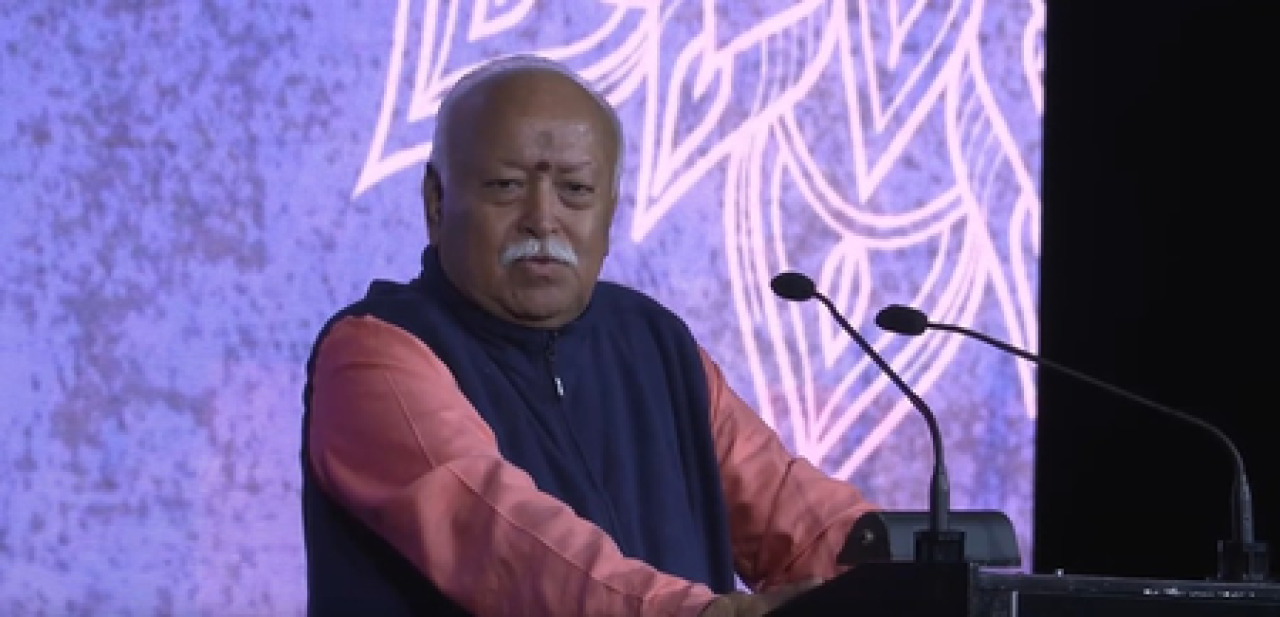

New York, August 30: At the ‘Universal Oneness’ event held at Madison Square Garden in New York, religious leaders from 30 countries pledged to eliminate hate, protect marginalized communities, and ensure that artificial intelligence serves humanity. The event featured Mohan Bhagwat, the chief of the Rashtriya Swayamsevak Sangh (RSS), alongside representatives from various major religions.
During the conference on Saturday, over 200 religious representatives contributed to a call for action. The declaration stated, “We reject the use of religion to justify hate, disrespect, inhuman behavior, or violence, and we will teach that deep faith can coexist with respect for those who believe differently.”
The declaration acknowledged both the power of faith to promote reconciliation and the historical use of religion to deepen divisions. It noted, “We recognize that faith has extraordinary power to heal, reconcile, and inspire. It is also a sad truth that religion has sometimes been used to divide, isolate, and justify violence.”
This declaration emerged in the context of armed conflicts, displacement, and growing distrust among societies. It warned that hate is now spreading rapidly across borders through digital platforms. It emphasized, “No government, institution, or technology can bear this responsibility alone. Nor can religious leaders, but it is a responsibility that is especially ours.”
The leaders acknowledged the dignity of every individual and rejected the notion that unity requires people to abandon their personal beliefs or identities. The declaration stated, “Being the same is not necessary for unity. Deep faith does not require hatred towards others.”
Religious leaders also committed to reviewing the teachings and practices of their communities, raising voices against targeted attacks, and building relationships across religious and cultural boundaries. It stated, “Peace begins with the courage to hold our own communities accountable.”
They promised to bring together youth from diverse religious and cultural backgrounds before disputes or tragic events occur. The declaration noted, “It is difficult to hate what we know.”
It called for joint service to those facing hunger, illness, displacement, and oppression, emphasizing that collaboration should be evident not just in public declarations but through actions. It further stated, “Our cooperation should be visible not only in our shared words but also in our shared deeds.”
The declaration also addressed decisions related to war, poverty, environmental protection, and new technologies like artificial intelligence. It asserted, “We will emphasize that human progress must always be for the welfare of humanity, and that technology should enhance, rather than diminish, dignity, truth, freedom, and mutual connection.”
The declaration concluded, “We are not naive. Religious leaders cannot completely eliminate hate or eradicate every injustice alone, but we are not powerless either.”
Participants at the event also tied rakhi to each other, symbolizing connection, care, and mutual responsibility. Organizers stated that this tradition is being extended beyond families to friends, neighbors, and communities.

Deependra Singh Chundawat is a Senior Sub-Editor at Udaipur Kiran, specializing in a wide range of technology topics including mobile phones, applications, gaming, PCs, and wearables. Along with covering the latest tech news, he also creates engaging web stories. Passionate about emerging technologies, he stays up to date with the newest trends and enjoys reading and writing about the latest mobile launches and digital innovations.