

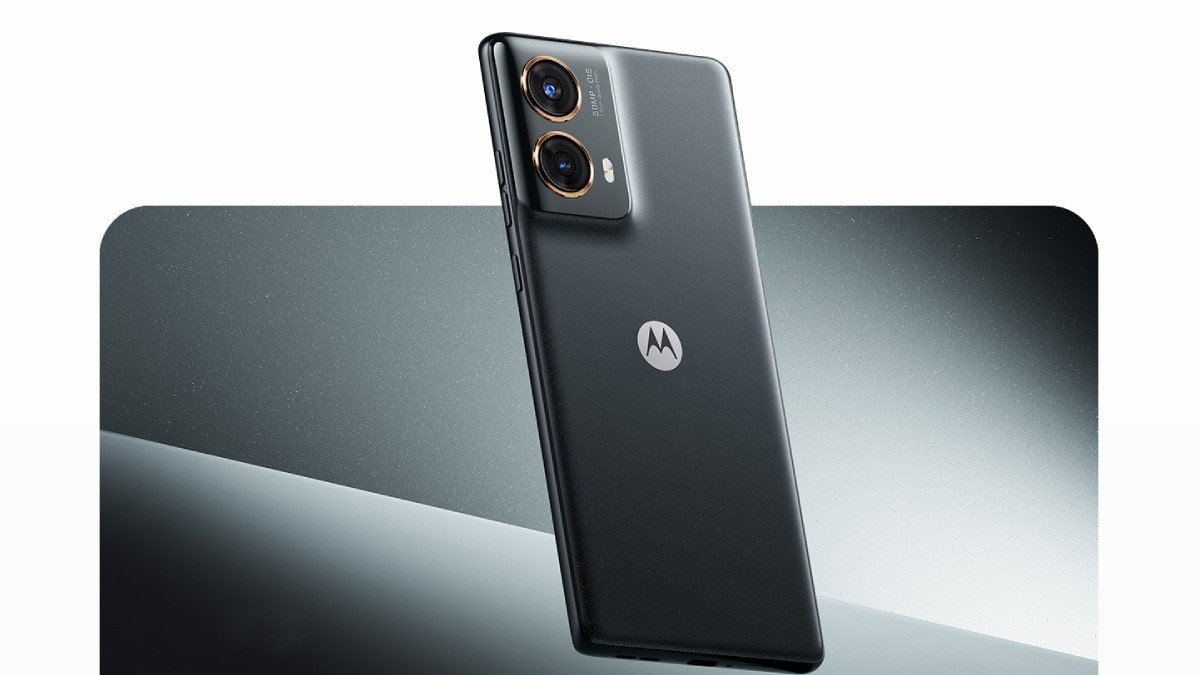
The Moto S50 Neo was launched in China on Tuesday. The smartphone was released alongside the Moto Racer 50 series. The company previously confirmed that the Moto S50 Neo will have a four-year warranty. The smartphone features a curved POLED screen, dual 50-megapixel cameras on the back, and stereo speakers with Dolby Atmos support. It is powered by a Qualcomm Snapdragon 6s Gen 3 chipset and has a 5000mAh battery that supports 30W fast wired charging. The company is yet to confirm the global or Indian launch of the phone.

Moto S50 Neo price
The Moto S50 Neo is priced in China starting at CNY 1,399 (roughly Rs. 16,100) for the 8GB + 256GB variant, while the 12GB + 256GB and 12GB + 512GB variants are priced at CNY 1,599- (Rs. 0018 approx.) onwards. 21800).
The phone will be available on the Lenovo China online store from June 28. It comes in three colors – Jimo (Black), Landing (Blue) and Qingdian (Green).
Moto S50 Neo – technical data, features
The Moto S50 Neo features a 6.7-inch Full HD+ (1080 x 2400 pixels) curved display with a 120Hz refresh rate, 1600 nits local peak brightness and dual SGS eye protection certification. The smartphone is powered by a Qualcomm Snapdragon 6s Gen 3 SoC paired with 12GB of LPDDR4 RAM and up to 512GB of internal storage.
As for the camera, the Moto S50 Neo has a 50-megapixel Sony IMX882 primary sensor and an 8-megapixel rear sensor with an ultra-wide-angle lens. It is equipped with a front-facing camera with a 32-megapixel sensor.
The Moto S50 Neo packs a 5,000mAh battery that supports 30W charging. For security reasons, a fingerprint scanner has been built into the display. The phone also supports 5G, 4G, Wi-Fi, Bluetooth, NFC and USB Type-C connectivity. It also has dual stereo speakers with Dolby Atmos support. The phone measures 161.91 x 73.06 x 7.59 mm, the black version weighs 171 grams, while the other two variants weigh 173 grams.

Bhupendra Singh Chundawat is a seasoned technology journalist with over 22 years of experience in the media industry. He specializes in covering the global technology landscape, with a deep focus on manufacturing trends and the geopolitical impact on tech companies. Currently serving as the Editor at Udaipur Kiran, his insights are shaped by decades of hands-on reporting and editorial leadership in the fast-evolving world of technology.