

Joint List Backs Eisenkot to Form Israel’s Next Government
The Joint List has announced its support for Gadi Eisenkot to form Israel's government, influencing the post-election landscape.

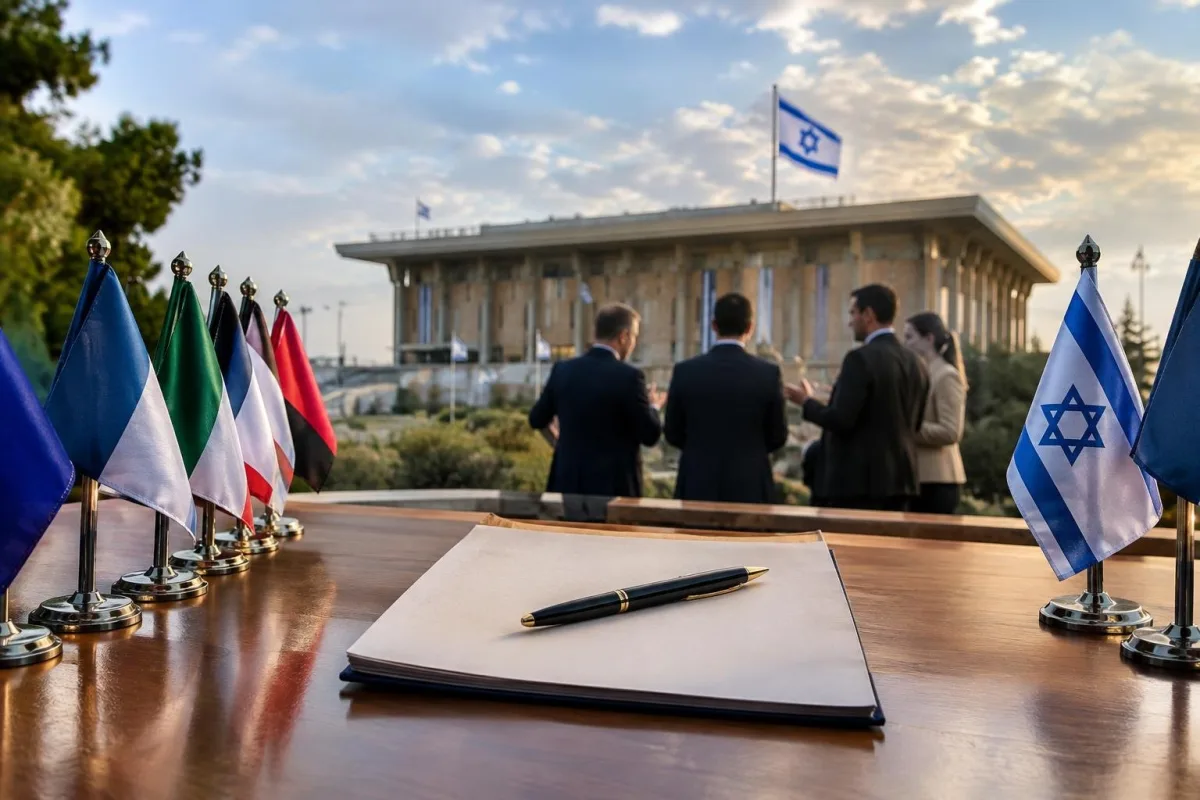
WASHINGTON, Nov 6: The Joint List alliance of Arab-led parties has officially backed Gadi Eisenkot to form Israel’s next government following last week’s elections. The coalition stated it will inform President Isaac Herzog of its decision later today.
The Joint List secured a historic 19 seats in the Knesset, which, combined with recommendations from other parties, puts Eisenkot in a favorable position to achieve a majority. With the support of the Joint List and Ra’am, another Arab party, Eisenkot is anticipated to have the backing of 67 lawmakers, surpassing the 61-seat threshold necessary to form a government.
President Herzog is poised to assign Eisenkot the mandate to create a government after he concludes consultations with party leaders. This comes after a tightly contested election where no party won a clear majority.
Netanyahu’s bloc received 53 seats in the Knesset, yet faced setbacks, including a refusal from the United Torah Judaism party to recommend a candidate. This abstention diminishes Netanyahu’s coalition’s chances of maintaining a governing majority.
Some factions in Netanyahu’s bloc have expressed concerns over a coalition with Arab parties, labeling it as a risk to Israel. Netanyahu himself has made unverified claims about electoral fraud involving Arab parties, which have been denied by those parties. Despite his party winning the highest number of seats, Netanyahu’s path to re-election narrows without essential endorsements.
Herzog has emphasized the necessity for parties to work toward a stable government, amid a complex political situation that could lead to another election if neither Eisenkot nor Netanyahu can secure the required votes. The president has stated that he respects the Palestinian minority in Israel and condemns the racist rhetoric that has surfaced post-election.
As the political scenario unfolds, Eisenkot faces the challenge of forming a coalition that includes support from the Palestinian-Israeli parties, with the potential for significant shifts in Israeli politics depending on the alliances formed in the coming days.
Sources

My name is Kuldeep Singh Chundawat. I am an experienced content writer with several years of expertise in the field. Currently, I contribute to Daily Kiran, creating engaging and informative content across a variety of categories including technology, health, travel, education, and automobiles. My goal is to deliver accurate, insightful, and captivating information through my words to help readers stay informed and empowered.