

The smartphone industry has long conditioned users to believe that tri-fold devices should be large, tablet-like behemoths, designed to unfold into massive screens. But Infinix is challenging that notion with its latest concept—the Infinix Zero Series Mini Tri-Fold, a flip-style foldable that unfolds to the size of a regular smartphone yet folds down to something as small as a credit card.
With Samsung, Huawei, and other brands exploring tri-fold technology, Infinix’s miniaturized take on the concept offers an intriguing glimpse into the future of ultra-compact foldables.
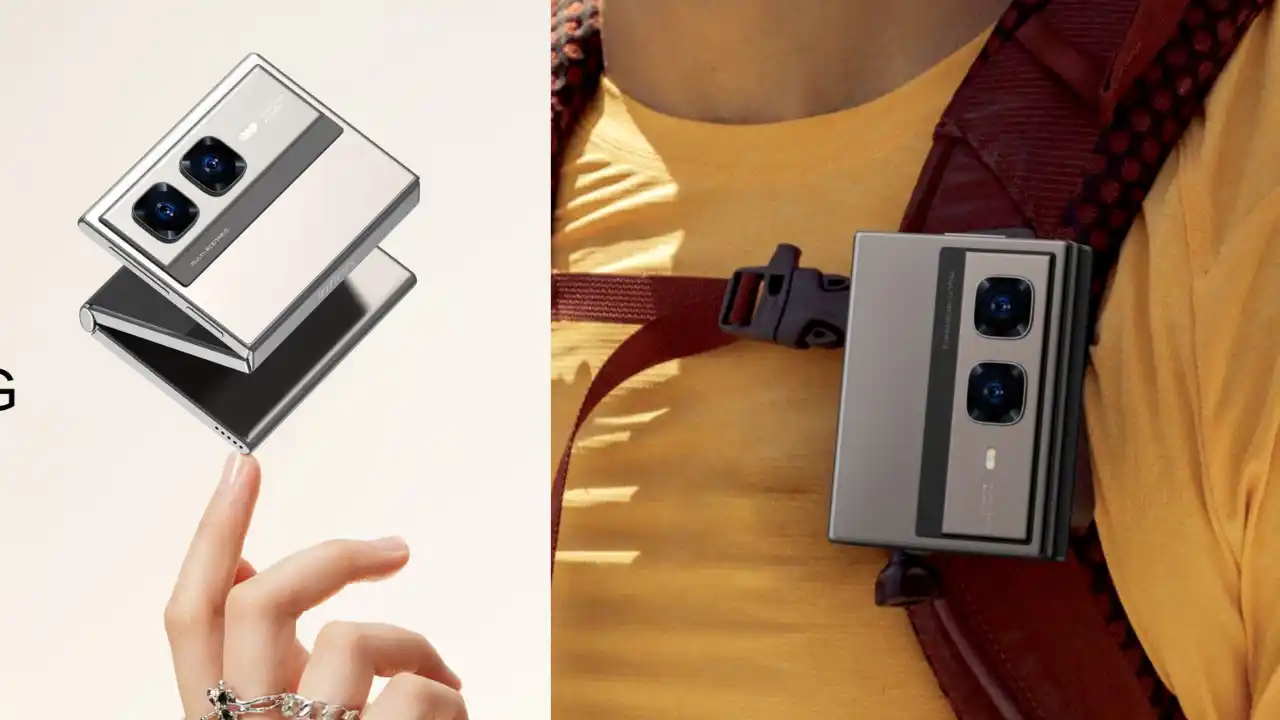

🔹 A New Approach to Tri-Fold Phones
📱 From Credit Card to Full-Sized Smartphone
Traditional clamshell foldables, such as the Samsung Galaxy Z Flip series and Motorola Razr+, prioritize compactness, allowing users to fold them down into a pocket-friendly size while still offering a full smartphone experience when unfolded.
The Infinix Zero Series Mini Tri-Fold builds on that concept, but instead of a single hinge, it introduces a second fold, bringing it into tri-fold territory.
- At its smallest, the device is roughly the size of a credit card.
- The mid-phase resembles a mini-smartphone, similar to compact Android devices.
- When fully unfolded, it expands into a standard-sized smartphone.
Unlike traditional tri-fold designs, which focus on expanding screen real estate, the Zero Series Mini Tri-Fold prioritizes shrinking the device’s form factor, making it more portable than any foldable before it.
🔹 Innovative Use Cases for the Infinix Zero Series Mini Tri-Fold
While the mini-tri-fold approach may seem unconventional, Infinix highlights several potential use cases:
- 📷 Chest Cam Mode – The compact form factor allows it to be mounted on a chest rig, offering a hands-free recording solution similar to action cameras.
- 🚴 Bike Mount Mode – Users could attach the device to bike handlebars for navigation, though concerns about the durability of foldable displays in high-impact scenarios remain.
- 🌍 Real-Time Translation – The top section folds outward, enabling the second speaker to view live translations during conversations.
These applications highlight the flexibility of the tri-fold design, but they also raise questions about practicality and durability.
🔹 The Downsides: More Hinges, More Problems?
While concept devices often push the boundaries of innovation, they must also justify their existence. The Infinix Zero Series Mini Tri-Fold brings a fresh perspective to folding screen technology, but does it actually solve a problem?
- 📉 Diminishing Returns on Size – A foldable that shrinks too much could become less functional rather than more practical. At what point does a miniaturized smartphone become too small to use effectively?
- 🔗 Three Hinges = More Complexity – Traditional foldables already struggle with durability, and adding an extra hinge could make the device more fragile and prone to wear over time.
- 📺 No Expanded Screen Advantage – Unlike other tri-fold designs, which unfold into tablet-sized displays, the Zero Mini Tri-Fold doesn’t seem to increase screen real estate—only change form factors.
While the concept is fascinating, it remains unclear whether the extra complexity provides tangible benefits.
🔹 Will Infinix Bring This Concept to Market?
At this stage, Infinix has made no commitment to mass-producing the Zero Series Mini Tri-Fold. Instead, the company’s official blog post leaves the future of the device open-ended, offering only a glimpse into what tiny tri-folds could look like.
📌 Could this device be the future of foldables, or is it simply a proof-of-concept? Only time will tell.
One thing is certain: Infinix is proving that foldable innovation isn’t limited to just making screens bigger—it’s also about making phones more compact and portable than ever before.

Bhupendra Singh Chundawat is a seasoned technology journalist with over 22 years of experience in the media industry. He specializes in covering the global technology landscape, with a deep focus on manufacturing trends and the geopolitical impact on tech companies. Currently serving as the Editor at Udaipur Kiran, his insights are shaped by decades of hands-on reporting and editorial leadership in the fast-evolving world of technology.