India’s Most-Wanted Naxal Basavaraju Killed in Chhattisgarh; Security Forces Set Sights on a Maoist-Free India by 2026
In a historic breakthrough for India’s internal security, Nambala Keshava Rao, better known by his alias Basavaraju, the General Secretary and top commander of CPI (Maoist), was killed in an intensive counter-insurgency operation in the Abujhmad forests of Chhattisgarh’s Narayanpur district. The elimination of the man once considered the ideological and military brain behind the Maoist insurgency is being hailed as a turning point in India’s decades-long battle against Left-Wing Extremism (LWE).

Basavaraju had a bounty of ₹1.5 crore on his head and was long seen as India’s most elusive and dangerous Naxal, responsible for orchestrating some of the deadliest attacks on Indian security forces.
The Rise of a Guerrilla Strategist
Born in 1955 in Jiyannapeta village, Andhra Pradesh, Basavaraju was a bright engineering student at the then Regional Engineering College (now NIT Warangal). He abandoned his M.Tech studies in 1984 to join the Naxalite movement. Trained in guerrilla warfare by the LTTE in Sri Lanka, he became an expert in explosives and jungle combat.
His long list of atrocities includes:
-
The 2010 Dantewada ambush killing 76 CRPF personnel
-
The 2013 Jeeram Ghati massacre that claimed 27 lives, including senior Congress leader Mahendra Karma
-
The 2003 Alipiri blast aimed at Andhra Pradesh CM N. Chandrababu Naidu
-
The 2018 murder of TDP MLA Kidari Sarveswara Rao and ex-MLA Siveri Soma in Araku Valley
Inside India’s Largest Anti-Maoist Operation
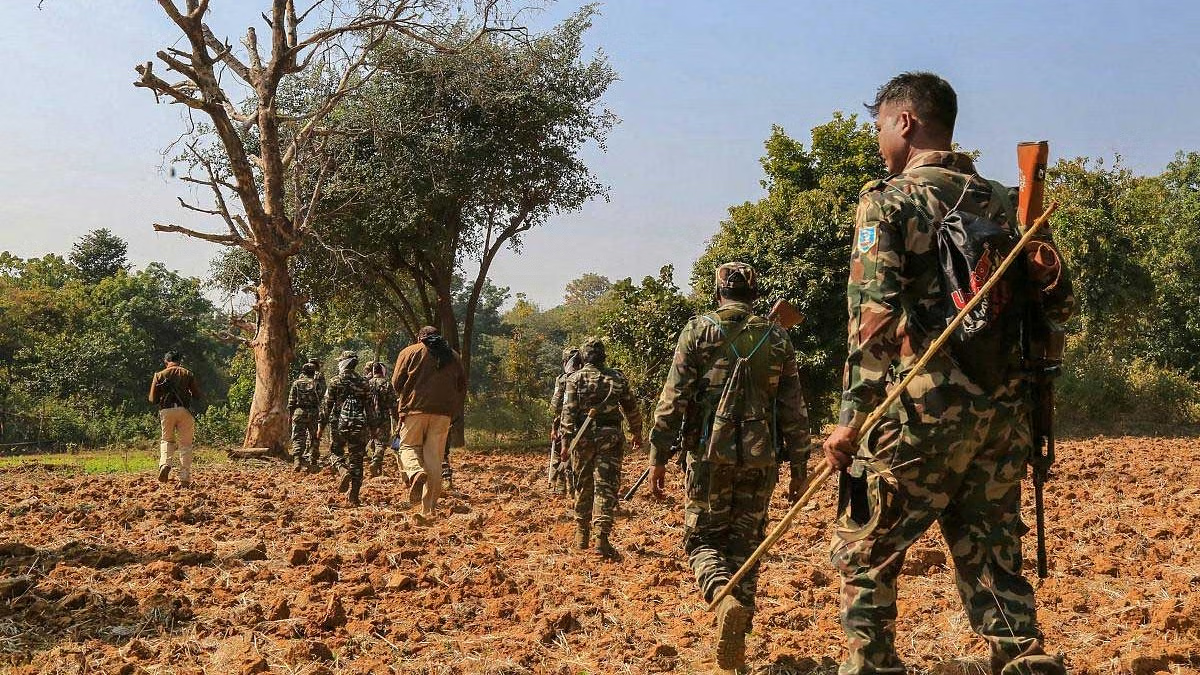
Basavaraju’s death came during a 24-day offensive, launched on April 21, spanning 1,200 sq. km of dense forest on the Chhattisgarh-Telangana border. The mission, involving 21 encounters, saw elite units like the District Reserve Guard (DRG) and CRPF overcome 450 IEDs, scorching heat, and hostile terrain.
Security forces established temporary helipads, surveillance bases, and used real-time drone intelligence to track insurgent movements. The operation uncovered:
-
216 hideouts
-
35+ weapons, including a sniper rifle
-
4 Maoist technical units manufacturing IEDs and BGL shells
-
818 shells, 899 detonator bundles, and large explosive stockpiles
The Fall of a Red Stronghold
The Kareguttalu Hills, long considered a Maoist fortress, have now been neutralized, breaking the myth of guerrilla invincibility. According to CRPF DG G.P. Singh, this was “the most extensive and coordinated anti-Naxal operation” ever conducted.
Chhattisgarh DGP Arun Dev Gautam added, “This was not just a tactical victory, but a psychological one. The insurgency’s fear aura has been shattered.”
Top Leadership Lauds Forces
Prime Minister Narendra Modi and Union Home Minister Amit Shah praised the operation. PM Modi called it a “remarkable success” and Shah described it as a “moment of national pride”, reaffirming the goal to eliminate Maoist insurgency by 2026.
A Crumbling Insurgency
The Maoist response has been muted. A statement by CPI (Maoist) spokesperson Abhay acknowledged the loss of 26 cadres and appealed for peace talks—a rare admission of loss and weakness.
Meanwhile, official data indicates the insurgency is on its last legs:
-
Maoist-affected districts reduced from 76 (2014) to 42 (2024)
-
Casualties among forces fell from 88 (2014) to 19 (2024)
-
928 Maoist surrenders in 2024, over 700 in early 2025
-
197 insurgents neutralized in just the first four months of 2025
Development as the Second Front
Alongside military action, the government has launched aggressive development efforts in LWE-affected areas. Over 320 security camps, 68 night-landing helipads, and new roads, mobile towers, schools, and health centers have made inroads into previously isolated regions.
Anti-financing drives by NIA and State Agencies have choked funds, while intelligence reports continue to condemn Maoists for recruiting child soldiers into groups like Bal Sangham and Chetna Natya Mandali.
Countdown to 2026: Toward a Naxal-Free India
With Basavaraju dead, the Maoist command structure is in disarray, with surviving leaders splintered into small, isolated cells. The government’s plan is clear: by the end of 2025, it aims to either neutralize or rehabilitate all remaining cadres.
As DGP Gautam concludes, “We have reclaimed land, restored law, and revived hope. The Red Corridor is closing, not just geographically, but ideologically.”
India’s fight against Maoism may not be completely over, but the endgame has begun.

Bhupendra Singh Chundawat is a seasoned technology journalist with over 22 years of experience in the media industry. He specializes in covering the global technology landscape, with a deep focus on manufacturing trends and the geopolitical impact on tech companies. Currently serving as the Editor at Udaipur Kiran, his insights are shaped by decades of hands-on reporting and editorial leadership in the fast-evolving world of technology.