

Good Deeds Matter More Than Sweet Words: Prashant Agarwal

‘Apnon Se Apni Baat’ Programme Concludes at Narayan Seva Sansthan
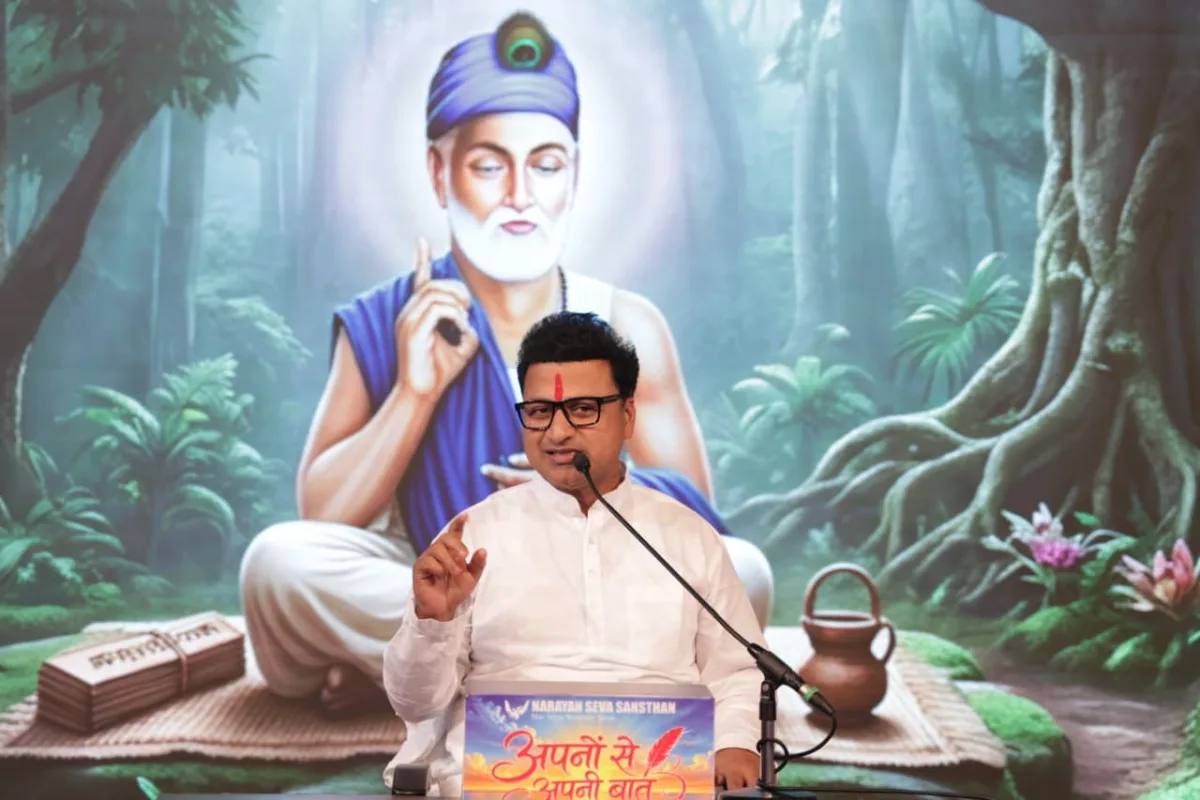
Udaipur, November 16, 2026 (Udaipur Kiran): Important life lessons from the teachings and stories of Sant Kabir were shared during the ‘Apnon Se Apni Baat’ programme organised at the World of Humanity, located at Seva Teerth of Narayan Seva Sansthan.
Sansthan President Prashant Agarwal explained the meaning of 21 teachings of Kabir in simple terms. He said a person’s identity is determined not by position, reputation or appearance, but by thoughts and actions. Kabir’s philosophy inspires people to give up ego and embrace love, truth and compassion.
Actions Are More Important Than Words
Explaining the difference between words and actions, Agarwal referred to Kabir’s couplet, which says that words may be as sweet as sugar, but actions can be poisonous.
He said performing good deeds is more important than merely speaking sweetly. Shaving one’s head, chanting prayers with a rosary or wearing the attire of a saint does not automatically make someone a true devotee. A person must have a pure heart and demonstrate goodness through behaviour.
Love, Compassion and Respect for the Weak
Sharing Kabir’s message of love and sensitivity towards the suffering of others, Agarwal said life remains incomplete without love and compassion.
He said a true saint is one who understands the pain of others and helps those in need. Referring to Kabir’s couplets, including the teachings against troubling the weak and disrespecting even a small straw, he explained that no one should be considered inferior because of their circumstances.
He added that a person’s greatness is determined by good deeds rather than birth into a high-status family.
Truth, Honesty and Good Company
Agarwal also explained the importance of truth and honesty through Kabir’s teachings, including the couplets ‘Saanch Barabar Tap Nahi’ and ‘Kabir Aap Thagaiye, Aur Na Thagiye Koy’.
He said it is better to bear a personal loss than to deceive someone else. Qualities such as charity, helping others, respect for one’s guru, good company and forgiveness make life better.
Kabir’s Message of Religious Harmony
Narrating the story associated with Kashi and Maghar, Agarwal explained how Kabir challenged the belief that salvation could be attained only by dying at a particular place. Kabir spent his final days in Maghar.
He also referred to the popular traditional story that, after Kabir’s death, Hindu and Muslim followers disagreed over his last rites. According to the legend, when the sheet covering his body was lifted, flowers were found in place of the body.
The story was shared as a message of religious unity and harmony.
Kabir’s Teachings Remain Relevant Today
Agarwal said Kabir’s teachings continue to be relevant and remind people that change must begin with oneself. Sensitivity towards others, good deeds and service to humanity are the true expressions of devotion.
The programme also included an interaction with hundreds of devotees and persons with disabilities.
Frequently Asked Questions
1. Where was the ‘Apnon Se Apni Baat’ programme organised?
It was organised at the World of Humanity at Seva Teerth of Narayan Seva Sansthan in Udaipur.
2. Who addressed the programme?
Narayan Seva Sansthan President Prashant Agarwal addressed the gathering.
3. What was the main message of the programme?
The programme highlighted that a person’s identity is shaped by thoughts and actions rather than position, reputation or appearance.
4. How many teachings of Sant Kabir were explained?
Prashant Agarwal explained the meaning of 21 teachings of Sant Kabir.
5. What did Kabir’s teachings say about words and actions?
They emphasised that good actions are more important than sweet words or outward displays of devotion.
6. What message was shared about helping the weak?
The programme highlighted that people should not trouble or disrespect the weak and should show compassion towards those in need.
7. What was the significance of the Kashi-Maghar story?
The story illustrated Kabir’s challenge to beliefs about salvation being linked to a particular place and conveyed a message of religious harmony.
8. Who attended the programme?
Hundreds of devotees and persons with disabilities participated in the programme and interacted with the organisers.