

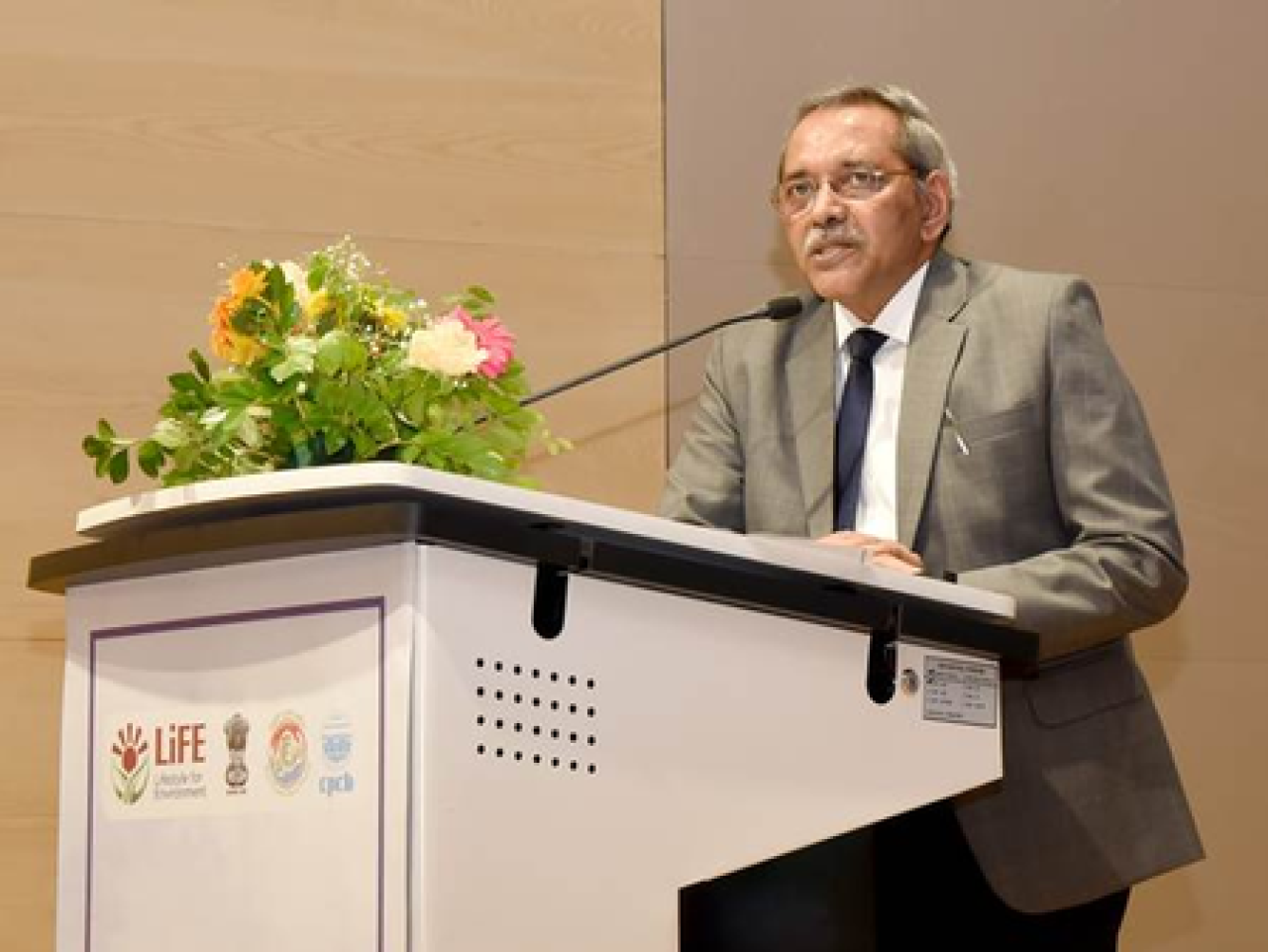

New Delhi, September 7 (Udaipur Kiran) : Justice (Retd.) Prakash Srivastava, Chairman of the National Green Tribunal (NGT), emphasized on Monday that clean air is not a luxury but a basic necessity for every individual. Speaking at the ‘Clean Air Day 2026’ event organized by the Ministry of Environment, Forest and Climate Change on the occasion of International Clean Air and Blue Sky Day, he highlighted the complexities of air pollution, which transcends political boundaries.
Justice Srivastava remarked that development and environmental protection are not opposing forces; rather, they can coexist to improve the quality of life for citizens. He urged every citizen to take responsibility for ensuring a clean and healthy environment for future generations.
He also called on local bodies to take preventive measures at the source of pollution, advocating for public awareness, the use of cutting-edge technology, and collective efforts involving all sections of society.
Environment Secretary Tanmay Kumar, who also spoke at the event, outlined the government’s multi-faceted, coordinated, and scientific approach to tackling air pollution, as envisioned by Prime Minister Narendra Modi.
During the program, the Ministry of Environment recognized cities and wards that excelled in the fifth Clean Air Survey under the National Clean Air Program (NCAP). Awards were presented based on the performance of 130 cities, categorized by population size: those with less than 300,000, between 300,000 and 1 million, and those with over 1 million residents.
The evaluation process included self-assessments by cities, approval from state-level monitoring committees, reviews by the Central Pollution Control Board, field verification by independent committees, and the selection of the top ten performing cities.
Secretary Kumar noted that each city develops its own clean air strategies based on specific needs under the NCAP. The Prana Portal monitors various air quality management standards across these 130 cities.
According to an official statement, significant reductions in PM10 levels have been recorded in 2025-26 compared to the fiscal year 2017-18. Improvements were observed in 108 out of the 130 cities, with 72 achieving over a 20% reduction in PM10 concentrations, and 26 cities experiencing reductions exceeding 40%. Additionally, 14 cities successfully met national ambient air quality standards.
The event also saw the release of a compilation report on best management practices under the NCAP, showcasing successful measures adopted by various cities and state pollution control boards to improve air quality. Key initiatives included controlling road dust, reducing vehicle emissions, banning open waste burning, increasing green spaces, leveraging technology, and conducting public awareness campaigns.

My name is Kuldeep Singh Chundawat. I am an experienced content writer with several years of expertise in the field. Currently, I contribute to Daily Kiran, creating engaging and informative content across a variety of categories including technology, health, travel, education, and automobiles. My goal is to deliver accurate, insightful, and captivating information through my words to help readers stay informed and empowered.