

Bomb Threats Target Over 6,000 Schools in Italy

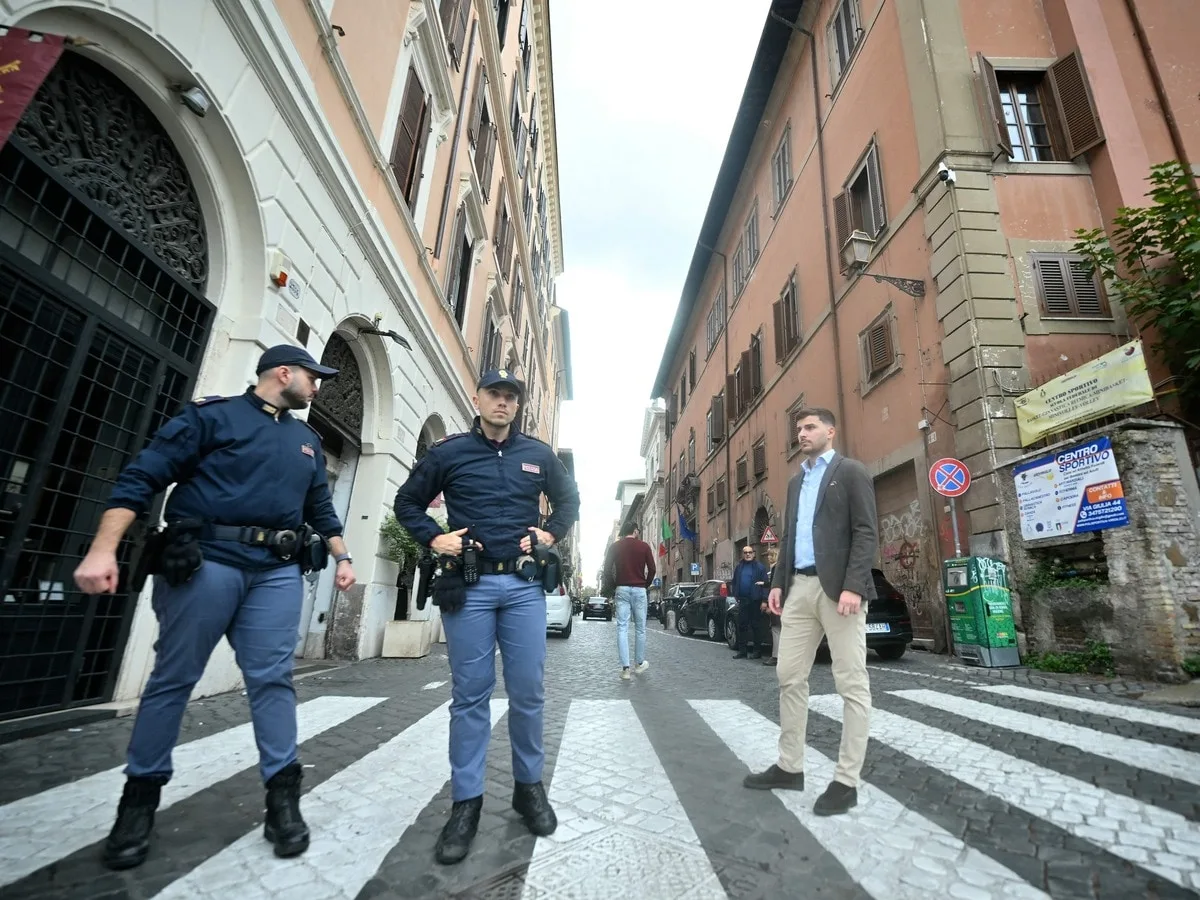
Rome, November 11: In an unprecedented and terrifying incident, over 6,000 schools and educational institutions across Italy received bomb threats via email on Wednesday. This alarming situation prompted immediate evacuations of more than 300 schools, from the capital Rome to Friuli in the north and Basilicata in the south. The threatening email also claimed that a powerful bomb was planted in the engine of Italian Prime Minister Giorgia Meloni’s car, causing panic within Italy’s security and intelligence agencies.
Identity of the Threat Sender
The sender of the threatening email identified himself as ‘Mikhail Andropov’ and claimed to be the leader of the ‘Principality of Misogynistan.’ The email alleged that remote-controlled explosive devices had been placed inside school premises as part of a genocide against Italians. An 18-year-old student, Anita Bartocchi, recounted that when the security sirens went off at a high school in Rome, students initially mistook it for the interval bell, only to realize later that it was a deadly email from Russian hackers.
Previous Threats and Broader Impact
This is not the first time such threats have been made; on November 2, 2026, over 270 schools in Italy received similar fake threats. The cyber threats were not limited to Italy; hundreds of schools in Scotland, Northern Ireland, and Ireland also received similar threatening messages. However, Scottish police dismissed these threats as fake and advised schools not to evacuate.
Coordinated Hybrid Attacks?
The name ‘Mikhail Andropov’ has been associated with recent cyber attacks on European TV channels, commercial flights, and supermarket cold storage systems. In France, blood banks had to shift blood bottles due to failures in their refrigeration systems.
Government Response
Italy’s Education Minister Giuseppe Valditara confirmed that at least 300 schools were completely evacuated, with the number likely to rise. Defense Minister Guido Crosetto described the incident as a plot to instill fear and uncertainty among the public. Interior Minister Matteo Piantedosi convened an emergency meeting with the country’s top security officials, concluding that these attacks were aimed not only at disrupting systems but also at destabilizing national institutions.
Currently, Italy’s anti-terrorism police and cybercrime unit are conducting extensive investigations to trace the email’s IP address and identify the suspects.