

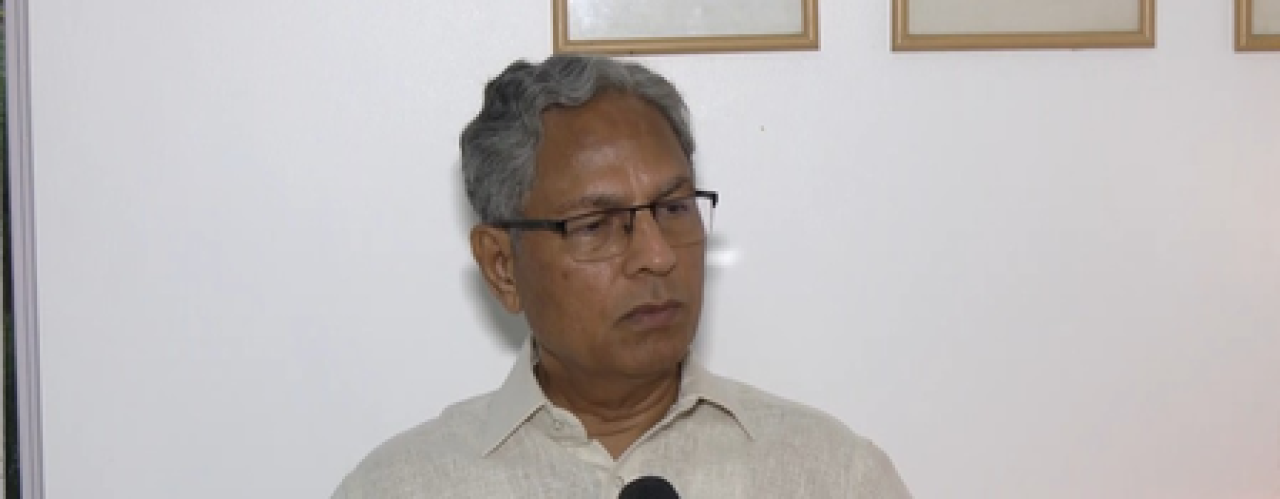

New Delhi, August 17: Professor Dr. Swarn Singh from the Jawaharlal Nehru University’s Institute of International Studies has indicated that there is over a 50% chance of Bangladesh Prime Minister Tariq Rahman visiting India. He emphasized the importance of creating a conducive environment for this visit, particularly regarding the issue of Sheikh Hasina.
In an interview with the IAS news agency, Professor Singh noted that whenever new heads of state are elected, it is expected that their first foreign visit will be to India, a trend that has historical precedence in Bangladesh. He pointed out that the recent political climate has shifted, especially after India allowed former Prime Minister Sheikh Hasina to remain in the country, which has led to some discontent in Bangladesh.
Professor Singh explained that both nations have no alternative but to improve their relations for mutual development. He mentioned that Tariq Rahman has expressed a commitment to making decisions in the interest of the people while maintaining a balanced foreign policy. India has already sent representatives to his swearing-in ceremony and has extended invitations for bilateral talks and the BRICS summit.
Regarding the current tensions between the two countries, Professor Singh stated that there are minor grievances, including demands for Sheikh Hasina’s extradition. He stressed the need for restraint to avoid provoking public unrest in Bangladesh. He remains optimistic that Prime Minister Rahman will visit India around August 20-21 for direct talks with Prime Minister Modi.
Reflecting on the historical context of India-Bangladesh relations during Hasina’s tenure, Professor Singh noted that the two countries have no option but to enhance cooperation, especially given their shared border. He recalled that relations were particularly strong during Hasina’s government, which lasted for 15 years, and highlighted the personal rapport between Hasina and Modi.
He also mentioned that while Bangladesh has historically leaned towards China, there are opportunities for a new chapter in relations if Rahman visits India. Discussions regarding the Teesta River and the 1990 Ganges River agreement, which is nearing its expiration, should also be prioritized.
Professor Singh concluded by acknowledging the complexities introduced during Dr. Muhammad Yunus’s interim government, which shifted focus towards Pakistan and China, complicating the relationship with India. He remains hopeful that Rahman’s administration will strive to balance foreign relations and improve ties with India.

My name is Kuldeep Singh Chundawat. I am an experienced content writer with several years of expertise in the field. Currently, I contribute to Daily Kiran, creating engaging and informative content across a variety of categories including technology, health, travel, education, and automobiles. My goal is to deliver accurate, insightful, and captivating information through my words to help readers stay informed and empowered.