

Bajaj Auto Meets Only 75% of Orders as Demand for Electric Scooters and Three-Wheelers Surges

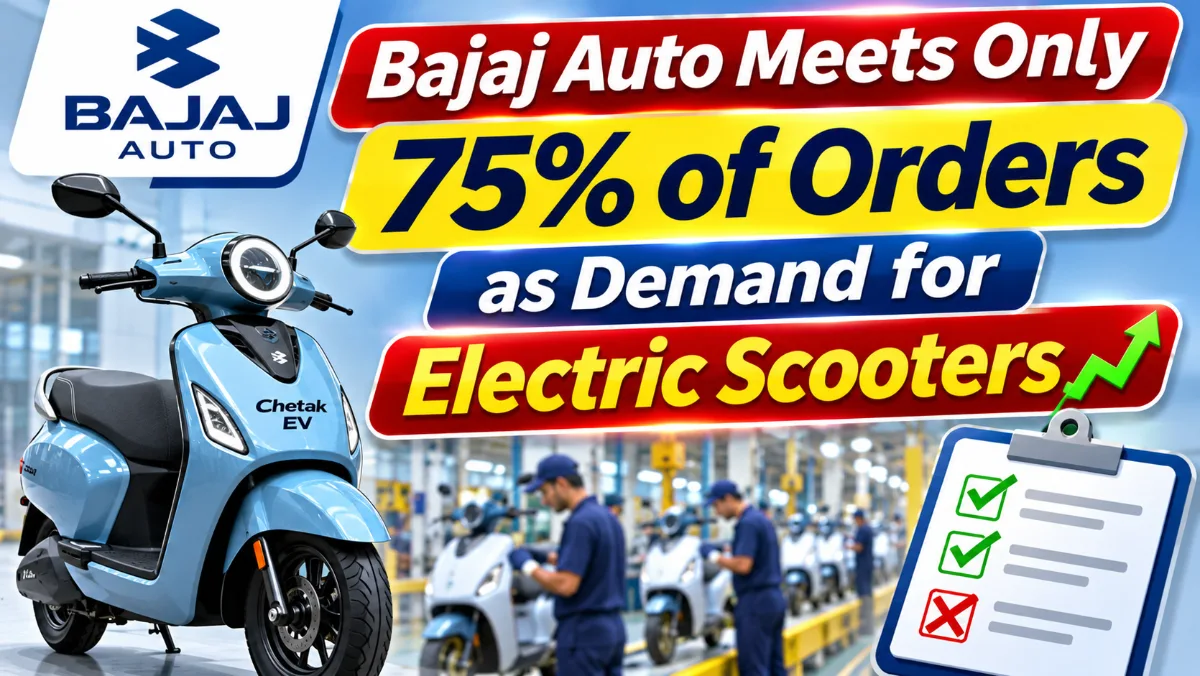
Pune, October 28, 2026 (Udaipur Kiran): Bajaj Auto is facing challenges in meeting rising demand for its electric two-wheelers and three-wheelers due to limited production capacity. The company is currently able to fulfil only around 75% of the planned order volume, according to a Reuters report.
Bajaj Auto Chief Financial Officer Dinesh Thapar shared the information during a conference call following the company’s July–September quarter results. The company is working to increase production capacity to meet growing demand for its electric vehicles (EVs).
Electric Vehicles Drive Growth
Electric vehicles have become an important contributor to Bajaj Auto’s growth. According to the company’s press release, its electric vehicle portfolio reached around 2 lakh units during the quarter, compared with 82,000 units in the same period last year.
EVs now account for nearly one-third of the company’s domestic revenue. This growth has come even as the company faces supply constraints and struggles to fulfil all customer orders on time.
Sales of electric three-wheelers and the revenue generated from them more than doubled compared with the same period last year. Bajaj Auto is increasing its production capacity to meet demand that it is currently unable to serve fully.
Chetak Electric Scooter Records Strong Sales
Bajaj Auto’s Chetak electric scooter also delivered its best-ever quarterly performance during the period. Sales more than doubled year-on-year, while revenue from the scooter crossed ₹2,000 crore.
However, strong demand and limited supply have put pressure on production. The company is working to expand capacity to fulfil orders in both domestic and export markets.
The supply challenge is not new. During its April–June quarter results announcement in July, Bajaj Auto had also indicated that demand for electric vehicles was exceeding its production capacity. At that time, EVs accounted for around 30% of domestic revenue. The share has now increased to approximately one-third.
Limited Scope for Price Increases
Bajaj Auto CFO Dinesh Thapar also indicated that the company needs to be cautious about increasing vehicle prices. According to Reuters, the company must consider how much of a price increase customers are willing to accept.
So far, price adjustments, a higher share of premium models and favourable currency movements have supported the company’s performance. Cost control and these factors helped Bajaj Auto maintain an operating margin of 20.9%.
Quarterly Revenue Crosses ₹20,000 Crore for the First Time
Bajaj Auto’s standalone revenue crossed ₹20,000 crore for the first time in the July–September quarter, reaching ₹20,003 crore. This represented a 34% increase compared with the corresponding period last year.
The company’s net profit rose 35% to ₹3,354 crore from ₹2,480 crore a year earlier.
Key financial and sales figures for the quarter included:
- Total vehicle sales: 15.49 lakh units, up 20% year-on-year.
- Exports: 7.79 lakh units, up 41%.
- Domestic sales: 7.70 lakh units, up 4%.
- Standalone revenue: ₹20,003 crore, up 34%.
- Net profit: ₹3,354 crore, up 35%.
- Operating margin: 20.9%.
Domestic revenue increased by 30%, significantly faster than the growth in domestic sales volume. The company is now focused on expanding production capacity to capitalise on demand for its electric scooters and three-wheelers while improving order fulfilment.
FAQ Section
1. Why is Bajaj Auto unable to fulfil all its orders?
Bajaj Auto is facing limited production capacity amid rising demand for electric two-wheelers and three-wheelers.
2. What percentage of orders is Bajaj Auto currently fulfilling?
The company is currently able to fulfil around 75% of the planned order volume, according to the report.
3. Who disclosed the production capacity challenge?
Bajaj Auto CFO Dinesh Thapar shared the information during a conference call after the July–September quarter results.
4. How much has Bajaj Auto’s electric vehicle portfolio grown?
The company’s electric vehicle portfolio reached around 2 lakh units during the quarter, compared with 82,000 units a year earlier.
5. How did the Chetak electric scooter perform during the quarter?
Chetak recorded its best-ever quarterly performance, with sales more than doubling year-on-year and revenue crossing ₹2,000 crore.
6. What is Bajaj Auto doing to meet rising EV demand?
The company is working to increase production capacity to meet domestic and export demand.
7. What was Bajaj Auto’s revenue in the July–September quarter?
Standalone revenue reached ₹20,003 crore, marking a 34% increase compared with the same period last year.
8. How much did Bajaj Auto’s net profit increase?
Net profit rose 35% to ₹3,354 crore from ₹2,480 crore in the corresponding quarter last year.

Bhupendra Singh Chundawat is a seasoned technology journalist with over 22 years of experience in the media industry. He specializes in covering the global technology landscape, with a deep focus on manufacturing trends and the geopolitical impact on tech companies. Currently serving as the Editor at Udaipur Kiran, his insights are shaped by decades of hands-on reporting and editorial leadership in the fast-evolving world of technology.