

AI Improves Early Detection of Tuberculosis and Lung Cancer, Experts Say
Artificial intelligence can significantly improve early detection of tuberculosis and lung cancer, according to Dr. Randeep Guleria.

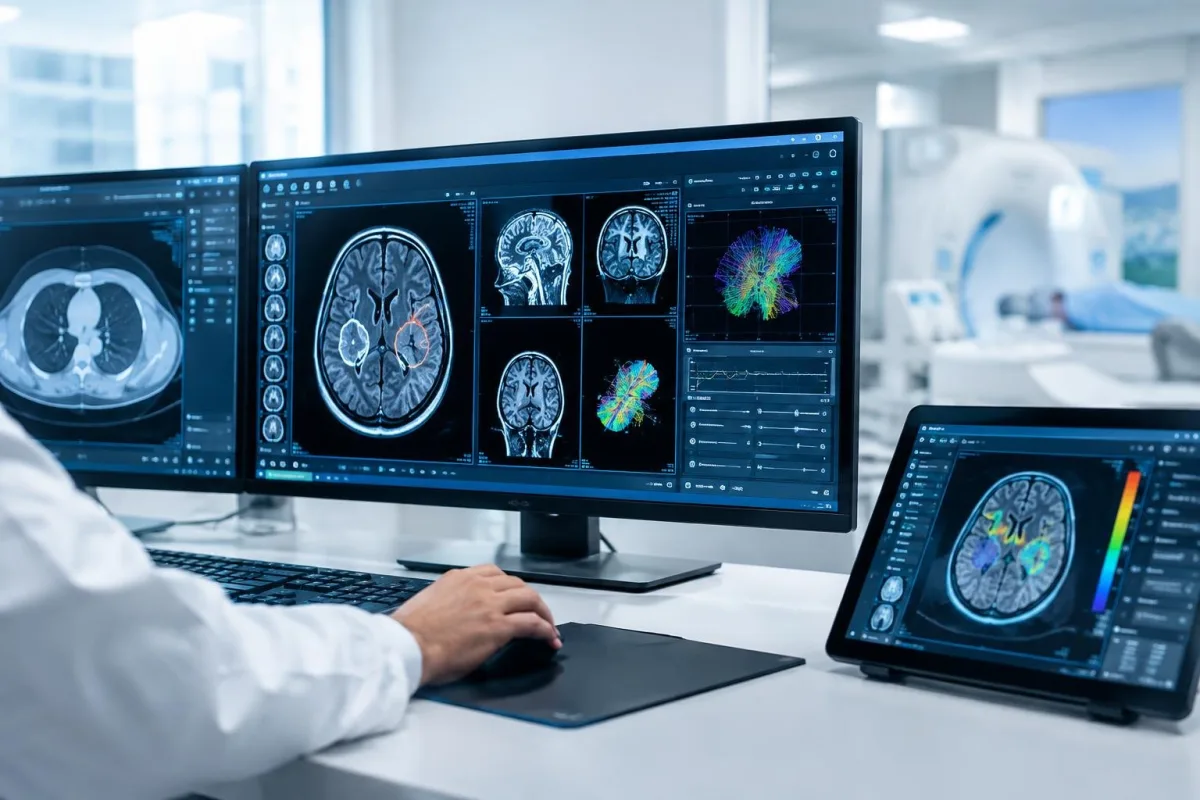
NEW DELHI, Oct 26: Artificial intelligence (AI) can enhance the early detection of tuberculosis (TB) and lung cancer, according to Dr. Randeep Guleria. Speaking at a recent conference in Jaipur, he emphasized that AI-powered tools could enable faster diagnosis and more efficient patient screening.
The role of AI in healthcare was a key focus during the 28th Joint Annual National Conference of the National College of Chest Physicians, India (NCCP-I) and the Indian Chest Society (ICS), which gathered over 2,000 medical professionals. Dr. Guleria noted that AI can identify abnormalities in chest X-rays and CT scans, helping healthcare providers make quicker decisions.
“Artificial intelligence has the potential to change how we approach the early detection of respiratory diseases,” Dr. Guleria stated.
Experts at the conference advocated for AI software that analyzes chest X-rays to identify patterns indicative of TB. This technology is particularly beneficial in underserved regions with limited access to expert radiologists. Dr. Raj Kumar, Director of the Vallabhbhai Patel Chest Institute, remarked that AI-assisted screening can enhance TB detection efforts.
AI also has potential in lung cancer diagnosis. Advanced algorithms can assist clinicians in reviewing CT scans, identifying suspicious lung nodules, and flagging abnormalities for further evaluation.
The application of AI in healthcare is expanding beyond screening. Hospitals are increasingly using AI to optimize patient triage and data collection, enabling frontline workers to screen for health risks more effectively. For instance, under Medanta’s TB-free initiative, AI-equipped buses expedite screening, producing results in under a minute.
“AI is being used for screening and not detection,” said Rajiv Sikka from Medanta.
Despite its advantages, experts caution that AI should not replace clinical judgment but serve as an assistive tool within existing healthcare frameworks. The potential for AI to fill critical gaps in healthcare delivery, especially in remote areas, holds promise as India continues to tackle challenges posed by TB and lung cancer.

Bhupendra Singh Chundawat is a seasoned technology journalist with over 22 years of experience in the media industry. He specializes in covering the global technology landscape, with a deep focus on manufacturing trends and the geopolitical impact on tech companies. Currently serving as the Editor at Udaipur Kiran, his insights are shaped by decades of hands-on reporting and editorial leadership in the fast-evolving world of technology.