

Xiaomi SU7 EV Faces Criticism Over Safety, Performance Downgrade and Misleading Features
Beijing, May 19 — Xiaomi’s high-profile entry into the electric vehicle (EV) segment with the SU7 sedan is facing mounting backlash following a series of safety concerns, controversial software changes, and accusations of misleading feature claims. What began as a dream debut, with supercar-level specs and aggressive pricing, has now turned into a challenging period for the tech giant’s automotive aspirations.
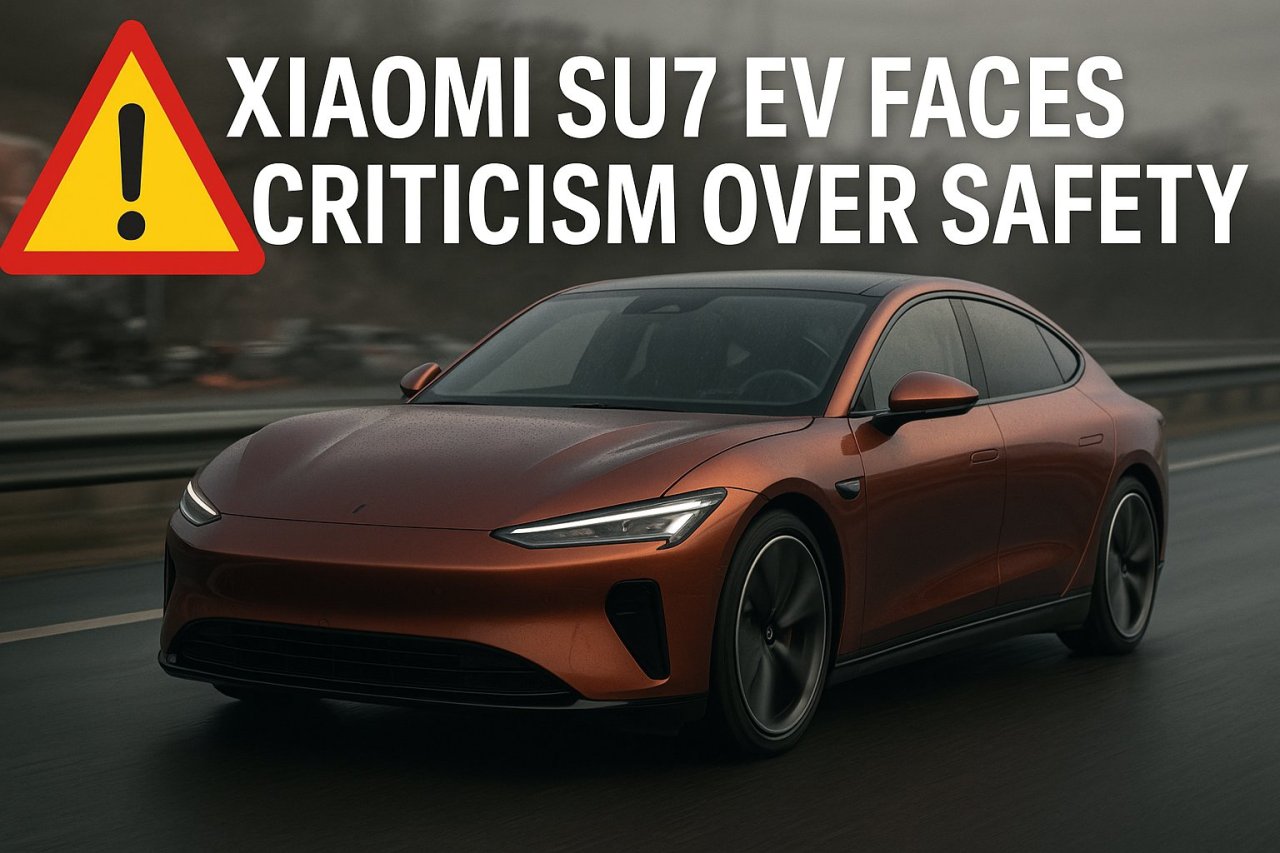

Fatal Crash Triggers Safety Concerns
The turning point came in March, when a Xiaomi SU7 was involved in a fatal crash, reportedly hitting a highway barrier and catching fire, resulting in three deaths. The incident, initially reported by CarNewsChina, raised immediate concerns over the safety of the vehicle’s high-performance powertrain and electronic systems, particularly the door lock mechanisms and driver-assistance features.
With its dual-motor setup boasting up to 1138kW of power and 1770Nm of torque, the SU7 offers explosive performance—hitting 0-100 km/h in under 3 seconds. Critics and consumers questioned whether such immense power should be made available to everyday users without additional safety safeguards.
Software Update Downgrades Performance, Backlash Follows
In response to the crash, Xiaomi pushed a controversial over-the-air update that reduced the SU7’s performance to 662kW. The full power capability was locked behind a “qualifying lap time” on a racetrack, and the launch control feature introduced a 60-second delay—moves aimed at curbing unsafe usage on public roads.
However, the move backfired. Enthusiasts and early adopters accused Xiaomi of false advertising and bait-and-switch tactics. The backlash forced the company to reverse the changes, with a statement emphasizing the importance of user feedback and a renewed commitment to transparency.
Air Duct Controversy Adds Legal Pressure
Further damage was done when Xiaomi’s claims about a performance-oriented dual air duct system were called into question. The carbon-fibre bonnet, marketed to improve cooling and aerodynamic efficiency, was found to have non-functional vents. Owners accused the company of deception, prompting legal complaints.
Xiaomi admitted that its messaging was “unclear” and offered affected customers loyalty points or the option to switch to a standard aluminium bonnet. However, the proposed 40-week waiting period for replacements has only added to consumer frustration.
CEO Lei Jun Breaks Silence
Under growing pressure, Xiaomi CEO Lei Jun broke his silence on Weibo, acknowledging the turbulent month. “This has been the most difficult time since the founding of Xiaomi,” he wrote. Jun revealed he had taken time off from meetings and social media to personally reflect on the challenges and refocus the company’s EV strategy.
Looking Ahead: YU7 SUV Launch Expected
Despite the rocky rollout, Xiaomi is not backing down. The company plans to launch its second EV—the YU7, a midsize SUV—later this year. The SU7’s setbacks have highlighted the steep learning curve of entering the automotive space, but Xiaomi remains committed to its broader EV vision.
As the company recalibrates, its next steps will be closely watched by both consumers and competitors in the highly competitive global EV market.

Bhupendra Singh Chundawat is a seasoned technology journalist with over 22 years of experience in the media industry. He specializes in covering the global technology landscape, with a deep focus on manufacturing trends and the geopolitical impact on tech companies. Currently serving as the Editor at Udaipur Kiran, his insights are shaped by decades of hands-on reporting and editorial leadership in the fast-evolving world of technology.