

What are the Different Types of MSME Loans Available in India?

Micro, small, and medium enterprises may need funding at different stages of growth. One business may need money to restock inventory, while another may be planning machinery, expansion, or a commercial vehicle. The right financing option depends on the purpose, duration, and nature of that requirement.
For business owners exploring an online MSME application option, understanding how the major loan categories differ can make comparison easier. It also helps businesses shortlist financing that matches the requirement instead of focusing only on the available loan amount.
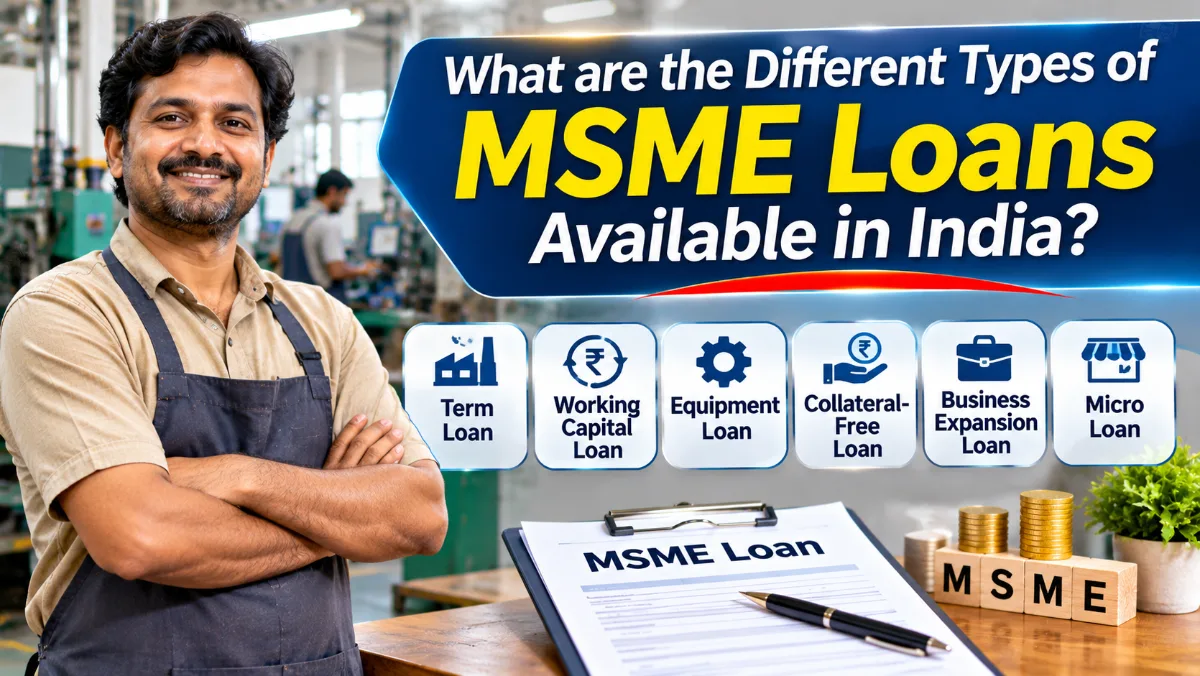
What are the Main Types of MSME Loans?
MSME finance can support operating needs, planned investments, asset purchases, trade activity, and other business requirements. Each option below serves a different purpose.
- Working Capital Loans
Working capital loans are designed for recurring operational expenses and short-term cash flow requirements.
They help businesses manage:
- Inventory purchases
- Supplier payments
- Wages and routine costs
- Seasonal demand
A business using an online MSME application route for working capital should estimate the actual operating gap and expected cash inflows before deciding how much to borrow.
- Overdraft Facilities
An overdraft allows eligible businesses to draw funds within an approved limit, subject to the applicable terms.
| Situation | Why it May Fit |
| Periodic Cash Flow Gaps | Funds can be accessed when required within the sanctioned limit |
| Variable Short-term Needs | It offers flexibility compared with one-time borrowing |
| Recurring Operating Gaps | It can support temporary funding needs |
An online MSME application journey for an overdraft should start with an assessment of how often the limit may be required.
- Term Loans
Term loans generally provide a fixed amount for a defined period and can support planned business investments.
| Requirement | Possible Use |
| Business Expansion | Planned growth expenditure |
| Capacity Addition | Larger operational investments |
| New Unit or Location | Defined expansion project |
| Capital Expenditure | Longer-term business assets |
When you apply for MSME online, for a term loan, businesses should compare expected future cash flows with the proposed repayment schedule.
- Commercial Equipment Finance
Commercial equipment finance focuses on machinery or equipment required for business operations. Keep these details ready:
- Equipment Quotation
- Purchase Price
- Technical Specifications
- Intended Business Use
An online MSME application for equipment funding is easier to prepare when the asset requirement and its purpose are clearly documented.
- MSME Vehicle Loans
MSME vehicle finance can support businesses requiring commercial vehicles for transport, logistics, distribution, or field operations.
| Check | Why it Matters |
| Vehicle Type | Should match the commercial activity |
| Expected Use | Establishes the operational requirement |
| Existing Fleet | Shows if capacity is being added or replaced |
| Cash Flow | Helps assess repayment affordability |
A dedicated vehicle facility may suit a long-term vehicle purchase better than using short-term operating funds.
- Trade Finance
Importers and exporters may need funding linked to procurement, shipments, receivables, or overseas payment cycles. HDFC Bank’s MSE lending policy lists export packing credit, post-shipment credit, and bill discounting under letters of credit among foreign trade facilities.
Trade-related finance may support:
- Pre-shipment Requirements
- Post-shipment Funding
- Short-term Transaction Gaps
- Eligible Foreign Trade Needs
Businesses that apply for MSME online for trade requirements should first identify where the funding gap occurs in the transaction cycle.
- Industry-specific Finance
Some sectors require financing for specialised assets that general business funding may not address as directly.
It may be relevant when:
- The asset is specific to the industry
- The purchase is central to operations
- A specialised facility matches the requirement more closely
Before using an online MSME application option, compare industry-specific finance with a general term loan to understand which structure better fits the need.
- Government-linked MSME Finance
Government-backed schemes may support eligible businesses based on enterprise type, sector, ownership, project purpose, or stage of growth.
Businesses should check the MSME loan eligibility conditions for the relevant scheme because qualifying criteria can differ.
How Can You Choose the Right MSME Loan?
The most suitable option depends on what the business needs to fund and how long the requirement will last. Comparing the requirement against the financing structure can help narrow the options.
| Business Need | Option to Explore |
| Short-term Operating Expenses | Working Capital Loan |
| Flexible Recurring Cash Flow Gap | Overdraft |
| Long-term Expansion | Term Loan |
| Machinery Purchase | Equipment Finance |
| Commercial Vehicle | Vehicle Loan |
| Import or Export Transactions | Trade Finance |
| Sector-specific Asset | Industry-specific Finance |
| Eligible Scheme-based Need | Government-linked Finance |
Before you apply for MSME online, ask three questions:
- What exactly will the funds be used for?
- How long will the business need the funding?
- What cash flow will support repayment?
The answers can help determine which financing structure is more closely aligned with the business requirement.
Choose MSME Finance Based on the Purpose
Choosing an MSME loan starts with identifying the business requirement rather than the largest available borrowing option. Short-term expenses, long-term investments, equipment purchases, and trade-related needs can call for different financing structures.
An online MSME application process can be easier to approach when the funding purpose, required amount, and repayment capacity are clear. Financial institutions like HDFC Bank offer different MSME financing options for operational and growth requirements. Comparing the relevant terms and documents before applying can help businesses choose finance that fits their plans more closely.
Source: