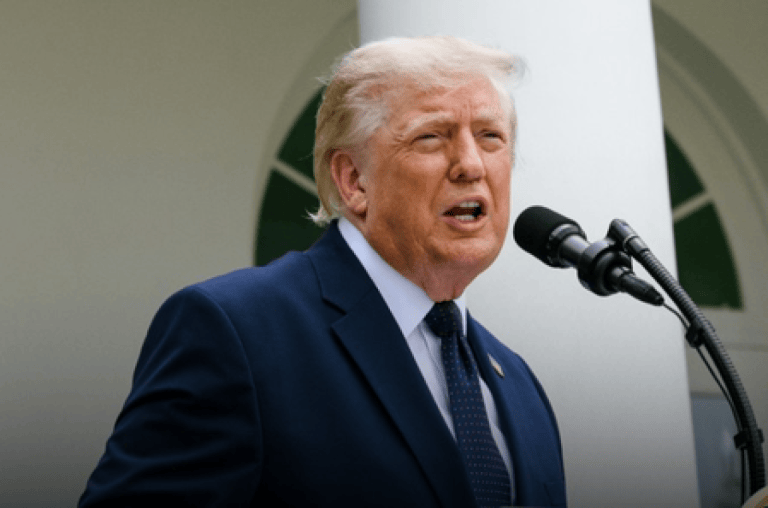

Trump and Rod Rosenstein are set to meet Thursday amid a wild morning of drama surrounding his future


White House press secretary Sarah Huckabee Sanders said that at Rosenstein’s request, he and President Donald Trump had “an extended” conversation about recent news stories. Sanders said they would meet on Thursday when Trump returns to Washington from United Nations General Assembly events.
A frantic Monday morning left Rosenstein’s future — and that of the Russia investigation — uncertain. Some news outlets reported that Rosenstein was preparing to be fired by President Donald Trump, while others reported Monday morning that Rosenstein had met with the White House chief of staff John Kelly and resigned in anticipation of being fired by Trump.
The drama came just days after The New York Times reported Rosenstein had discussed wearing a wire to secretly record the president and invoking the 25th Amendment.
The reports immediately sparked a firestorm of concern that the president would move next to fire the special counsel Robert Mueller.
One current FBI employee, who requested anonymity when speaking about internal matters, said in reaction to the potential of Rosenstein’s ouster: “Wow. Mueller’s finished.”
Democrats on Monday renewed calls for Congress to pass proposed legislation that would protect the special counsel and his investigation into Russian interference in the 2016 election and possible collusion between the Trump campaign and Russia.
Trump said during a Monday-morning interview with the conservative commentator Geraldo Rivera that he had not yet made a decision about whether to get rid of Rosenstein, who oversees the special counsel’s investigation into possible collusion between the Trump campaign and the Russian government.
“I don’t want to comment on it until I get all the facts,” the president said of the reports about Rosenstein’s conduct. “If anything took place, and I’ll make a determination sometime later.”
The question of whether Rosenstein would be fired or resigned would have significant implications because it would affect whether Trump could hand-pick the next deputy attorney general. The Federal Vacancies Reform Act of 1998 gives the president the authority to temporarily appoint an acting official to a federal agency position if the current official “dies, resigns, or is otherwise unable to perform the functions and duties of the office.”
But the law is much less clear about the president’s ability to fill a post if the previous occupier was fired.
source : https://www.greenwichtime.com

Bhupendra Singh Chundawat is a seasoned technology journalist with over 22 years of experience in the media industry. He specializes in covering the global technology landscape, with a deep focus on manufacturing trends and the geopolitical impact on tech companies. Currently serving as the Editor at Udaipur Kiran, his insights are shaped by decades of hands-on reporting and editorial leadership in the fast-evolving world of technology.