

Over 400 MBBS Seats Remain Vacant After Counseling Rounds

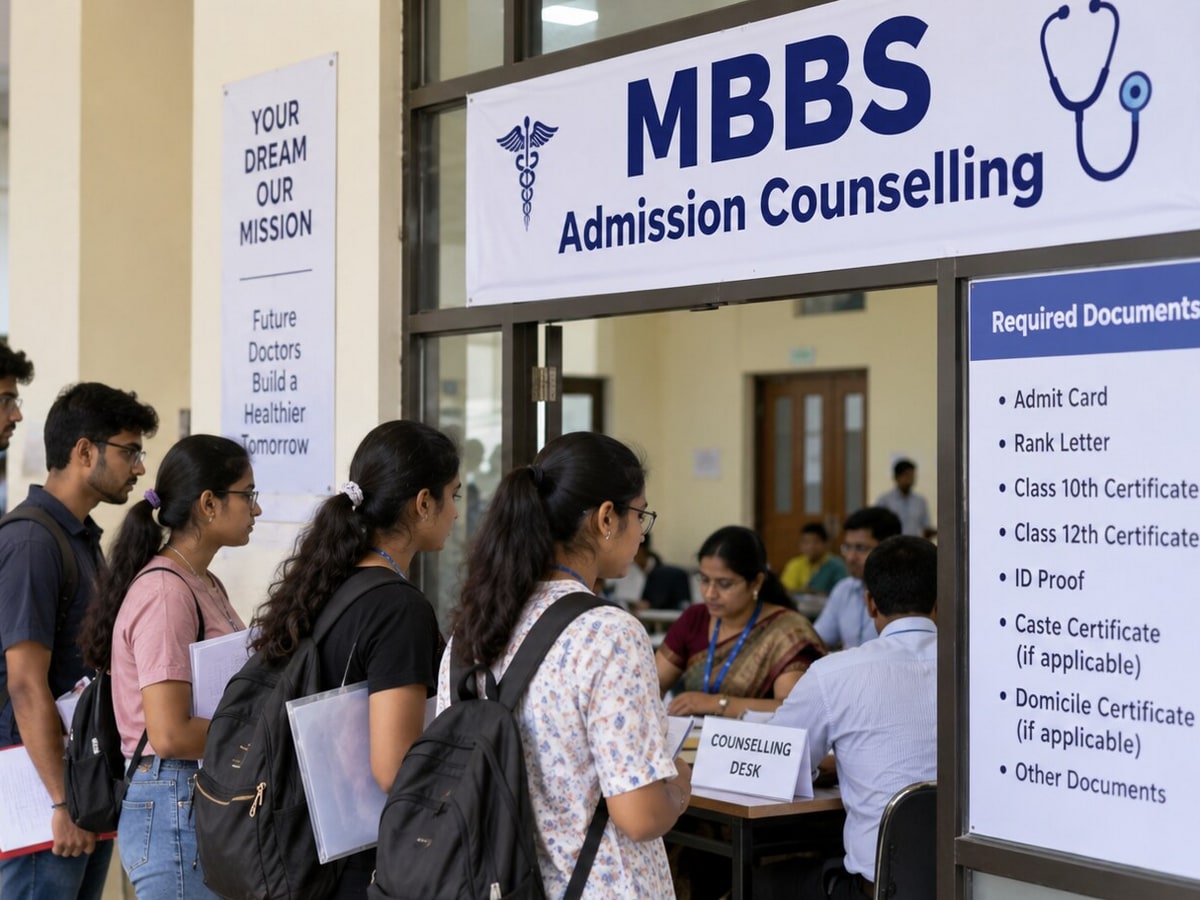
New Delhi, November 12: After the completion of all rounds of MCC NEET UG counseling, 411 MBBS seats across the country remain vacant. A special stray round was conducted to fill the 948 vacant seats, but even after this fifth round, 411 seats are still unfilled. Only 537 out of the 948 seats could be filled during the special stray round, with the high fees being cited as a major reason for the vacancies. However, the allotment data does not clarify why candidates did not take the available seats.
According to a report, an official from the Health Ministry stated that only 60-70 MBBS seats were left vacant last year. He mentioned, “The Supreme Court directed us to conduct four rounds of counseling, but we also held a fifth round. Despite this, over 400 seats remain unfilled.” The official added, “In many institutions, fees that were previously around ₹15 lakh have now increased to ₹25-35 lakh. While seats in government medical colleges and reputed private institutions are being filled, some private colleges still have vacant seats. These institutions need to review their fees, quality of education, and infrastructure. If fees remain so high, increasing the number of seats will not be beneficial, as students cannot afford such expensive education.”
Where MCC Conducts Admissions
The Medical Counseling Committee (MCC), under the Directorate General of Health Services (DGHS), conducts counseling for 15% All India Quota (AIQ) seats in state government medical colleges, 100% seats in deemed universities, and all MBBS seats in central institutions like AIIMS, JIPMER, and BHU. State officials conduct counseling for the remaining state quota seats in government colleges and private medical colleges affiliated with state universities.
Soaring Fees
Dr. Lakshya Mittal, chairperson of the United Doctors Front, stated that the significant difference in fees is forcing even high-scoring NEET candidates to forgo seats they could have secured based on merit. He remarked, “In one state, the MBBS fee is around ₹5 lakh, while in another state like Tamil Nadu, it is nearly ₹20 lakh. Why is there such a huge difference when the education is the same?” He called for a regulatory system to address the fee discrepancies.
This issue highlights not just a demand problem but also students’ inability to pay the exorbitant fees. He emphasized that effectively implementing the Prime Minister’s 2022 announcement regarding fee parity remains a concern.
Why Are Deemed Universities’ Fees Higher?
Private medical colleges are generally run by trusts or societies and are regulated by state fee committees. In contrast, deemed-to-be universities are privately managed institutions granted university status by the central government under Section 3 of the UGC Act, allowing them to conduct their own examinations and confer degrees. They typically enjoy greater academic and administrative autonomy, including more flexibility in setting fees according to regulatory requirements.
This disparity can have a significant financial impact on students. For instance, the Dhanalakshmi Srinivasan Medical College, established in 2011, was initially a self-financing institution affiliated with Tamil Nadu Dr. MGR Medical University. After receiving deemed university status under Dhanalakshmi Srinivasan University for the 2026-27 academic session, its annual MBBS tuition fee increased to ₹24 lakh, while the previously regulated state quota fees were ₹5.4 lakh and management quota fees were ₹16.2 lakh. The total tuition cost for the 4.5-year MBBS program, excluding hostel and mess charges, is estimated to reach ₹1.09 crore.