

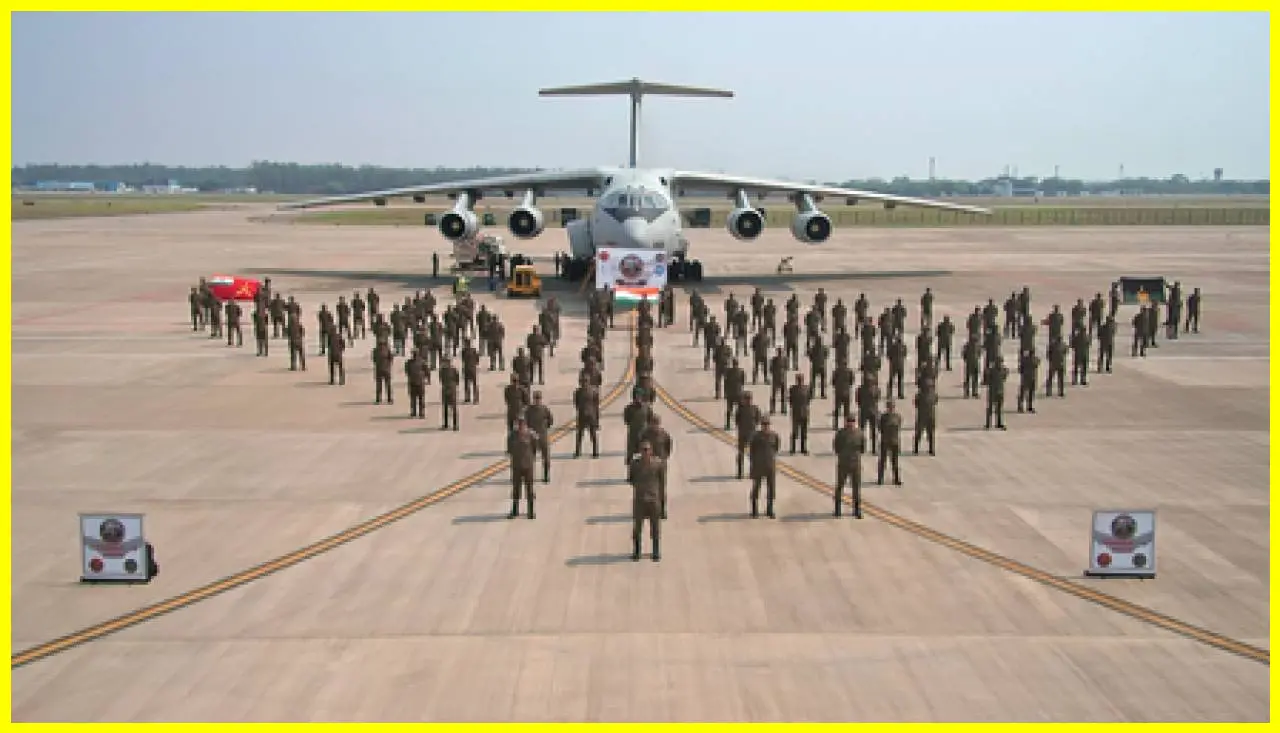

New Delhi, May 4: The Ministry of Defence announced on Sunday that the second edition of the joint military exercise Sinbax-II 2026 between India and Cambodia will be held from May 4 to May 17.
According to a statement from the ministry, the exercise will take place at the Techo Sen Noh Thom Mares Royal Cambodian Air Force Training Center (Camp Basil) in Cambodia’s Kampong Speu province.
The statement emphasized that this bilateral exercise is significant amid changing global security challenges. It will be conducted under Chapter VII of the United Nations and will involve company-level joint training, focusing on operations in sub-conventional (low-intensity) environments.
A contingent of 120 Indian soldiers, primarily from a battalion of the Maratha Light Infantry Regiment, will participate, while 160 personnel from the Royal Cambodian Army will also be involved.
The exercise will build on experiences from counter-terrorism operations that peacekeepers have to undertake during UN missions. It will include various practical discussions and tactical drills to prepare for a comprehensive final exercise.
Special training will cover drone operations, mortar, and sniper techniques. The main objective is to enhance coordination, synergy, and operational capabilities between the two nations’ armed forces.
The statement further noted that this exercise will demonstrate both countries’ capacity to maintain global peace and facilitate the sharing of experiences, particularly during operations against enemy forces in semi-urban areas.
The ministry stated that Sinbax-II 2026 showcases the growing defense cooperation between India and Cambodia, strengthening their bilateral relations and enhancing mutual understanding in addressing regional security challenges.

Bhupendra Singh Chundawat is a seasoned technology journalist with over 22 years of experience in the media industry. He specializes in covering the global technology landscape, with a deep focus on manufacturing trends and the geopolitical impact on tech companies. Currently serving as the Editor at Udaipur Kiran, his insights are shaped by decades of hands-on reporting and editorial leadership in the fast-evolving world of technology.