

Google’s Satellite Project Suncatcher Generates Poetry from Space
Google's Suncatcher satellite is operational and has generated a haiku while communicating with Earth, marking a key achievement in space-based AI.

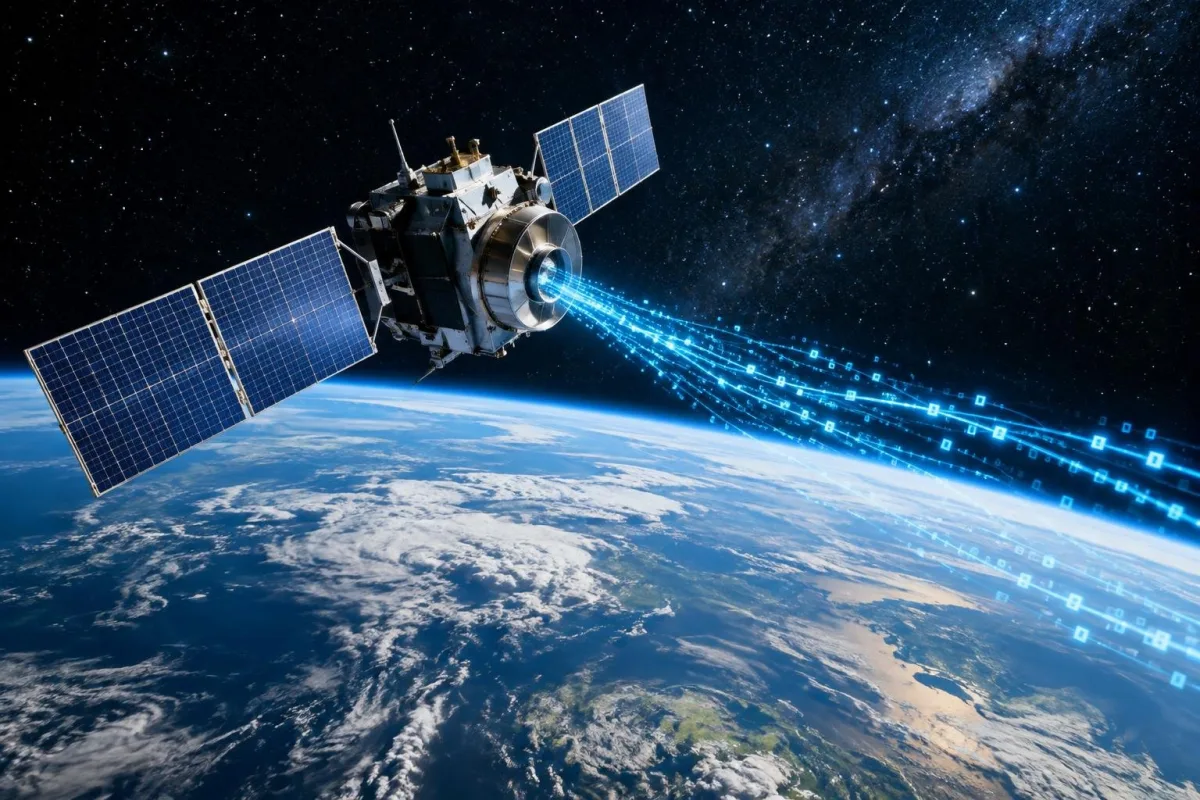
NEW DELHI, Oct 31: Google’s prototype satellite for Project Suncatcher is now online, successfully sending its first AI-generated response from space. The satellite launched on a SpaceX Falcon 9 rocket earlier this month, marking a step in Google’s exploration of space-based AI data centers.
The satellite carries four Tensor Processing Units (TPUs) and generates up to 1 kW of power. It can operate one TPU at a time for about 20 minutes, complicating communications with ground stations. After three weeks of subsystem testing, Google engineers prompted the onboard AI, Gemma 4, to write a haiku during a pass over Svalbard, Norway. The output was:
Blue marble belowData streams in silent graceStarlight feeds my core. ✨
This haiku represents what Google calls its “Hello World” milestone, marking the first successful AI response from a data center class TPU in orbit. The satellite was also tested with space-themed limericks and tasked with reporting its operational status.
Google plans to assess TPU performance under thermal stress and radiation in space. The goal is to determine the reliability of these chips for executing workloads beyond Earth, where energy and physical limitations are increasing.
The next phase includes launching two more interconnected satellites in 2027, featuring enhanced power capabilities and optical links for better data processing. Google’s approach is unique, focusing on creating a network of satellites that can communicate and share processing tasks.
Elon Musk, CEO of SpaceX, predicts that orbital computing will surpass terrestrial computing by the end of 2028, driven by advancements in space infrastructure. Musk’s comments reflect a growing interest in utilizing space for computational tasks, aligning with Google’s Suncatcher initiative.
Sources

Bhupendra Singh Chundawat is a seasoned technology journalist with over 22 years of experience in the media industry. He specializes in covering the global technology landscape, with a deep focus on manufacturing trends and the geopolitical impact on tech companies. Currently serving as the Editor at Udaipur Kiran, his insights are shaped by decades of hands-on reporting and editorial leadership in the fast-evolving world of technology.