

Redmi Pad Pro 5G Design, Colourways Revealed; Confirmed to Launch Soon
The Redmi Pad Pro was launched in China in April this year, with a Snapdragon 7s Gen 2 SoC, a 10,000mAh battery, fast charging support, and a 12.1-inch 2.5K LCD display. It comes in three RAM and storage configurations and Wi-Fi connectivity. The tablet hasn’t arrived in India yet, but it has been spotted on the Google Play console, so it’s likely to go on sale soon. It has now been confirmed that the tablet will also be launched in a 5G version.
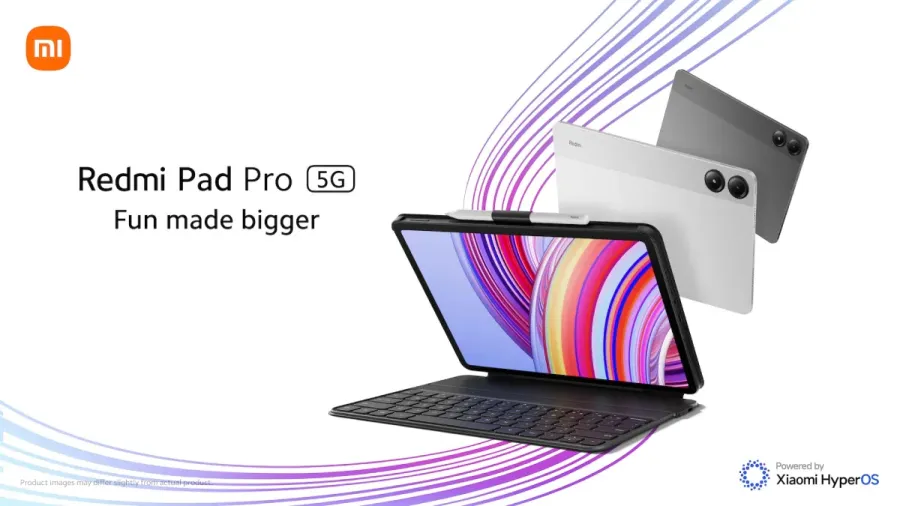

Introducing the Redmi Pad Pro 5G
Xiaomi CEO Lei Jun (@leijun) announced in a post on X (formerly Twitter) that the Redmi Pad Pro 5G will support a 5G SIM card. The exact release date and schedule have not yet been announced. June added that the 5G version will also support a “network sync” feature that allows users to easily connect their phone’s hotspot to the tablet with a single touch.
The design of the future model shown in the teaser poster is similar to the current Redmi Note Pro. Even the color scheme and accessories like the B. pen, keyboard and protective case look the same. Available in shades like taupe and navy blue. This suggests that the Redmi Pad Pro 5G is the same as the Wi-Fi only version, except for the additional 5G connectivity.
Redmi Pad Pro 5G Specifications and Capabilities (Expected)
Like the existing Redmi Pad Pro, the Redmi Pad Pro 5G sports a 12.1-inch LCD panel with 2.5K resolution (2560 x 1600 pixels), 120Hz refresh rate, up to 180Hz touch sampling rate, or With a peak sampling frequency of 180 Hz. 60 nits brightness and Corning Gorilla Glass 3 protection.
The Redmi Pad Pro 5G is expected to be powered by the Snapdragon 7s Gen 2 SoC, a 10,000mAh battery with support for 33W wired fast charging, an 8-megapixel rear sensor and an 8-megapixel front-facing camera sensor. The teaser confirms that the tablet will come with Xiaomi HyperOS based on Android 14.

Bhupendra Singh Chundawat is a seasoned technology journalist with over 22 years of experience in the media industry. He specializes in covering the global technology landscape, with a deep focus on manufacturing trends and the geopolitical impact on tech companies. Currently serving as the Editor at Udaipur Kiran, his insights are shaped by decades of hands-on reporting and editorial leadership in the fast-evolving world of technology.