
Ram Temple Trust Has ₹1,882 Crore, New CEO to Oversee Five Key Areas
Ayodhya: Amid controversies surrounding the management of the Ram Temple in Uttar Pradesh’s Ayodhya, the Shri Ram Janmabhoomi Teerth Kshetra Trust has made a major administrative change by appointing retired Air Marshal Jeetendra Mishra as its first Chief Executive Officer (CEO).
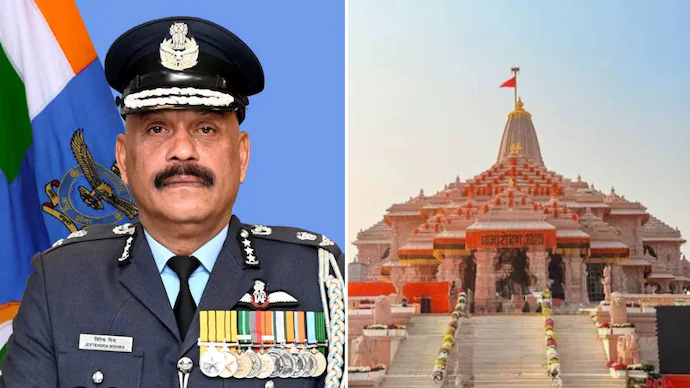

Nearly six years after the formation of the trust, the appointment marks a significant change in the administrative structure of the Ram Temple. Until now, temple arrangements were managed collectively by trust office-bearers, committees and various officials.
With a CEO in place, the temple is expected to move towards a more centralised executive system, with clearer accountability for departments, financial monitoring, employee management, devotee facilities and project implementation.
Why the CEO System Was Introduced
The discussion over appointing a CEO gained momentum after an initial SIT report highlighted several shortcomings related to the monitoring of the counting room and incidents concerning alleged irregularities in offerings.
The report pointed to gaps in monitoring people entering the counting room, CCTV arrangements and procedures. This raised questions over whether the day-to-day management of such a large religious institution should continue to be handled only through trust office-bearers and different committees or whether a full-time professional executive mechanism was required.
One of the key aspects of the CEO system will be a clearer separation between religious and administrative responsibilities.
Five Key Responsibilities of the Ram Temple CEO
1. Managing Donations and Offerings
Jeetendra Mishra will oversee the management of donations and offerings. An accounting system is expected to be implemented to prevent irregularities, with the assistance of chartered accountants and financial experts.
2. Supervision of Around 2,000 Employees
The CEO will supervise around 1,500 to 2,000 personnel deployed in temple security, cleaning and management-related operations.
3. Infrastructure and Project Monitoring
He will oversee the completion of the remaining construction work in the Ram Temple complex and ensure that the CCTV network remains functional. The CEO will also be responsible for implementing trust decisions on the ground.
4. Devotee Facilities and Crowd Management
A major responsibility will be ensuring smooth darshan for lakhs of devotees. During festivals, the CEO will coordinate with the police and administration to prepare plans for managing the movement of devotees.
5. Coordination Between Trust and Government
The CEO will function under the temple trust board and its chairman. He will also serve as a coordinator between the trust and the state government, police and administration.
Ram Temple Trust Has ₹1,882 Crore in Bank Accounts
The trust’s financial details for the financial year 2025-26 were also presented during a meeting held at Maniram Das Chhawni.
According to the financial statement presented at the meeting, the trust recorded income of around ₹237 crore during the year, while its expenditure stood at around ₹91 crore.
Around ₹425 crore was reported to have been spent on construction and various other works.
The meeting was also informed that the trust had around ₹1,882 crore in its bank accounts as of March 21, 2026.

Bhupendra Singh Chundawat is a seasoned technology journalist with over 22 years of experience in the media industry. He specializes in covering the global technology landscape, with a deep focus on manufacturing trends and the geopolitical impact on tech companies. Currently serving as the Editor at Udaipur Kiran, his insights are shaped by decades of hands-on reporting and editorial leadership in the fast-evolving world of technology.